A small roof defect can become a costly building issue long before water reaches an occupied space. This commercial roof inspection guide helps property owners and managers recognize what should be checked, what findings require prompt action, and when a qualified roofing contractor should take over.
For commercial properties, inspections are not simply a maintenance task. They support budgeting, tenant comfort, warranty compliance, safety, and the long-term performance of the entire roof system. A disciplined inspection program gives you time to make planned decisions rather than responding to an emergency leak during a storm.
Why Commercial Roof Inspections Matter
Commercial roofing systems are exposed to standing water, freeze-thaw cycles, wind, ultraviolet exposure, foot traffic, rooftop equipment activity, and changing temperatures. In the Toronto area, winter conditions can place additional stress on seams, drains, flashing, and areas where snow and ice collect.
Many roofing problems begin out of sight. Moisture can travel beneath a membrane, enter insulation, or move along a deck before it appears as a stain inside the building. By the time interior damage is visible, the repair may involve more than the roof surface. Ceiling finishes, electrical systems, inventory, and tenant operations may also be affected.
A professional inspection establishes the current condition of the roof and creates a record of what was observed. That documentation is valuable when planning capital expenses, tracking repairs, reviewing warranty requirements, or communicating with owners and tenants.
When to Schedule a Commercial Roof Inspection
Most commercial properties benefit from inspections twice each year, typically in spring and fall. A spring inspection identifies damage after snow, ice, and freeze-thaw conditions. A fall inspection confirms that drainage and roofing details are prepared for colder weather.
Additional inspections are appropriate after severe wind, hail, heavy snow, major rainfall, or unauthorized rooftop work. Service technicians working on HVAC units, communications equipment, or vents can accidentally damage a membrane or disturb flashing. An inspection after this work can catch a small puncture before it becomes a leak.
The right schedule depends on the roof type, building use, age, drainage design, rooftop traffic, and prior repair history. An older roof or a roof with recurring ponding water may need closer monitoring than a newer, well-draining system.
What a Professional Commercial Roof Inspection Includes
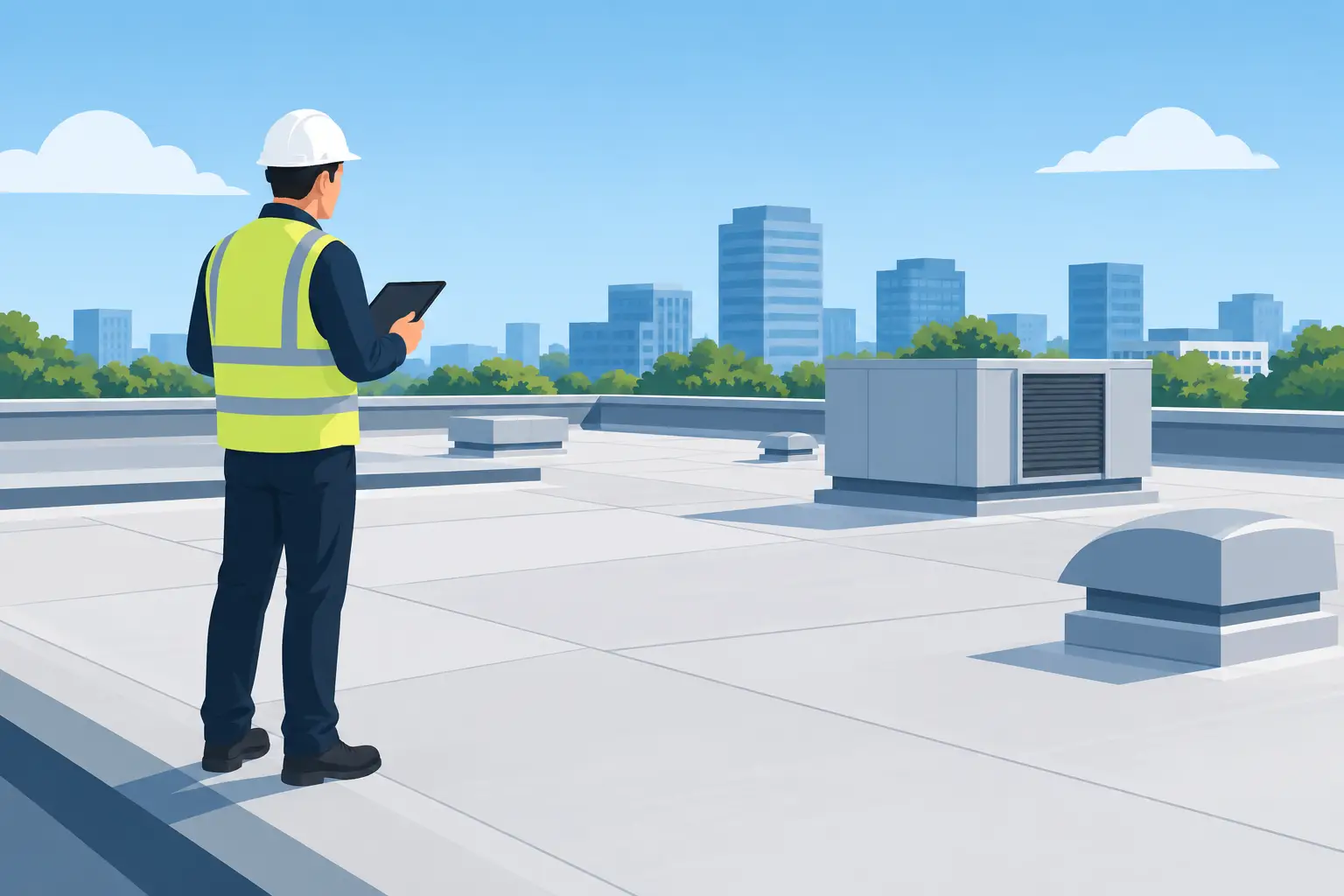
A proper inspection is systematic. It should assess the roof field, perimeter, penetrations, drainage components, and visible interior signs of moisture. The inspector should not limit the review to the area directly above a reported leak.
Roof Surface and Membrane Condition
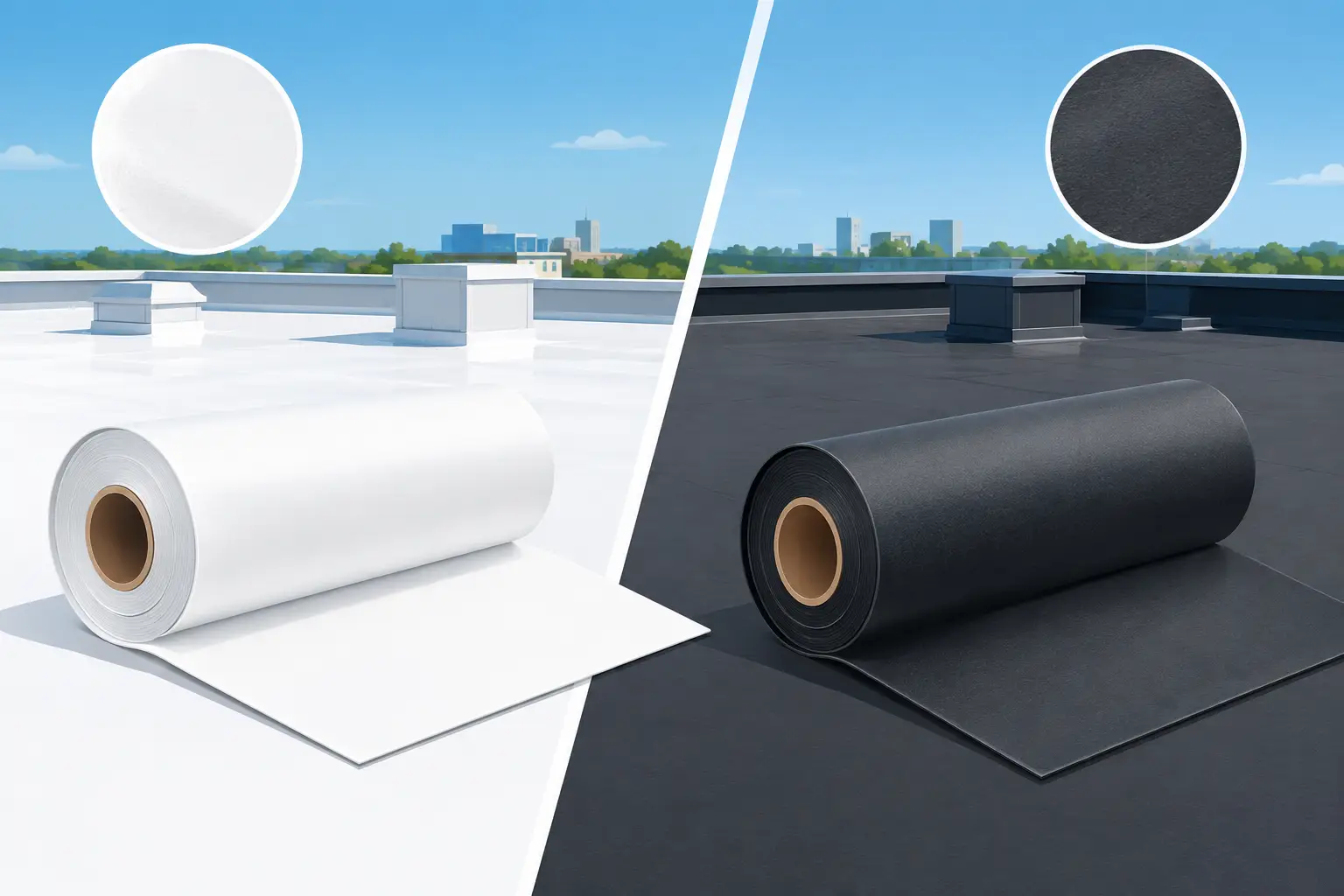
The roof field is checked for cracks, punctures, open seams, splits, blisters, wrinkles, exposed reinforcement, and areas of membrane deterioration. The specific concerns vary by system. Modified bitumen, built-up roofing, EPDM, TPO, PVC, metal, and liquid-applied systems each have different failure points and repair methods.
Foot traffic deserves particular attention. Routes leading to HVAC equipment often show wear sooner than the rest of the roof. Walk pads can protect these areas, but they must be properly placed and maintained. A repair that looks simple from ground level may require a closer evaluation to determine whether moisture has entered below the membrane.
Flashing, Edges, and Penetrations
A high percentage of commercial leaks occur at transitions rather than in the open roof field. Inspectors examine flashing around parapet walls, skylights, vents, drains, curbs, pipes, and mechanical units. They also check coping, termination bars, sealants, edge metal, and expansion joints.
These details must accommodate movement. Building materials expand and contract at different rates, especially through seasonal temperature changes. A brittle sealant joint, loose metal edge, or separated flashing section can create a direct path for water.
Drainage and Ponding Water
Water should leave the roof as designed. Drains, scuppers, gutters, downspouts, and strainers must be clear of leaves, gravel, construction debris, and other obstructions. Standing water can accelerate material breakdown and add unnecessary weight to the roof structure.
Not every damp area after rain is an emergency. However, water that remains for more than 48 hours in dry conditions should be evaluated. Persistent ponding may point to clogged drainage, poor slope, insulation compression, deck deflection, or a design issue that requires more than routine cleaning.
Interior and Structural Indicators
The inspection should include accessible interior areas, particularly beneath known problem zones and around roof penetrations. Water stains, mold-like odors, wet insulation, peeling finishes, rust, and ceiling discoloration can provide useful clues.
Interior evidence does not always identify the exact source of a leak. Water can travel through insulation or along structural members before becoming visible. A trained roofing team uses the full pattern of conditions – interior and exterior – to locate the cause rather than applying a temporary patch to the nearest visible spot.
Warning Signs That Need Prompt Attention
Property teams can monitor roof conditions between scheduled inspections without walking on the roof unnecessarily. If you observe any of the following, arrange a professional assessment:
- Water stains, drips, or new ceiling discoloration inside the building.
- Ponding water that remains after reasonable drying time.
- Loose flashing, lifted membrane edges, open seams, or visible punctures.
- Blocked roof drains, overflowing scuppers, or debris collecting around drainage points.
- A sudden increase in repair calls from tenants near the same area of the building.
Avoid sending untrained staff onto the roof to investigate damage. Commercial roofs can be slippery, fragile in places, and difficult to assess safely. Working at heights requires proper training, equipment, and site-specific safety procedures.
Documentation Makes Inspections More Useful
An inspection should produce more than a verbal opinion. Ask for clear photographs, identified roof areas, observations, recommended repairs, and a practical priority level. This allows property managers to distinguish between immediate leak risks, maintenance items that should be addressed soon, and conditions that can be monitored.
A useful roof file should include inspection reports, repair invoices, warranty information, roof plans, photographs, and records of any rooftop work performed by other trades. Over time, this history helps identify recurring issues and supports better replacement planning.
Documenting repairs also protects the warranty process. Manufacturer warranties often require that repairs and alterations be performed by approved or qualified professionals. Unapproved materials, incompatible sealants, or careless penetrations can create problems that are more expensive than the original repair.
Repair, Restoration, or Replacement: How to Decide
Inspection findings do not automatically mean replacement is necessary. A localized puncture, failed flashing detail, or blocked drain can often be repaired effectively if the roof system is otherwise dry and in serviceable condition.
Restoration may be appropriate when the existing roof is stable but needs a renewed protective surface or targeted improvements. This option depends on the roof type, moisture condition, adhesion, drainage, and manufacturer requirements. It is not a shortcut for a roof with widespread wet insulation or failing substrate.
Replacement is often the better investment when repairs are becoming frequent, leaks appear in multiple areas, insulation is saturated, or the system has reached the end of its useful service life. A qualified contractor should explain the evidence behind the recommendation, outline options, and provide a detailed estimate rather than relying on a one-size-fits-all answer.
Choosing a Contractor for the Inspection
The quality of the inspection depends on the person performing it. Look for a contractor with commercial roofing experience, trained installers, appropriate Working at Heights compliance, and direct accountability for the work. The contractor should be prepared to explain conditions in plain language while providing the technical detail needed for asset decisions.
For buildings in Toronto, North York, Vaughan, Markham, and surrounding communities, local experience also matters. A contractor who understands regional weather patterns and common commercial roof assemblies can make recommendations that fit the building, the budget, and the expected service life.
Toronto Roofers approaches commercial roof assessments with on-site review, documented findings, and workmanship standards backed by trained in-house specialists. The goal is not to sell unnecessary work. It is to identify the condition of the roof, address active risks, and give property decision-makers a clear path forward.
A roof inspection is most valuable before a leak forces the issue. Keep your inspection records current, respond quickly to changes in roof performance, and schedule qualified help when the condition of the system is uncertain. That practical discipline gives you more control over repairs, costs, and the protection of everyone inside the building.