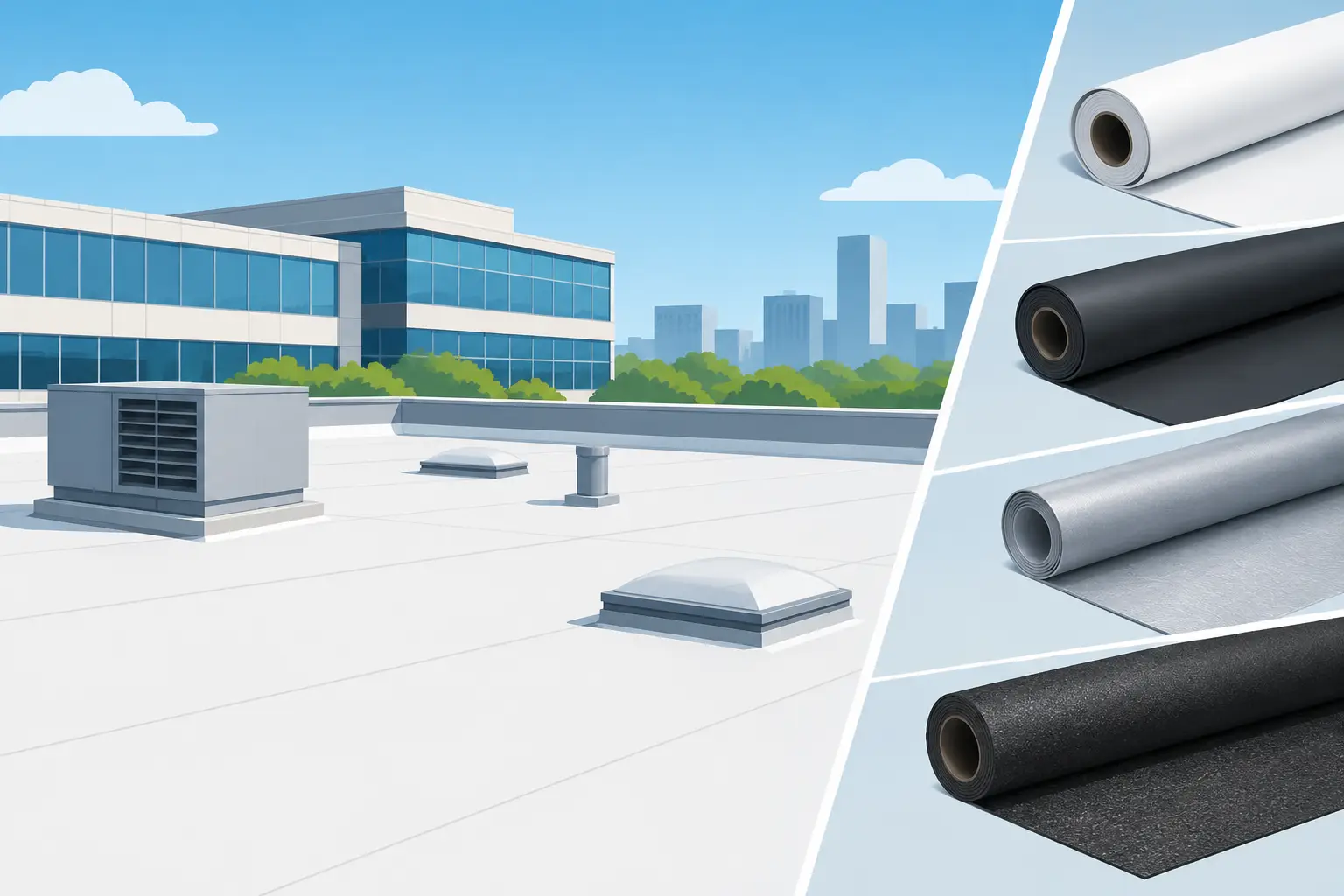
A commercial roof membrane is not a finish material. It is the waterproofing layer that protects insulation, roof decking, inventory, tenants, and the operating budget beneath it. Choosing among the best commercial roof membranes means looking beyond the initial price and matching the system to the building’s drainage, rooftop activity, exposure, and long-term maintenance plan.
For commercial property owners and managers, the right answer is rarely the membrane with the lowest installed cost. A roof that handles ponding water, resists punctures, supports future repairs, and carries a meaningful manufacturer warranty can deliver substantially better value over its service life.
What Makes a Commercial Roof Membrane the Right Choice?
A membrane roof system must perform as a complete assembly. That includes the deck, vapor control where required, insulation, attachment method, flashing details, drains, and edge metal. Even a high-quality membrane can fail prematurely when it is installed over wet insulation, poorly secured at the perimeter, or improperly flashed around penetrations.
The best choice depends on practical conditions at the property. A restaurant roof with grease exhaust has different requirements than an office building with frequent HVAC service. A large warehouse with open exposure to wind needs a different attachment strategy than a smaller building sheltered by adjacent structures.
Before selecting a membrane, a qualified roofing contractor should assess roof slope and drainage, existing roof layers, insulation condition, wind exposure, rooftop equipment, foot traffic, and the owner’s expected holding period. This is why an on-site inspection and detailed estimate matter. They identify the conditions that product brochures cannot see.
The Best Commercial Roof Membranes Compared
TPO: A Strong All-Around Choice for Many Flat Roofs
Thermoplastic polyolefin, commonly called TPO, is one of the most widely specified commercial membranes. It is typically white or light colored, helping reflect sunlight and reduce heat absorption at the roof surface. Seams are heat-welded rather than glued, creating a continuous watertight bond when installed correctly.
TPO is often a practical choice for office buildings, retail properties, light industrial facilities, and multi-unit buildings with broad low-slope roof areas. It offers a favorable balance of cost, energy performance, and weldable seams. Modern TPO systems are available in multiple thicknesses, and thicker membranes generally provide greater resistance to wear and future service work.
Its limitations should also be considered. TPO quality varies by manufacturer, and it is not a substitute for proper drainage or protection around equipment. On roofs with regular technician traffic, designated walk pads should be installed to reduce puncture risk and protect the warranty.
PVC: Excellent Resistance to Chemicals and Grease
PVC membranes are also heat-welded single-ply systems, but they are especially valued for their resistance to chemicals, oils, and grease. This makes PVC a strong candidate for restaurants, food-processing facilities, laboratories, and buildings where rooftop exhaust can release contaminants onto the roof surface.
Like TPO, PVC can provide a reflective roof surface and strong seam performance. The membrane remains flexible and is well suited to detailed work around penetrations, curbs, and complex roof geometry. For properties that cannot tolerate disruption from frequent roof repairs, its chemical resistance can be a meaningful advantage.
PVC typically costs more than TPO. The added investment is often justified when the building use creates chemical exposure, but it may not be necessary for a straightforward office or warehouse roof. The decision should be based on actual rooftop conditions, not simply on selecting the highest-priced material.
EPDM: Proven Durability for Large, Simple Roof Areas
EPDM is a synthetic rubber membrane with a long track record on commercial buildings. It is commonly black, though lighter options are available, and it is known for flexibility in cold weather. EPDM can be fully adhered, mechanically attached, or ballasted in the appropriate application.
This material is frequently used on large, low-slope roofs with relatively uncomplicated layouts. Its flexibility can be beneficial in climates with significant seasonal temperature swings. EPDM is also a familiar system for many maintenance teams, and repairs can be effective when completed promptly with compatible materials.
The trade-off is that traditional EPDM seams use adhesives or tapes rather than heat welding. Seam preparation and installation discipline are therefore critical. A well-installed EPDM roof can perform for many years, but poor workmanship at seams, transitions, and penetrations can undermine the system.
Modified Bitumen: Built for Durability and Serviceability
Modified bitumen is an asphalt-based membrane system installed in multiple plies or layers. It may be applied with hot asphalt, cold adhesives, self-adhered sheets, or heat-welded methods, depending on the product and site requirements. Because it is built up in layers, it offers strong puncture resistance and dependable performance on roofs with frequent maintenance activity.
For buildings with numerous rooftop units, heavy foot traffic, or a history of minor damage from service contractors, modified bitumen can be an excellent option. Its multi-layer construction provides redundancy. If the top surface is damaged, the system may still have protection below it.
This system is heavier than single-ply membranes and requires a careful review of deck condition and drainage. Installation methods must also be selected with site safety in mind. Where open-flame work is not appropriate, self-adhered or cold-applied options may offer a safer alternative.
Membrane Thickness and Attachment Matter as Much as Material
A membrane type alone does not define roof quality. Thickness, reinforcement, attachment, insulation, and detailing all affect performance. A thicker single-ply membrane can offer better puncture resistance, but it still needs correct flashing and secure perimeter attachment to withstand wind forces.
Mechanically attached systems can be efficient and cost-effective, particularly on large roof areas. Fully adhered systems can provide a cleaner appearance and may be preferred where wind uplift requirements or building design call for them. Ballasted systems are less common on many properties because of weight and inspection considerations, but they remain appropriate in certain applications.
The roof edge deserves special attention. Wind forces are often highest at corners and perimeters. Secure edge metal, correctly spaced fasteners, and manufacturer-approved details are not minor finishing touches. They are central to keeping the roof system intact during severe weather.
Do Not Ignore Drainage, Insulation, and Rooftop Traffic
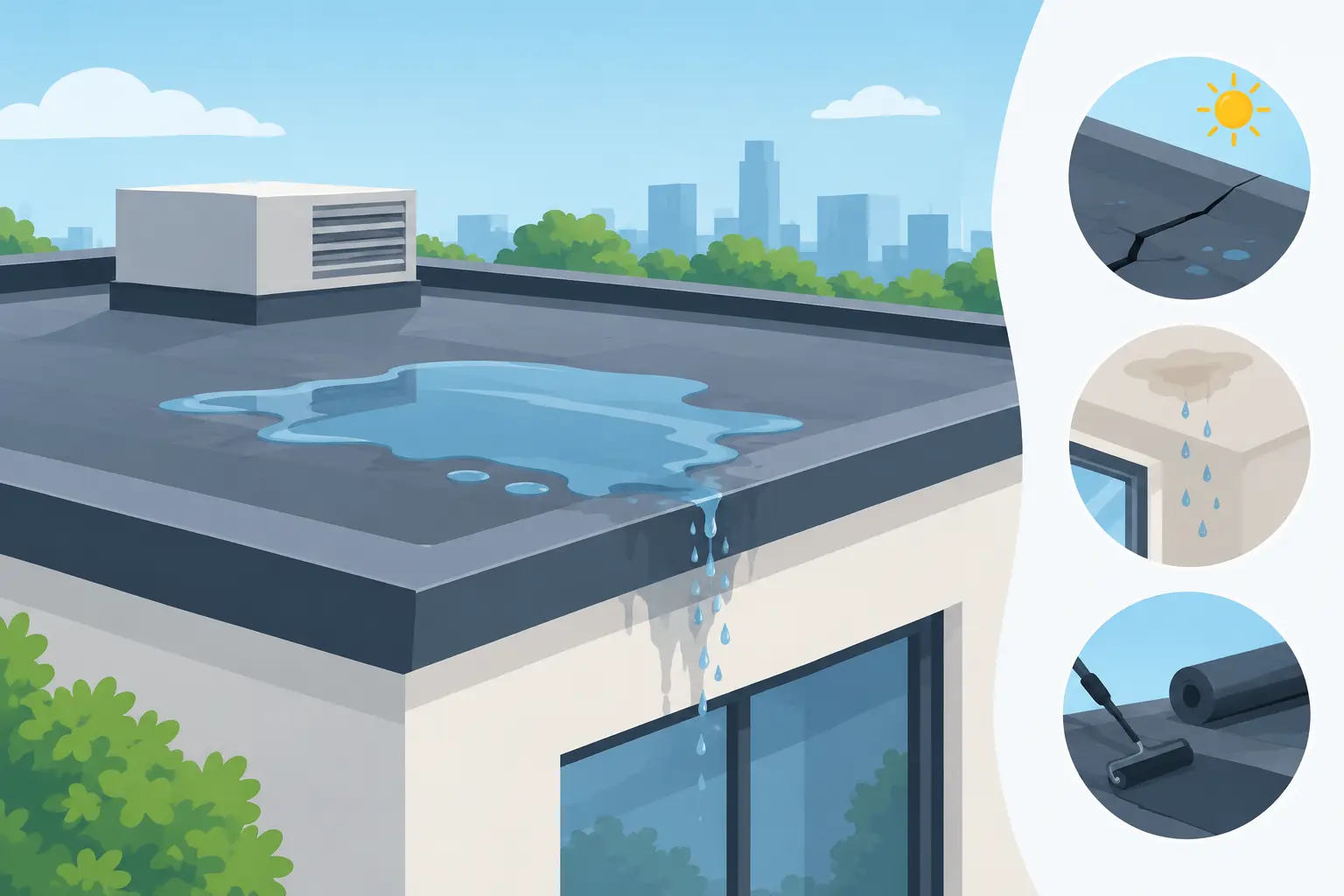
No membrane performs well under persistent ponding water. Standing water can accelerate deterioration, increase loading, promote debris buildup, and make small defects harder to identify. If drainage is inadequate, the roof design may need tapered insulation, additional drains, or corrected slope before a new membrane is installed.
Insulation also affects more than energy use. A properly designed insulation package creates a stable substrate for the membrane and can help correct low areas. Wet insulation should not simply be covered over. Moisture trapped in the assembly can reduce thermal performance and create conditions for premature failure.
Rooftop traffic is another common issue. HVAC technicians, electricians, and other trades can damage a roof without realizing it. Walk pads should guide traffic to service areas, while pipe supports and equipment curbs should be compatible with the selected membrane. A roof is part of the building envelope, not a work platform for uncontrolled access.
How to Choose a Commercial Roofing Contractor
The best commercial roof membranes only perform as well as the people installing them. Ask prospective contractors who will supervise the work, whether installers are trained for the proposed system, how safety compliance is managed, and what documentation will be provided at closeout.
A reliable proposal should identify the membrane manufacturer, thickness, insulation scope, attachment method, flashing details, drainage work, warranty options, and exclusions. Vague pricing may conceal shortcuts in tear-off, insulation replacement, edge metal, or detail work. Comparing complete scopes is more useful than comparing a single bottom-line number.
For Toronto-area commercial properties, Toronto Roofers provides direct, in-house oversight, trained installation teams, Working at Heights compliance, and detailed on-site assessments. That level of accountability is especially valuable when a roof replacement must protect occupied spaces and keep business operations moving.
Plan for the Roof After Installation
A new membrane roof needs routine attention. Seasonal inspections can identify blocked drains, open sealant, damaged flashings, and traffic-related punctures before they become interior leaks. Documentation from inspections also supports warranty compliance and helps property managers budget for future repairs.
The right membrane should fit the building you own today and the maintenance plan you can realistically maintain tomorrow. Request a detailed roof assessment before committing to a system, and make the final decision based on verified site conditions, qualified installation, and long-term protection rather than material price alone.