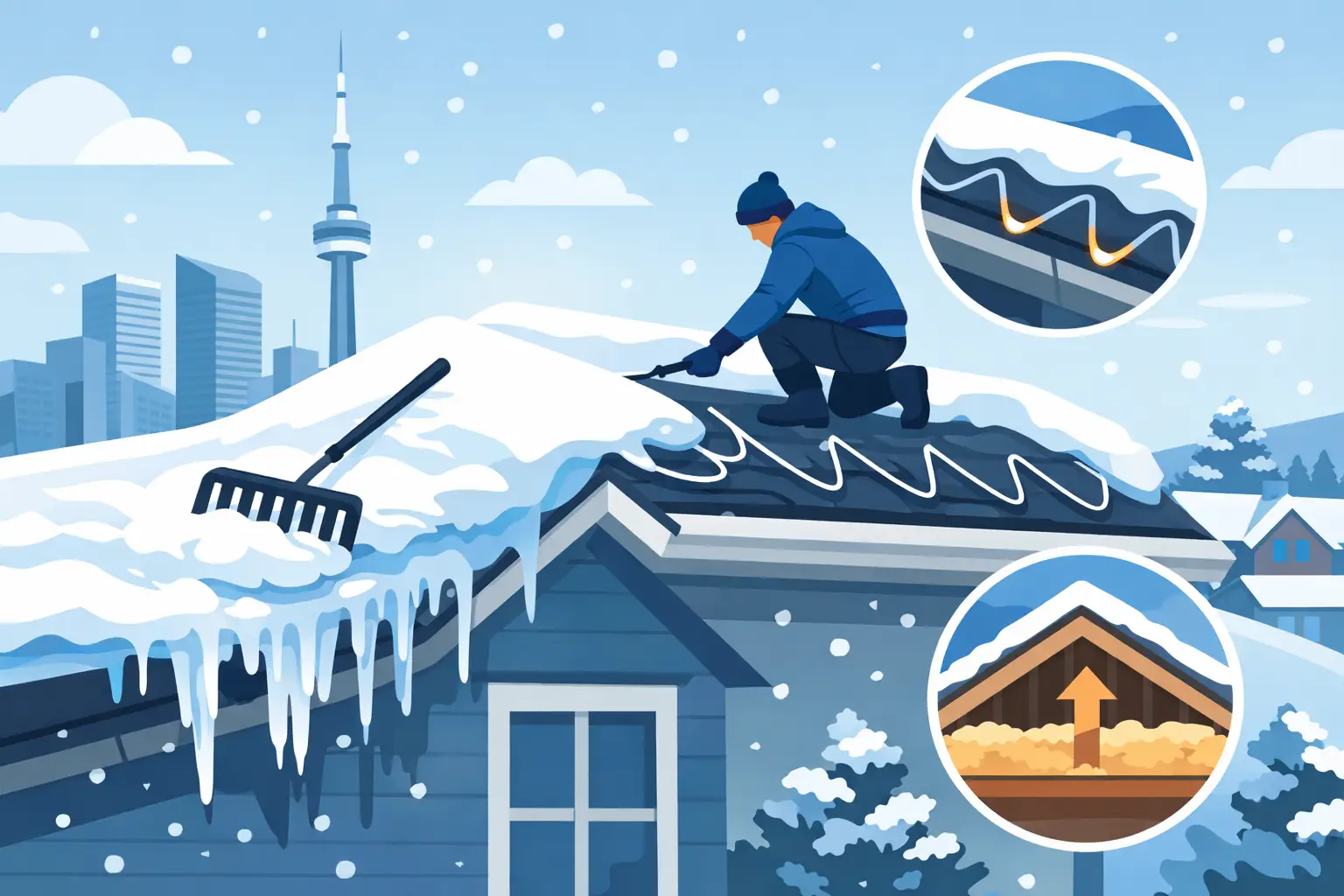
A thick ridge of ice at the eaves may look like a normal winter nuisance, but the water trapped behind it can work its way beneath shingles, into roof decking, and down interior walls. The best ice dam solutions do more than break up visible ice. They address the uneven roof temperatures and drainage problems that cause dams to form in the first place.
For homeowners and property managers, the right response depends on whether the dam is an active emergency or a recurring winter problem. Safe removal can reduce immediate risk. Lasting prevention usually requires a closer look at attic air leaks, insulation, ventilation, roof details, and the condition of the roofing system.
Why Ice Dams Form on Otherwise Good Roofs
An ice dam begins when snow melts on the warmer upper portion of a roof, then refreezes near the colder eaves. The ice ridge blocks drainage. As more snow melts, water pools behind that ridge and can be pushed under shingles by gravity, wind, and freeze-thaw cycles.
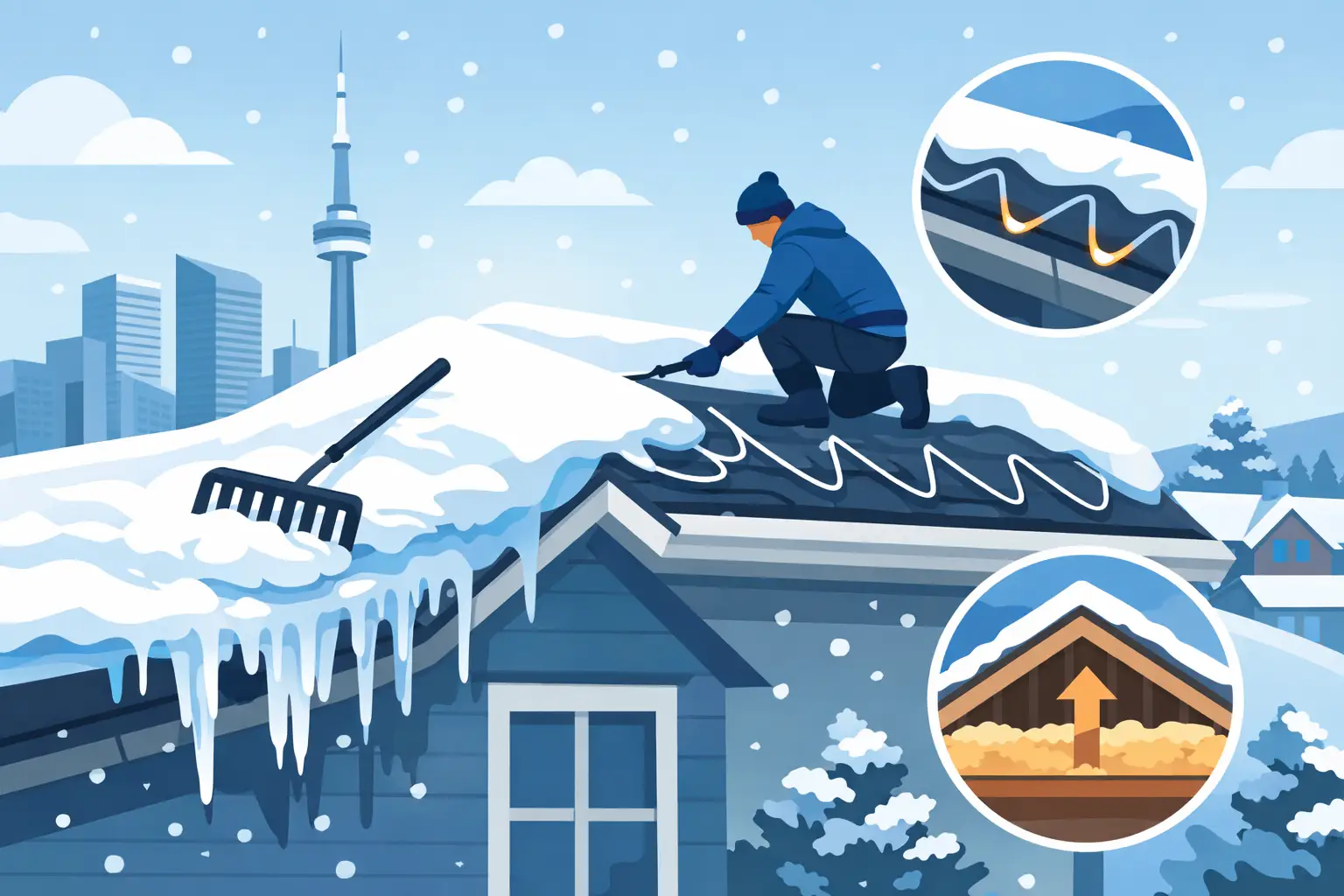
The source of the heat is often inside the building. Warm air escaping through attic-floor gaps, recessed lights, plumbing penetrations, attic hatches, or poorly sealed ductwork can warm the roof deck unevenly. Insulation that is thin, compressed, wet, or poorly distributed makes the problem worse. In some homes, inadequate ventilation prevents the roof assembly from staying consistently cold.
Roof geometry also matters. Valleys, low-slope transitions, skylights, chimneys, dormers, and areas above exterior walls can collect snow or create localized warm spots. A dam at one eave does not automatically mean the entire roof needs replacement, but repeated ice buildup in the same area deserves professional investigation.
Best Ice Dam Solutions for an Active Problem
When water is already backing up under the shingles or appearing indoors, the priority is to limit further damage without damaging the roof or creating a fall hazard.
Remove roof snow carefully
Reducing the snow load above the ice dam can slow the meltwater feeding it. A roof rake used from the ground is often the safest option for a one-story area, provided it has a non-abrasive edge and is used carefully. Leave a thin layer of snow on the roof rather than scraping directly against shingles. Aggressive scraping can tear shingle granules, damage flashing, and shorten the roof’s service life.
For steep, high, icy, or difficult-to-reach roofs, professional snow removal is the safer choice. Walking on a snow-covered roof without proper training, fall protection, and equipment creates unnecessary risk. It can also crack brittle shingles during cold weather.
Use steam removal for severe dams
Professional low-pressure steam removal is one of the safest methods for breaking down a substantial ice dam. Steam cuts channels through the ice so trapped water can drain, without the impact damage associated with hammers, chisels, axes, or metal tools.
This is not a do-it-yourself job. High-temperature equipment, slippery roof surfaces, electrical hazards, and the need to protect shingles and gutters all require experienced technicians. Steam removal treats the immediate ice buildup, but it does not correct the building conditions that allowed the dam to form.
Protect the interior while repairs are arranged
If water has entered the home or building, move belongings away from affected areas and place containers below active drips. Do not ignore a small ceiling stain. Wet insulation, drywall, framing, and electrical components can create a larger repair issue after the snow melts.
A roofing inspection can identify whether water has entered through a lifted shingle, compromised flashing, deteriorated underlayment, or a backup behind the dam. If there is staining, peeling paint, a sagging ceiling, or visible mold, the affected interior area should also be assessed and dried properly.
Long-Term Prevention Starts Below the Roof Deck
The most reliable way to prevent recurring ice dams is to reduce heat loss from the living space into the attic. This is why a roofing solution often overlaps with insulation, ventilation, and building-envelope work.
Air sealing comes before adding insulation
Adding insulation without controlling air leakage can leave the root cause in place. Warm, moist air can still rise into the attic through gaps around pipes, wiring, chimney chases, bathroom fans, and ceiling fixtures. That air warms the roof deck and can contribute to frost, condensation, and wood moisture as well as ice dams.
An attic assessment should identify major bypasses before new insulation is installed. Properly sealed penetrations help keep conditioned air inside the home, improve comfort, and make the insulation perform as intended. Any work near chimneys, electrical fixtures, or mechanical equipment must account for required clearances and fire safety standards.
Improve insulation coverage and consistency
Insulation should be deep enough, dry, and evenly installed across the attic floor. Gaps at exterior walls, uneven coverage around trusses, or insulation displaced by storage traffic can create warm roof areas. Inadequate insulation is especially common around attic hatches and complex roof lines.
The right insulation approach depends on the existing assembly, attic access, ventilation layout, and local energy requirements. More insulation is not automatically better if it blocks soffit ventilation or traps moisture. Baffles and proper detailing are needed to preserve airflow from soffits into the attic where the roof design calls for it.
Make ventilation work with the roof system
Attic ventilation helps remove heat and moisture, but it is not a cure-all. A ventilated attic with major air leaks below it may still produce ice dams. Likewise, adding extra roof vents without a balanced intake path at the soffits may provide limited benefit.
A qualified roofing contractor evaluates the full system: soffit intake, attic pathways, exhaust ventilation, insulation depth, and obstructions. The goal is not to make the attic warm or cold in isolation. It is to keep the roof deck as uniformly cold as practical during winter while managing moisture properly.
Roofing Repairs That Reduce Ice-Dam Damage
Even with improved attic conditions, a roof should be prepared for the water exposure that winter can bring. Shingles, flashings, valleys, and penetrations must shed water effectively when temperatures fluctuate.
A professional repair may include replacing damaged or missing shingles, securing loose flashing, correcting vulnerable valley details, or repairing deteriorated roof decking. During a roof replacement, a self-adhering ice and water barrier at eaves, valleys, and other vulnerable transitions provides a critical secondary layer of protection. It is designed to resist water backup when snow and ice slow normal drainage.
Ice and water barrier is valuable, but it should not be treated as permission to overlook ventilation or insulation defects. It limits leak risk when a dam occurs. It does not stop the dam from forming.
Are Heated Cables One of the Best Ice Dam Solutions?
Heat cables can be useful in specific locations, especially where roof design makes snow and ice buildup difficult to avoid. They are often considered near gutters, valleys, roof-to-wall intersections, and drainage paths. When installed correctly, they create channels that allow meltwater to escape.
Their trade-offs deserve attention. Cables use electricity, need regular inspection, and can fail if installed carelessly or buried under debris. They also do not correct attic heat loss. For a roof with recurring widespread dams, cables are usually a supplemental measure rather than the primary solution.
Installation should be planned around the roof material, electrical capacity, drainage layout, and manufacturer instructions. Improvised cable placement can create concentrated heat, interfere with roof maintenance, or leave homeowners expecting a permanent fix where one does not exist.
When to Call a Roofing Professional
Professional help is warranted when ice dams return every winter, water is entering the building, shingles are lifting, gutters are pulling away, or the attic shows frost or moisture staining. These symptoms can point to more than a surface ice problem.
Toronto Roofers approaches ice-dam concerns as a roof-system issue, not just an ice-removal task. A detailed on-site assessment can identify visible roof defects and the conditions that may be contributing to uneven roof temperatures. Trained installers can then recommend practical repair, maintenance, or replacement work based on the building’s actual needs.
Avoid contractors who promise that one product alone will eliminate every ice dam. The right solution varies by roof design, insulation levels, ventilation, sun exposure, and the severity of local winter weather. Clear scope, safe work practices, and workmanship accountability matter when the repair affects both the roof and the building below it.
A small ice ridge can become expensive when it is allowed to trap water through several freeze-thaw cycles. Address it safely now, then use the warmer months to correct the conditions that made it possible.