
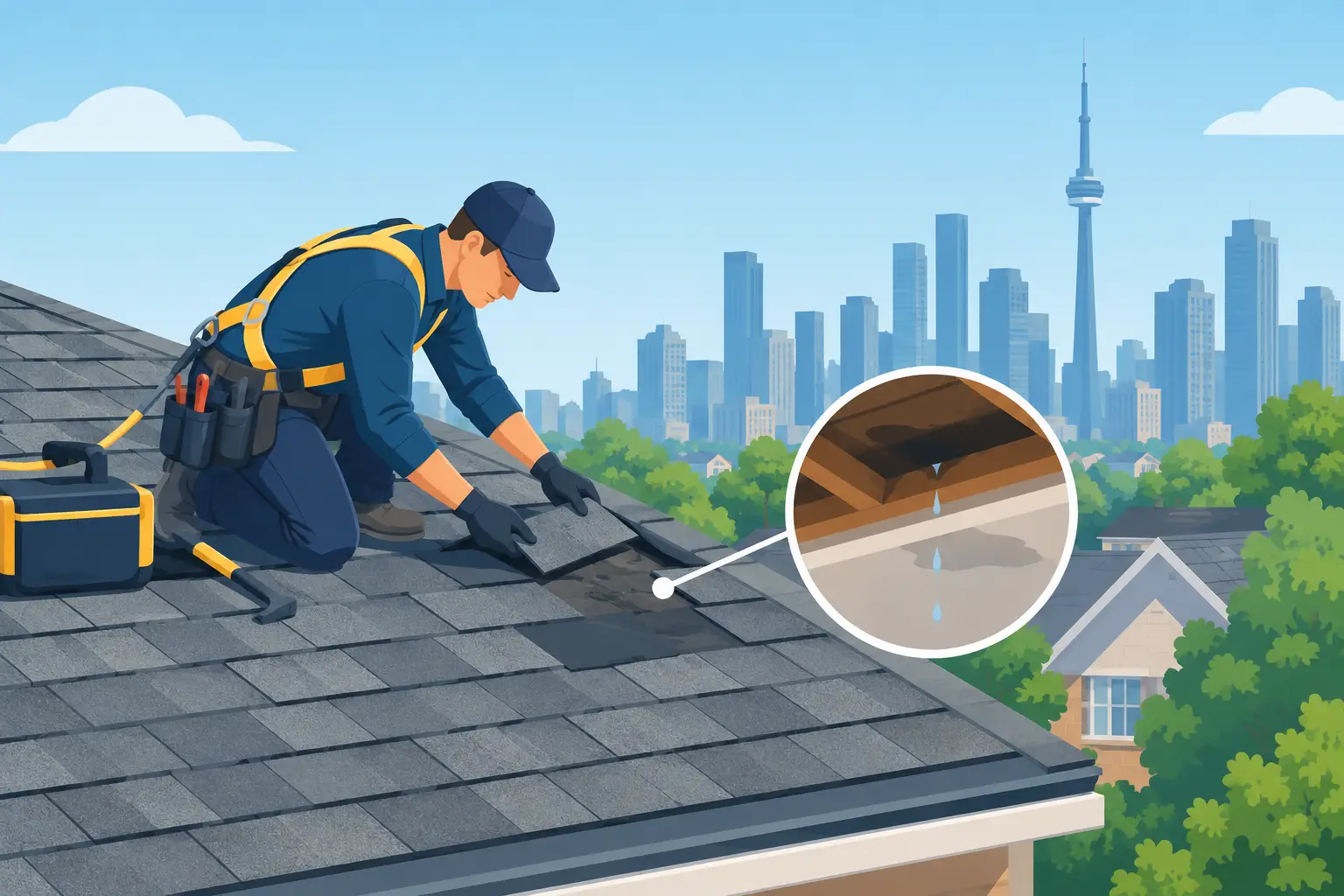
A ceiling stain rarely identifies the real source of a roof leak. Water can enter near a vent, travel along decking or framing, and show up several feet away inside the home. This North York roof repair example shows why a proper inspection matters more than applying sealant where the stain appears.
The situation is representative of the calls homeowners make after a heavy rain: a small water mark appeared on an upstairs ceiling near an exterior wall. The roof was not at the end of its expected service life, but the leak needed prompt attention. Waiting through another storm could have damaged insulation, decking, drywall, and interior finishes.
The Initial Roof Inspection
The property had an asphalt shingle roof with a plumbing vent and a small roof-to-wall transition above the affected room. From ground level, the shingles looked generally intact. That is common. Many active leaks are caused by failed details rather than obvious missing shingles.
A trained roofing crew begins with safe access and a focused inspection of likely entry points. The review should include shingles, flashings, pipe boots, valleys, wall intersections, fasteners, sealant conditions, and drainage patterns. Interior observations also matter. The location, size, and condition of the ceiling stain can help narrow the investigation, but it should not be treated as proof of the leak location.
In this case, the roof inspection found two connected problems. The rubber collar around the plumbing vent had cracked from age and temperature exposure. Nearby shingles had also been lifted and improperly sealed during an earlier repair. Wind-driven rain could pass beneath the shingle edge, reach the deteriorated vent flashing, and enter the roof assembly.
This is a good example of why a quick surface patch can fail. If the crew sealed only the visible crack, the loose shingles and compromised water-shedding pattern would remain. Roof repairs must restore the system, not just cover the symptom.
North York Roof Repair Example: What Was Repaired
The repair area was opened carefully to avoid disturbing more shingles than necessary. The crew removed the affected shingles around the vent, inspected the exposed roof deck, and checked for soft or deteriorated wood. Fortunately, the decking was dry and structurally sound. That kept the scope limited to the roofing materials and flashing components.
The failed vent boot was removed and replaced with a properly sized flashing assembly. New underlayment protection was installed where needed, followed by replacement shingles integrated into the existing roof pattern. Each shingle course was aligned and fastened according to manufacturer requirements so water would shed correctly toward the eaves.
Matching replacement shingles can be a consideration on an existing roof. Color, granule texture, and weathering may differ, particularly on older installations. A qualified contractor should explain that a repair can be watertight and correctly installed even when an exact visual match is no longer available. For a localized leak with otherwise serviceable roofing, repair is usually the practical choice. If repeated leaks, broad shingle failure, or widespread granule loss are present, replacement may provide better long-term value.
The crew also checked adjacent details, including the nearby wall flashing and the condition of the surrounding shingle field. This step helps prevent a homeowner from paying for a repair that addresses only one weak point while another is about to fail.
Why the Leak Was Not a Simple Caulking Job
Caulking has a place in roofing when it is used as a supplemental seal at the correct detail. It is not a substitute for sound flashing, intact underlayment, correct shingle overlap, or properly driven fasteners. Heavy use of exposed sealant can hide underlying installation errors and may crack as it ages.
A lasting repair depends on directing water over and away from vulnerable areas. Around plumbing vents, that means the flashing must sit in the right position within the shingle courses. At walls, chimneys, skylights, and valleys, the same principle applies: flashing and roofing materials need to work together in layers.
For property managers, this distinction is especially valuable. A low-cost patch may seem attractive during a maintenance cycle, but recurring interior leaks can lead to tenant disruption, mold concerns, insulation replacement, and higher repair costs. Clear findings, a detailed estimate, and documented repair scope support better property decisions.
Safety, Workmanship, and Accountability Matter
Roof repairs can look small from the ground, but the work carries real risks. Safe access, fall protection, weather awareness, and careful handling of roofing materials are part of a professional job. Crews should follow Working at Heights requirements and use established procedures rather than rushing through a repair because the affected area is limited.
Workmanship also affects whether a repair lasts. Incorrect nail placement, damaged shingle edges, insufficient overlap, or flashing installed over instead of beneath the wrong course can create another leak path. These details are not always visible once the work is complete, which is why homeowners should choose a contractor with trained installers and direct project oversight.
Toronto Roofers approaches roof repair with in-house roofing specialists, owner-led accountability, and formal training standards. Certified workmanship and a detailed on-site assessment give clients a clearer picture of what failed, what must be repaired, and whether a larger issue is developing.
When a Repair Is Enough and When Replacement Makes Sense
Not every roof leak means the roof needs replacement. In this North York example, the affected area was localized, the deck was sound, and the surrounding shingles remained in usable condition. A targeted repair was appropriate.
Replacement becomes worth discussing when damage is widespread or when the roof is nearing the end of its service life. Frequent leaks in different locations, curling or brittle shingles, large areas of granule loss, failed flashings throughout the roof, and recurring ice-dam damage can signal that isolated repairs are no longer cost-effective.
The right recommendation depends on the roof’s age, slope, materials, ventilation, prior repair history, and the condition of the deck beneath the shingles. A professional contractor should not force every problem into a replacement proposal. The goal is to protect the building with the repair or roofing system that fits its actual condition.
What Homeowners Should Do After Seeing a Ceiling Stain
Act quickly, but do not climb onto a wet or damaged roof. Photograph the interior stain, move valuables away from the area, and place a container below an active drip if necessary. If water is pooling in a ceiling bulge, keep clear of the area and contact a qualified professional promptly.
It is also helpful to note when the leak occurs. Does it appear after wind-driven rain, melting snow, or only during a prolonged storm? Does it occur near a bathroom vent, chimney, skylight, or exterior wall? These details can help guide the inspection, although they should never replace a full assessment of the roof system.
A small leak is the time to request a detailed roof evaluation, not the time to assume it will dry out on its own. The right repair protects more than shingles. It protects the deck, insulation, interior finishes, and long-term value of the property.