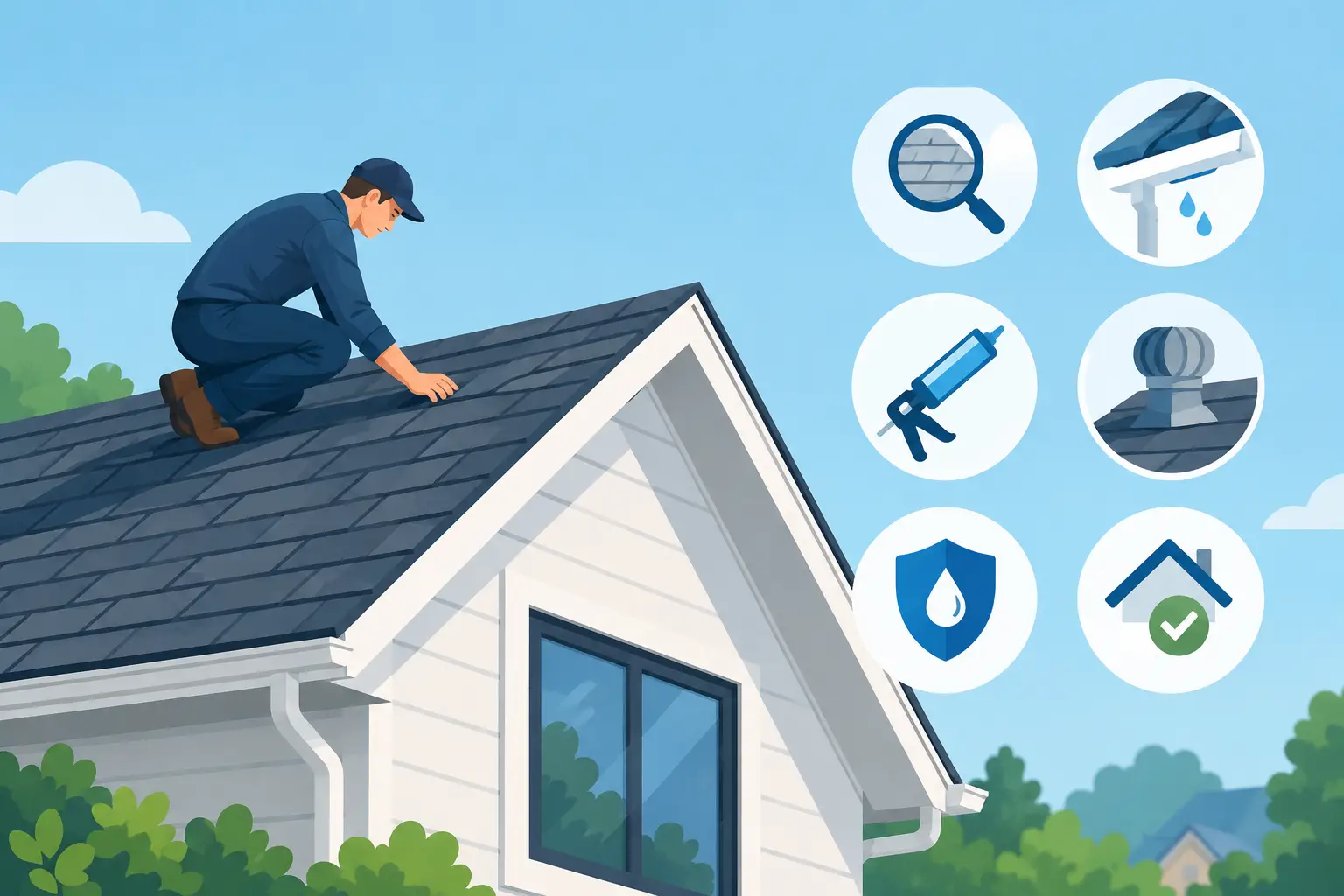
A commercial roof can look sound from the ground while water is already moving beneath the membrane, around a drain, or into insulation. That is why commercial roofing is not simply a matter of installing material across a large surface. It is a building-protection system that must manage weather, drainage, foot traffic, equipment, and the long-term condition of the property beneath it.
For property owners and managers, the right roofing decision protects more than the roof deck. It helps preserve tenant spaces, inventory, electrical systems, finishes, and business continuity. The wrong decision can turn a manageable repair into recurring leaks, interior damage, emergency calls, and an early replacement.
What Commercial Roofing Must Do
A commercial roof has a different job than most residential roof systems. Many commercial buildings use low-slope or flat roof assemblies, where water management depends on properly designed drainage, tapered insulation, secure flashing, and carefully installed seams. Small installation errors can have consequences because water does not shed as quickly as it does from a steeply sloped roof.
The roof must also work around penetrations. HVAC units, vents, pipes, drains, skylights, rooftop access points, and mechanical curbs all interrupt the roof surface. Each one requires compatible flashing details and careful workmanship. A membrane may be high quality, but it cannot perform as intended if the transitions around those details are poorly handled.
Commercial properties also place different demands on a roof. Service technicians may walk across it to access equipment. Snow can accumulate around curbs and parapet walls. Ponding water can accelerate deterioration where drainage is inadequate. In Toronto, freeze-thaw cycles and seasonal storms add pressure to seams, flashings, drains, and exposed edges.
That is why the best commercial roofing work begins with an assessment, not a material recommendation. A qualified contractor should examine the existing roof assembly, drainage paths, visible damage, insulation condition, penetrations, rooftop equipment, and realistic remaining service life.
Repair, Restoration, or Replacement?
A roof leak does not automatically mean the entire roof needs replacement. In many cases, a targeted repair is the responsible solution. Damaged flashing, an open seam, punctured membrane, cracked sealant, or a drain issue may be repaired before water reaches the interior of the building.
The decision changes when problems are widespread or when moisture has moved into the insulation and roof deck. Repeated leaks in different areas, extensive membrane deterioration, failing seams, chronic ponding, or a roof near the end of its expected service life may point to restoration or replacement instead. Covering a failing system with frequent patchwork can become more expensive than addressing the underlying condition.
A professional recommendation should explain the reason for the scope of work. Property owners deserve to know whether the issue is isolated, whether concealed moisture is suspected, and what will happen if the repair is deferred. Detailed estimates matter because they make the contractor accountable for the work proposed.
There is no one answer for every building. A newer roof with localized damage may only need a precise repair. An aging roof with multiple weak points may require a planned replacement that prevents disruption and protects the building for the years ahead.
Signs That Should Prompt an Inspection
Waiting for active interior leaks is rarely the best approach. Water can travel through roof layers before it becomes visible inside, and by that point the damage may be more extensive. Arrange an inspection when you see recurring stains, blistering or cracking on the roof surface, loose edge metal, deteriorated flashing, standing water after dry weather, or unexplained increases in maintenance calls.
It is also wise to inspect the roof after severe wind, heavy snowfall, or work performed by other trades. Mechanical servicing, antenna installation, and equipment replacement can damage a membrane or disturb flashing if the roof is not protected properly.
Choosing a Commercial Roofing System
The best system depends on the building, the roof slope, drainage design, budget, traffic levels, and performance expectations. Material selection should follow a site evaluation rather than a generic preference.
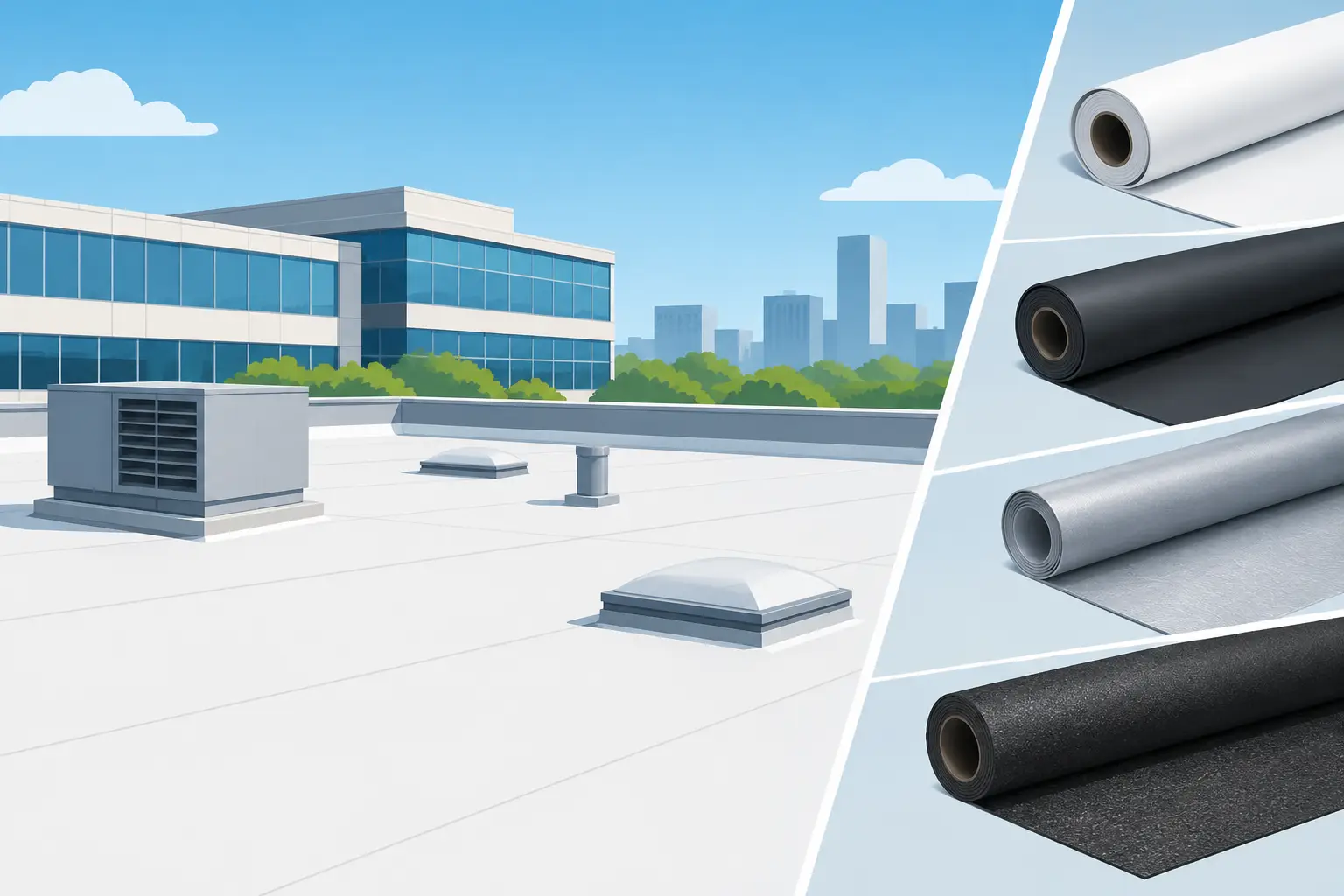
Single-ply membrane systems are commonly selected for low-slope commercial buildings because they can provide broad, continuous coverage when installed correctly. Modified bitumen systems can be a practical choice where multi-layer protection and proven detailing are priorities. Coatings or restoration systems may extend the life of an eligible roof, but only when the existing substrate is dry, sound, and properly prepared.
The material is only part of the decision. Insulation affects energy performance and slope-to-drain. Flashing protects transitions at walls and penetrations. Edge metal resists wind forces. Drainage components must be clear, secure, and appropriate for the roof layout. Every layer needs to work together.
A lower initial price can be attractive, particularly when a building has other capital needs. However, comparing estimates only by total cost can hide important differences in membrane thickness, insulation scope, flashing details, tear-off requirements, warranty coverage, safety measures, and cleanup. A clear scope gives decision-makers a fair basis for comparison.
Drainage Is a Roofing Priority
Ponding water is one of the most common warnings on a low-slope roof. While a brief period of standing water after rainfall may occur, water that remains for extended periods deserves attention. It can increase stress on seams, encourage debris buildup, block drains, and expose weaknesses that may not be visible during dry conditions.
Correcting drainage may involve cleaning and repairing drains, adjusting roof geometry, installing tapered insulation, or addressing areas where the roof has settled. The appropriate solution depends on why the water is collecting. Simply applying more patch material around a low area does not correct the slope or restore proper water flow.
During an on-site consultation, drainage should be part of the conversation. A contractor who evaluates water movement is looking beyond the immediate symptom and toward the condition of the complete roof system.
Installation Quality Determines Performance
Commercial roofs rely on exact workmanship. Seams must be welded, adhered, or sealed according to the manufacturer’s requirements. Flashings must accommodate movement and be properly terminated. Materials need correct adhesion and fastening patterns. Details around drains, corners, and equipment curbs require particular attention because those areas are frequent sources of leaks.
The crew matters as much as the product. Trained installers, direct supervision, formal safety practices, and owner-led accountability help keep work consistent from the initial inspection through final cleanup. Roofing crews should also follow Working at Heights requirements and protect the site, occupants, and other trades while the project is underway.
Manufacturer warranties can add valuable protection, but they do not replace proper installation. Many warranties depend on approved materials, correct application methods, and documented workmanship. Ask what warranty is available, what it covers, and what maintenance obligations apply after installation.
Maintenance Extends the Service Life
Commercial roof maintenance is a practical investment, not an unnecessary add-on. Routine inspections help identify loose flashing, sealant failures, debris-clogged drains, surface damage, and early seam concerns before they grow into interior leaks.
The right schedule depends on the roof type, building use, age, nearby trees, rooftop equipment, and weather exposure. Many properties benefit from seasonal inspections and an additional review after major storms. Buildings with frequent rooftop traffic or complex mechanical equipment may need closer attention.
Maintenance records are useful for more than repairs. They create a history of roof condition, help plan future capital work, and demonstrate responsible property management when warranty questions arise. For multi-tenant or operational facilities, planned maintenance also allows work to be scheduled with less disruption than an emergency response.
What to Expect From a Qualified Contractor
A commercial roofing contractor should provide a site-specific evaluation and a detailed estimate that defines the work clearly. The proposal should identify the roof areas involved, recommended materials, repair or replacement scope, flashing and drainage considerations, safety procedures, and warranty information.
Communication is equally important. Property managers need to understand scheduling, access requirements, noise considerations, protection for entrances and landscaping, and how rooftop equipment will be handled. Reliable contractors address those practical details before work begins, not after a problem develops.
Toronto Roofers approaches commercial projects with trained in-house crews, direct oversight, and a focus on certified workmanship. The goal is not to sell more work than a roof needs. It is to provide a clear recommendation that protects the property and gives the owner confidence in the next step.
A commercial roof should not be managed only when it fails. A timely inspection and an honest assessment can turn uncertainty into a plan – whether that plan is a focused repair, scheduled maintenance, or a properly specified replacement.