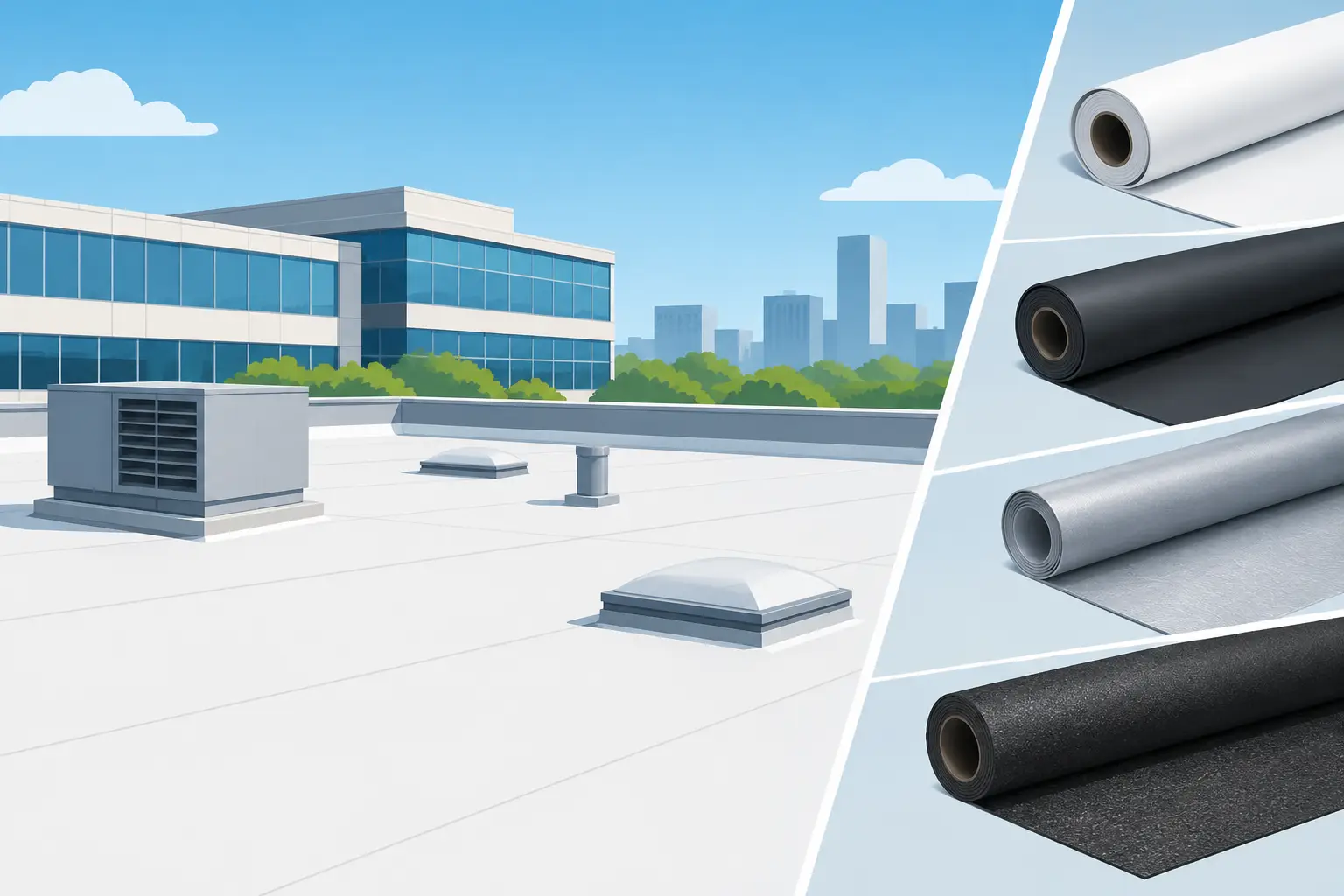
A flat roof can look sound from the ground while water is already moving beneath its surface. Can flat roofs leak? Yes. Like any roofing system, a flat roof can leak when its membrane, flashing, drainage, or details are compromised. The good news is that a well-designed, professionally installed, and regularly maintained flat roof can provide dependable long-term protection.
For homeowners, property managers, and commercial building owners, the concern is not simply whether a leak is possible. The real question is whether early signs are being caught before moisture reaches insulation, decking, interior finishes, or electrical systems.
Why Can Flat Roofs Leak?
Despite the name, flat roofs are not truly flat. They should be built with a slight slope that directs water toward drains, scuppers, gutters, or edge details. When that drainage plan is inadequate, or when a roof surface settles over time, water may remain on the membrane longer than intended.
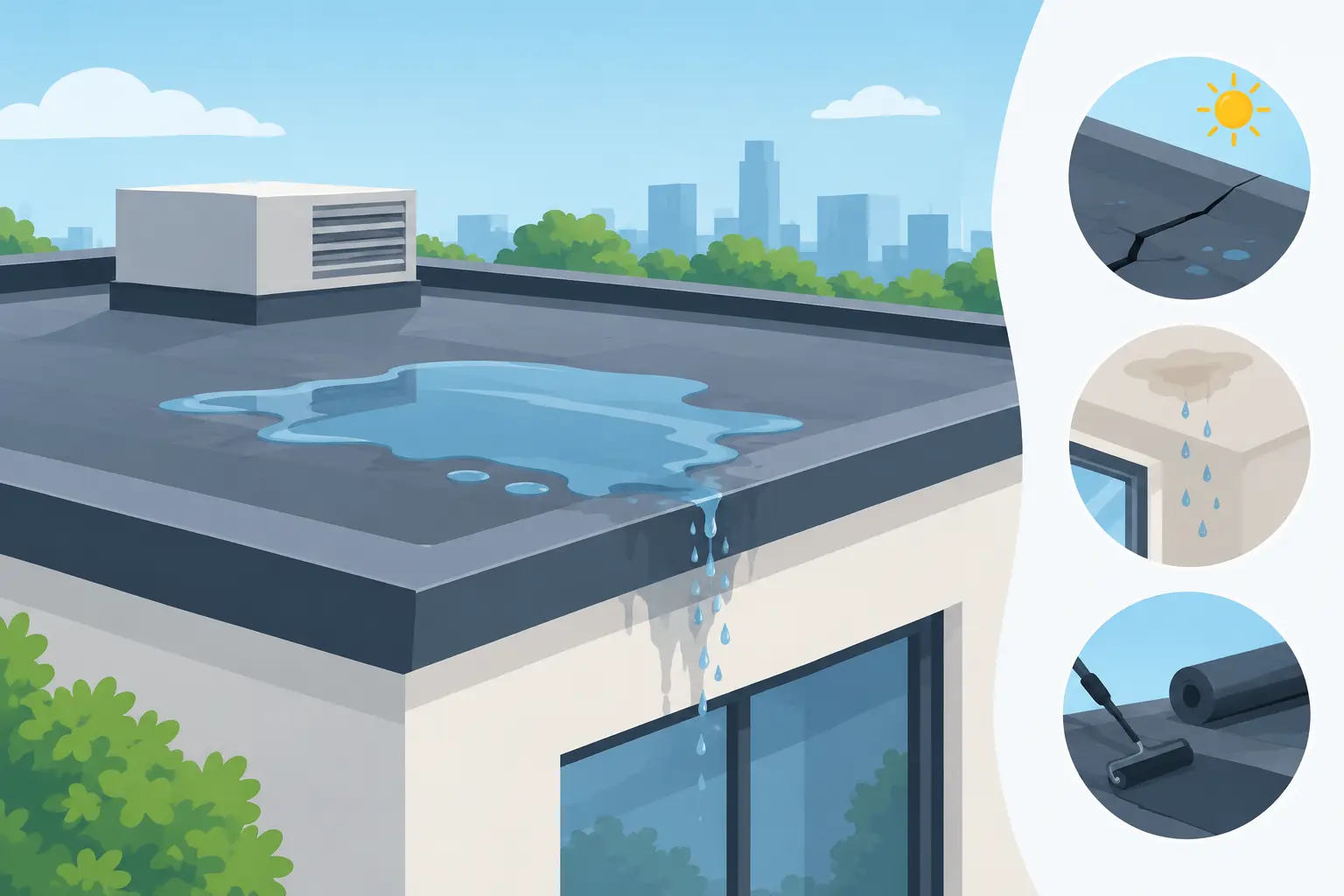
Standing water does not automatically mean a roof is leaking. However, persistent ponding places additional stress on seams, penetrations, and aging materials. In Toronto, repeated freeze-thaw cycles can make that stress more serious. Water that enters a small opening can freeze, expand, and gradually widen the vulnerable area.
Leaks also develop because flat roofing systems have more than one line of defense. The field membrane matters, but so do the seams, perimeter edges, wall transitions, drains, vents, HVAC curbs, skylights, and pipe penetrations. A roof may have a sound membrane across most of its area but still leak at one improperly sealed detail.
The Most Common Flat Roof Leak Causes
Aging is a common cause, especially when a roof has reached or exceeded its expected service life. Asphalt-based systems can crack, blister, or lose protective surfacing. Single-ply membranes may shrink, puncture, or develop weakened seams. No roofing material lasts forever, and deferred maintenance often turns manageable wear into a larger repair issue.
Installation quality is equally important. Incorrect seam welding, poor adhesion, insufficient flashing height, loose edge metal, or improper drainage slopes can cause trouble long before the material itself should fail. This is why credentials, product-specific training, and direct on-site oversight matter when selecting a roofing contractor.
Physical damage is another frequent issue. Foot traffic from maintenance crews, unsecured equipment, falling branches, or sharp debris can puncture a membrane. Commercial roofs are particularly exposed because technicians may need regular access to HVAC equipment. A designated walkway system can help protect high-traffic areas.
Clogged drains and gutters create avoidable risk. Leaves, sediment, tennis balls, and windblown debris can block outlets and allow water to back up. During a heavy storm, a drainage blockage can turn a minor roofing weakness into an active interior leak.
Flashing Failures and Roof Penetrations
Many flat roof leaks begin at transitions rather than in the open roof field. Flashing is the material used to seal vulnerable intersections, including where the roof meets a wall, chimney, parapet, vent, or mechanical unit.
These areas move differently as temperatures change. Sealants can dry out, metal can shift, and membrane flashing can separate. A repair that only coats the visible opening may not address the source of the problem if water has traveled beneath the roof surface.
Warning Signs You Should Not Ignore
Water stains on a ceiling are an obvious warning, but they are often not directly below the leak. Water can travel along roof decking, insulation, framing, conduit, or interior walls before becoming visible. By the time a stain appears, the affected area may be larger than expected.
Watch for bubbling paint, peeling wall finishes, damp insulation, musty odors, mold growth, or discoloration around ceiling fixtures. On the roof itself, warning signs include split seams, cracked coatings, open flashing, soft spots, membrane blisters, exposed fasteners, and water that remains for more than 48 hours after dry weather.
For commercial properties, unexplained moisture near rooftop equipment deserves prompt attention. For residential additions, garages, low-slope sections, and porches, look closely where the flat roof joins the main building. Those connection points require careful flashing and are common locations for water entry.
Why Finding the Leak Is Not Always Simple
Flat roof leak detection requires more than locating the nearest wet spot. A professional inspection considers the roof material, slope, drainage pattern, seams, penetrations, previous repairs, and the condition of insulation and decking.
Water may enter through an opening near a drain and appear inside several feet away. It may also be caused by condensation, plumbing, masonry, or an exterior wall detail rather than the roofing membrane. Assuming every interior water stain is a roof leak can lead to the wrong repair.
An experienced roofer may use visual inspection, moisture investigation, seam testing, and targeted water testing when appropriate. The goal is to identify the actual point of failure and determine whether the surrounding roof system has been affected. This protects the owner from paying for repeated patchwork that never solves the underlying issue.
Repair or Replacement: Which Is the Right Choice?
A localized repair can be a cost-effective solution when the roof is relatively young, the membrane remains in good condition, and the damage is isolated. Re-sealing a penetration, repairing a split seam, replacing damaged flashing, or correcting a small puncture can extend the useful life of the roof.
Replacement becomes the better long-term decision when leaks are recurring, repairs are spread across multiple areas, insulation is saturated, drainage is poor, or the roofing system is near the end of its service life. Installing another layer over an existing roof can sometimes be considered, but it depends on local code requirements, roof structure, existing moisture, and the condition of the current assembly.
The lowest immediate repair price is not always the lowest ownership cost. A small patch may be appropriate for isolated damage. On a roof with widespread deterioration, however, repeated service calls can add up while water continues to threaten the building below.
A detailed estimate should explain the observed issue, recommended scope of work, material options, and any conditions that affect the recommendation. Property owners should be wary of vague proposals that promise to “seal the roof” without identifying where and why water is entering.
How to Reduce the Risk of Flat Roof Leaks
Regular maintenance gives owners the best opportunity to catch minor problems early. Most flat roofs benefit from inspection at least twice a year, typically in spring and fall, and after severe storms or high-wind events.
A practical maintenance visit should include clearing drains and gutters, removing debris, examining seams and flashings, checking roof edges, and looking for damage around mechanical equipment. Trees near the building should also be monitored. Branches can scrape roofing surfaces, while leaves can quickly clog drainage points.
Avoid allowing untrained personnel to walk on the roof or apply store-bought coatings over an active leak. Roof coatings and sealants can have a place in a properly specified repair or restoration plan, but they are not universal solutions. Applying incompatible material can trap moisture, interfere with future repairs, or void manufacturer coverage.
Workmanship Makes the Difference
Flat roofing is detail-driven work. The visible roof surface is only part of the system. Proper substrate preparation, compatible materials, correctly formed seams, secure edge details, drainage planning, and safe installation practices all affect how the roof performs over time.
For buildings in Toronto and the surrounding area, winter weather makes competent installation and maintenance especially valuable. A contractor should be able to explain the recommended system, the condition of the existing roof, and what the work will and will not address. Clear communication is as important as the repair itself when protecting a major property investment.
If you notice water stains, recurring ponding, or loose roof details, arrange an inspection before the next major storm. Early assessment can often preserve more of the existing roof and prevent a small entry point from becoming a costly interior repair.