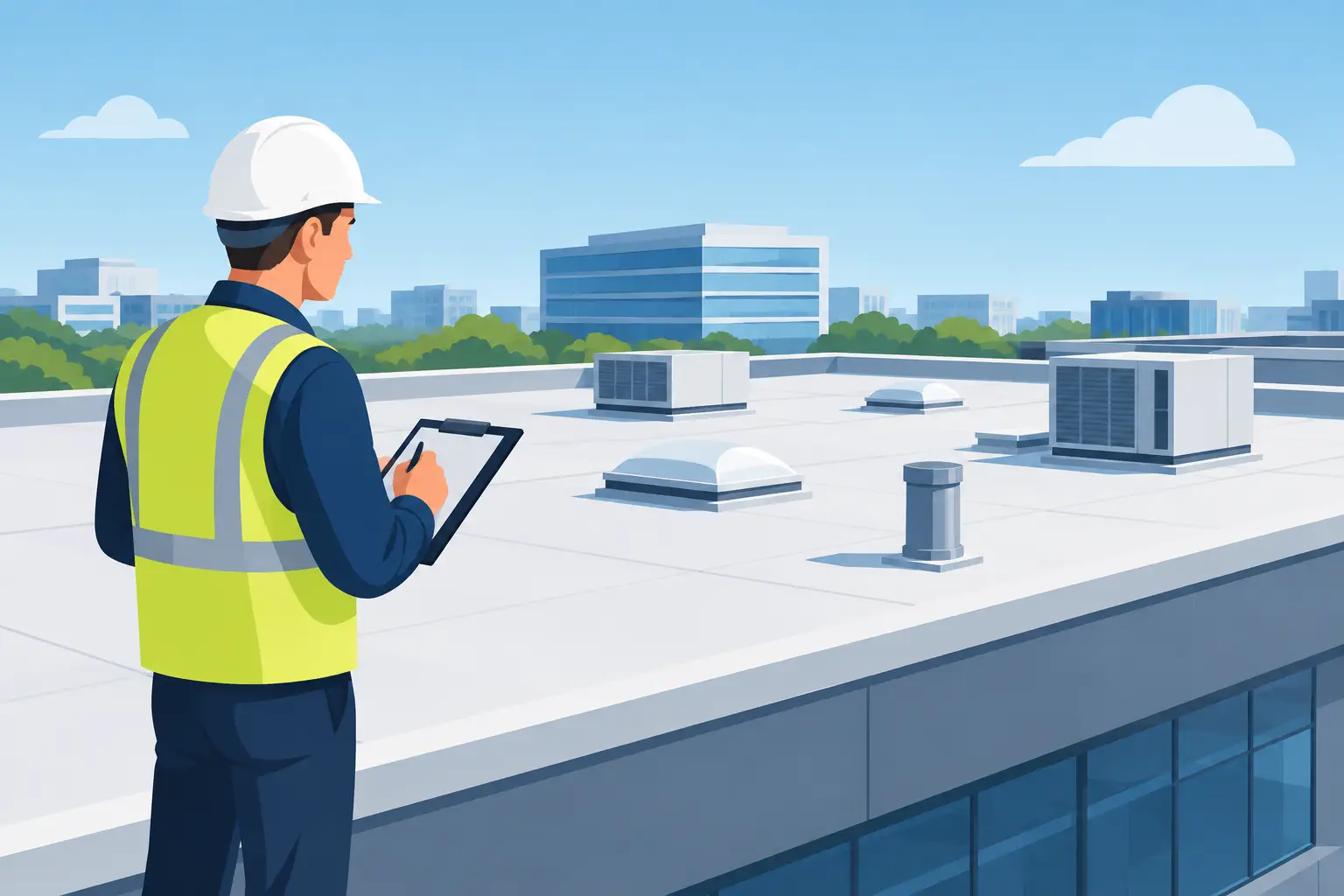
A commercial roof rarely fails without warning. Small membrane splits, loose flashings, blocked drains, and failing sealant can develop quietly long before water reaches an occupied space. When you schedule commercial roof inspections on a consistent basis, you give your maintenance team time to address those early conditions before they become emergency repairs, tenant complaints, or damage to equipment and inventory.
For property managers and building owners, inspection timing should be part of a written maintenance plan, not a reaction to a visible leak. The right schedule depends on your roof type, building use, age, drainage design, and exposure to weather. In Toronto and surrounding areas, freeze-thaw cycles, wind, snow load, and heavy rainfall make regular oversight especially valuable.
How Often Should You Schedule Commercial Roof Inspections?
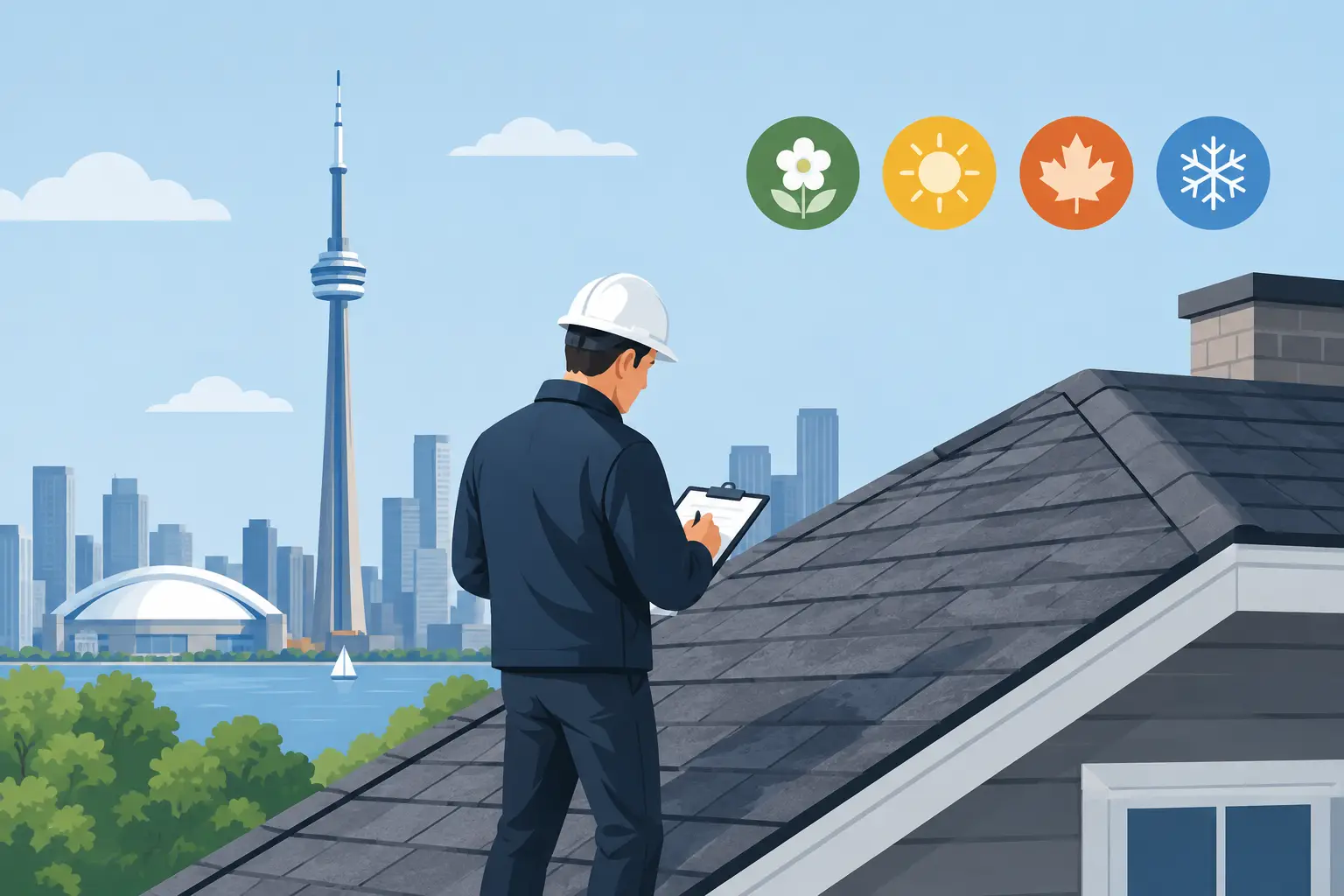
Most commercial properties should receive a professional roof inspection at least twice each year: once in the spring and once in the fall. Spring inspections identify damage caused by snow, ice, winter wind, and repeated freezing and thawing. Fall inspections prepare the system for colder weather by confirming drains are clear, flashings are secure, and repairs are completed before winter conditions make roofing work more difficult.
Twice-yearly service is a reliable starting point, but some buildings need more attention. A roof nearing the end of its service life, a property with frequent rooftop traffic, or a building surrounded by trees may benefit from quarterly inspections. Facilities with sensitive operations, such as restaurants, medical offices, warehouses, and data or communications equipment, should not wait for a leak to justify a visit. The cost of an interruption can exceed the cost of preventive repairs many times over.
You should also arrange an inspection after a significant weather event. Strong winds can lift membrane edges and loosen metal coping. Heavy rain can expose drainage problems. Ice accumulation can stress flashings and create ponding areas that remain hidden until temperatures rise. A quick post-storm assessment documents conditions and helps prevent a small defect from spreading.
What a Qualified Commercial Roof Inspection Should Cover
A meaningful inspection is more than a contractor walking the roof and taking a few photos. It should be a systematic review of the complete roof assembly and the components that move water off the building.
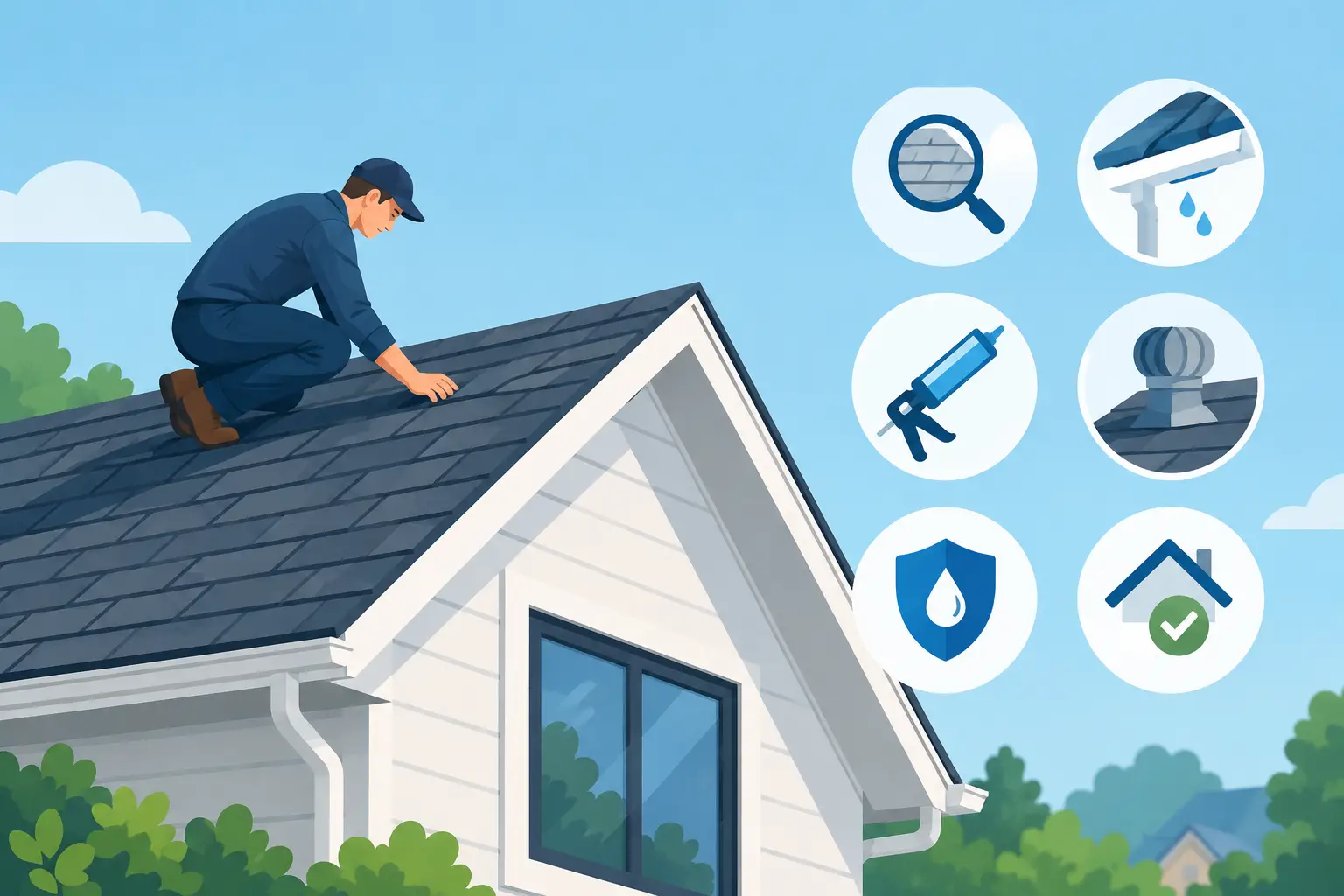
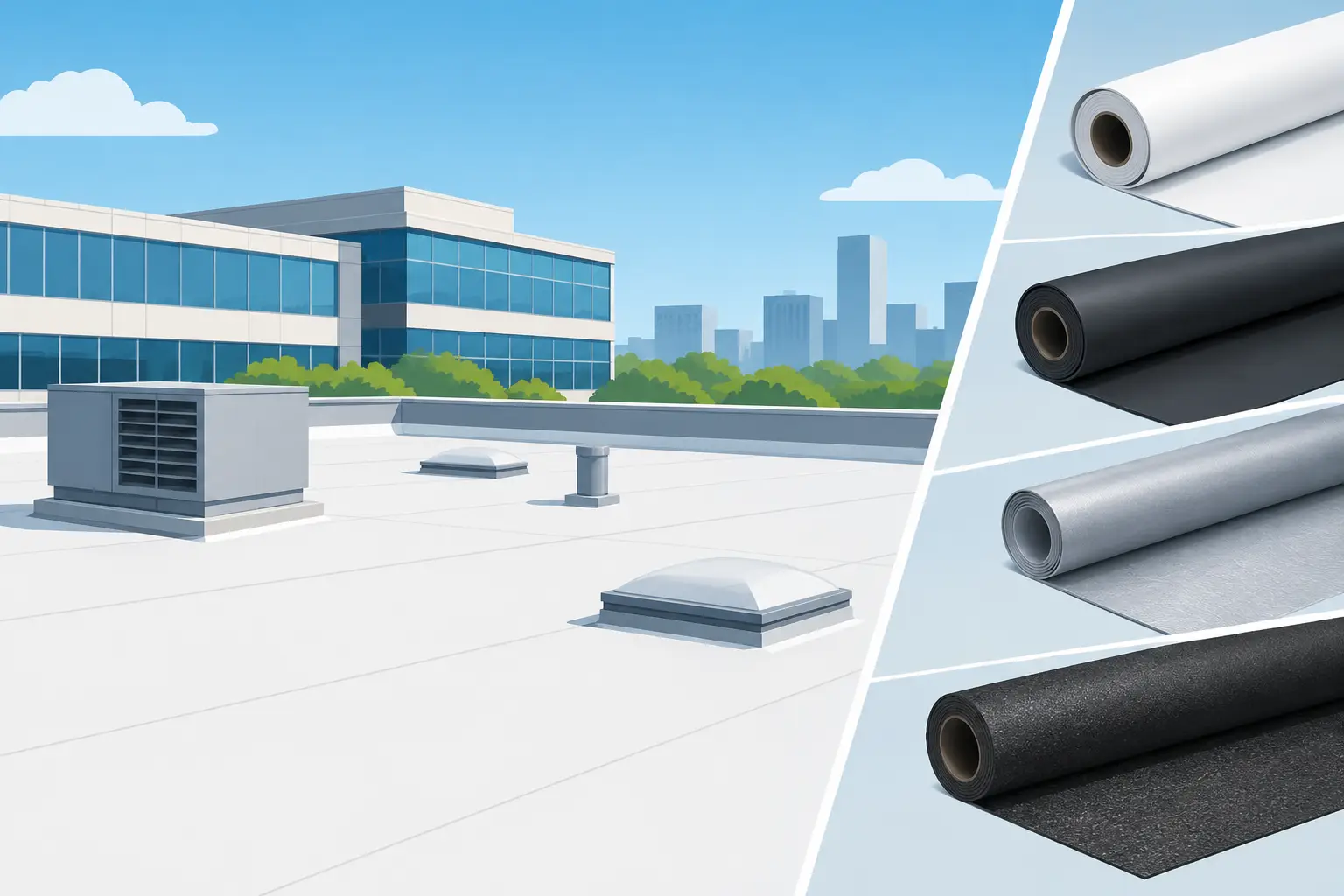
The inspection begins with the field of the roof. On low-slope systems, this includes checking for punctures, open seams, cracking, blistering, worn coatings, exposed reinforcement, and areas of standing water. On sloped commercial roofs, the contractor looks for damaged shingles, missing fasteners, deteriorated underlayment indicators, and problems at valleys or transitions.
Flashings require close attention because they are common leak points. A trained roofing professional examines flashings at parapet walls, curbs, vents, skylights, drains, expansion joints, rooftop equipment, and transitions between materials. Sealant may look intact from ground level but be separated, brittle, or improperly bonded at the roof surface.
Drainage is another essential part of the assessment. Clogged drains, scuppers, gutters, and downspouts can allow water to back up on the roof. Ponding water adds weight, accelerates material deterioration, and can reveal slope or structural concerns. The inspection should identify where debris collects and whether water has a clear path away from the roof.
A professional report should provide photographs, observations, recommended repairs, and clear priorities. Not every issue requires immediate replacement. An honest contractor separates urgent conditions from items to monitor and from planned maintenance work. That distinction helps property owners make responsible decisions without ignoring genuine risk.
Signs You Should Not Wait for Your Next Inspection
Routine scheduling is the foundation, but visible warning signs call for prompt action. Interior ceiling stains, musty odors, peeling paint, wet insulation, or unexplained humidity can point to a roof leak even when water is not actively dripping. Leaks can travel through insulation, deck seams, and wall assemblies, so the location of the interior stain is not always directly below the exterior problem.
Outside, watch for loose or displaced roof materials, water that remains on the roof more than 48 hours after rain, blocked drains, damaged metal edging, or debris around HVAC curbs. Maintenance staff should report these conditions rather than attempting temporary repairs with incompatible materials. Improper patching can void manufacturer coverage and make the original issue harder to diagnose.
Roof access also creates risk. Service technicians, satellite installers, and other trades can puncture membranes, disturb flashings, or leave discarded fasteners behind. If multiple contractors use the roof, a brief inspection after major rooftop work is a practical safeguard.
Build Inspections Into Your Maintenance Calendar
The best inspection program is easy to follow. Set spring and fall appointments well in advance, then add weather-event inspections and follow-up visits when repairs are completed. Keep the roof report, repair records, photos, warranty documents, and invoices in one property file. This record creates accountability and gives future contractors a clearer view of the roof’s condition.
It also helps to designate one person at the property who can provide access, share known concerns, and receive the inspection report. For multi-tenant buildings, that contact can collect information about interior leaks or recurring issues before the contractor arrives. Clear communication makes the inspection more efficient and reduces the chance that a localized problem is missed.
Budgeting matters as well. A written inspection report allows owners to plan repairs before conditions become urgent. Rather than being forced into an unplanned replacement during poor weather, you can prioritize maintenance, set aside capital funds, and make decisions based on the remaining performance of the existing roof system.
Why Contractor Qualifications Matter
Commercial roof systems are technical assemblies. A repair that works on one membrane may damage another, and the wrong fastener, adhesive, or sealant can create a larger problem. Choose a contractor with trained installers, working-at-heights safety compliance, experience with commercial roof details, and a clear process for documenting findings.
Ask who will perform the inspection, how the roof will be assessed, and what you will receive afterward. Detailed estimates and on-site consultation are signs that the contractor is evaluating the actual building instead of offering a generic solution. Direct oversight matters when repairs involve active leaks, occupied spaces, or warranty-sensitive materials.
Toronto Roofers approaches commercial roofing with in-house accountability, trained crews, and practical recommendations based on the condition of the roof. Whether the next step is a minor repair, maintenance work, or long-term replacement planning, a proper inspection gives you the information needed to protect the building.
Do not wait for a ceiling stain to set your maintenance schedule. Put your next roof inspection on the calendar while conditions are stable, and use the findings to make controlled, well-documented decisions for your property.