A brown ceiling stain after a Toronto rainstorm is not always directly below the problem. Water can enter at a flashing, ridge, vent, or damaged shingle, then travel along roof decking or framing before it appears indoors. That is why learning how to fix roof leaks starts with controlling damage and locating the true entry point – not simply sealing the spot where water becomes visible.
Start by Containing Water and Protecting the Interior
A roof leak can damage insulation, drywall, electrical components, and wood framing quickly. If water is actively dripping, place a container below it and move furniture, electronics, and valuables out of the area. If the ceiling is bulging, water may be trapped above the drywall. Do not puncture it near lights, wiring, or electrical fixtures. Turn off power to the affected area if it is safe to do so, then contact a qualified professional.
Take clear photos of the ceiling stain, active drip, attic moisture, and any visible exterior damage. Documentation helps establish the scope of the issue and gives a roofing contractor useful information before the on-site inspection.
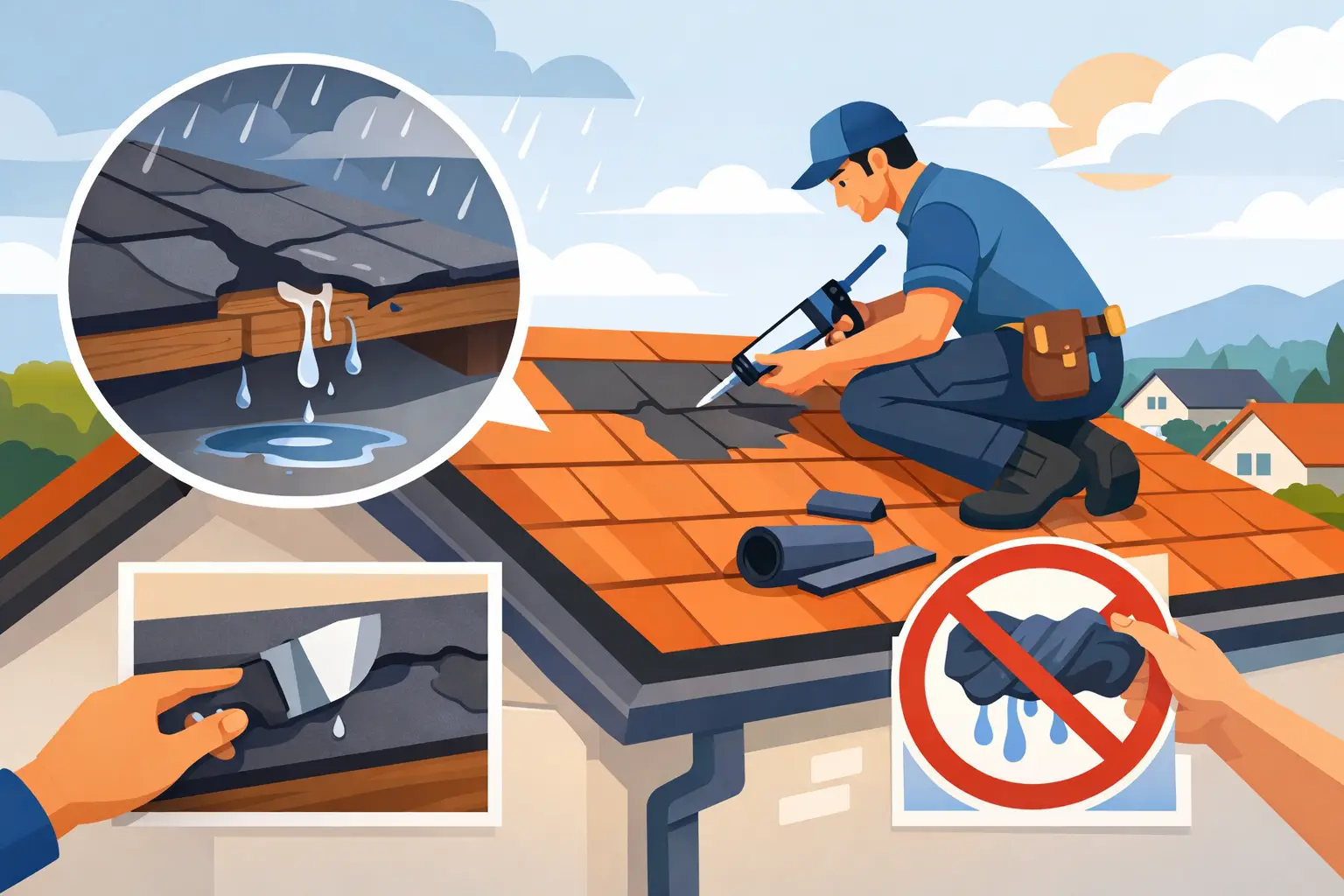
If the leak began during a storm, a temporary tarp can limit further water intrusion. This is not a permanent repair, and it should only be installed when roof conditions are safe. Wet shingles, snow, high winds, and steep slopes create serious fall hazards. Working at Heights procedures are not optional on an active roof.
How to Fix Roof Leaks by Finding the Real Source
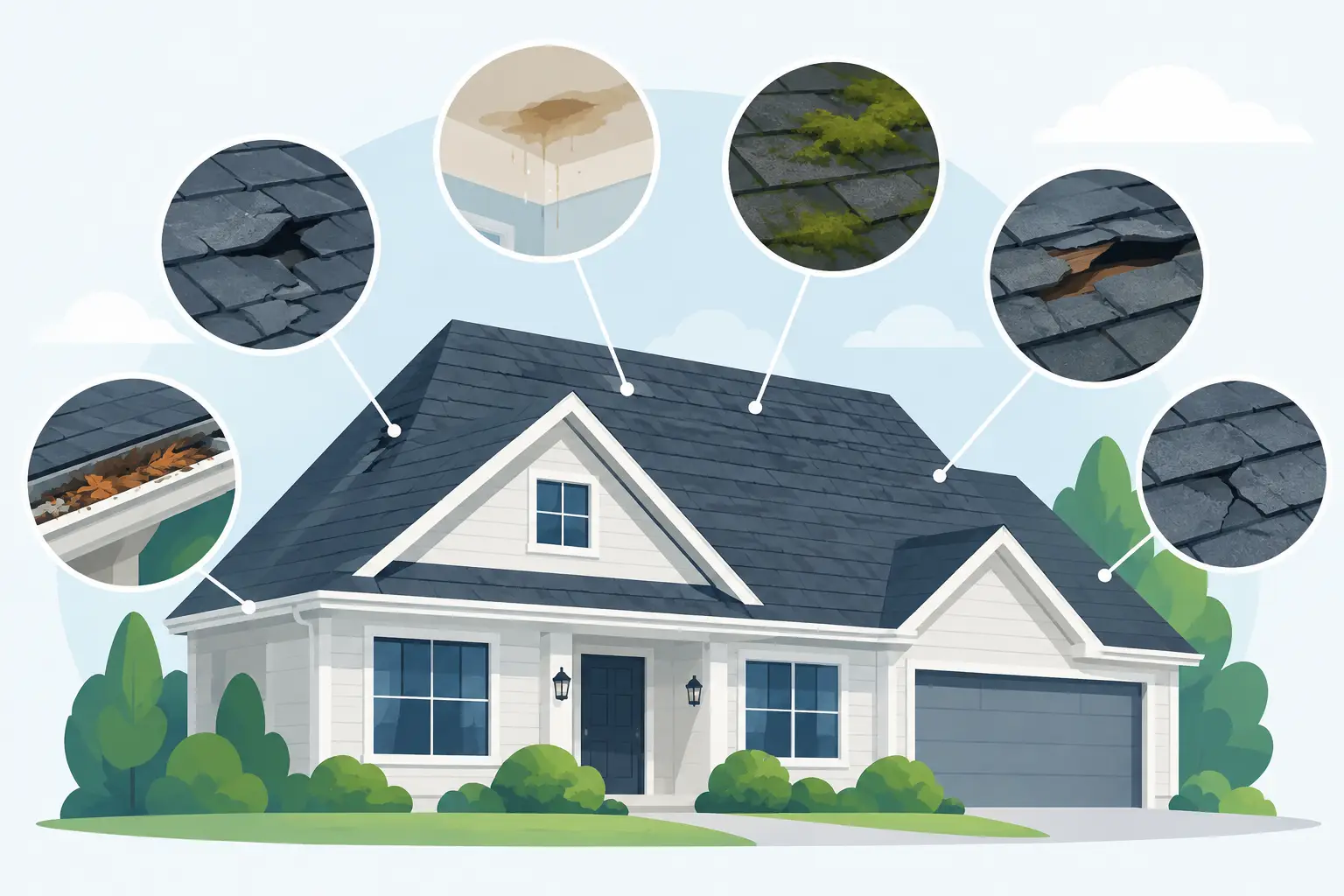
The visible leak is a clue, not a diagnosis. Start your inspection indoors, preferably after or during a light rain when conditions allow. In the attic, use a flashlight to look for wet insulation, dark water trails, damp sheathing, mold growth, rusty fasteners, or daylight around penetrations.
Follow staining or wet wood upward and outward. On a sloped roof, the entry point is often above the interior stain. A leak near a bathroom ceiling, for example, may come from the plumbing vent flashing several feet uphill rather than from the shingles directly overhead.
From the ground, look for obvious exterior concerns: lifted or missing shingles, exposed nail heads, damaged roof vents, cracked pipe boots, loose flashing, blocked gutters, or branches rubbing against the roof. Binoculars can help you inspect without climbing.
Avoid assuming every wet ceiling is a roof issue. Condensation from an improperly vented bathroom fan, attic humidity, plumbing leaks, and ice damming can create similar symptoms. A proper diagnosis separates a roofing defect from a ventilation or building-envelope problem before money is spent on repairs.
Common Leak Locations and the Right Repair Approach
Damaged or Missing Shingles
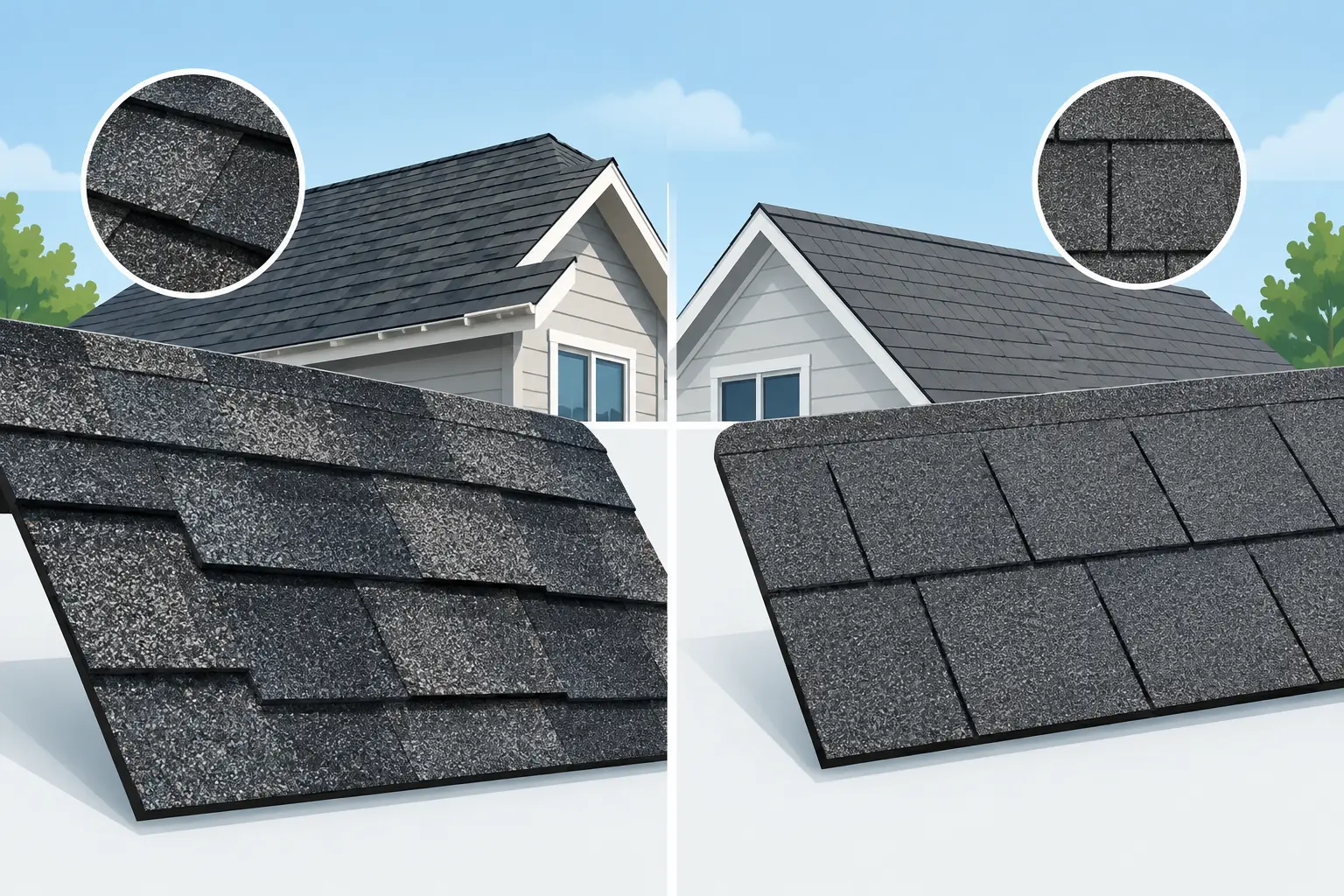
Wind can lift shingles, break their sealing strips, or pull fasteners loose. Age, heat cycling, and storm debris can also crack the shingle surface. A small area of damage may be repaired by replacing affected shingles and restoring the underlayment beneath them.
The repair must match the roof system. Sliding a new shingle over damaged material or applying roofing cement across the surface may slow a leak briefly, but it can trap water, interfere with drainage, and make future repairs harder to assess. When shingles are brittle or the damage is widespread, a targeted repair may not be the best long-term value.
Flashing Around Chimneys, Walls, and Valleys
Flashing is the metal detail that directs water away from vulnerable transitions. Chimneys, skylights, sidewalls, valleys, and roof-to-wall intersections depend on correctly layered flashing to shed water. Caulk alone is rarely an adequate flashing repair.
Loose step flashing, corroded valley metal, failed chimney counterflashing, or improperly installed sealant can all cause recurring leaks. These repairs require access to the roofing layers and an understanding of water flow. The goal is to rebuild the overlap correctly, not cover the visible gap with more sealant.
Pipe Boots and Roof Vents
Rubber pipe boots often crack as they age, especially after repeated freeze-thaw cycles. Plastic vent housings can split, and vent flashing can loosen at the shingle line. These are common leak points because every roof penetration interrupts the main waterproofing surface.
A lasting repair typically involves replacing the failed boot or vent component and integrating its flange beneath the surrounding shingles. Surface patches can fail when water backs up under the shingle course during wind-driven rain.
Skylights
A leaking skylight is not always a skylight failure. The issue may be condensation on the glass, failed perimeter flashing, worn seals, or inadequate integration with the roofing system. Condensation is more likely during cold weather and often points to indoor humidity or poor ventilation. Flashing leaks usually appear after rain or melting snow.
Skylight repairs should be diagnosed carefully. Repeatedly sealing around a unit that has failed flashing can hide the problem while water continues to damage the roof deck.
Ice Dams and Winter Leaks
In Toronto and surrounding areas, ice dams can force melting snow under shingles at the roof edge. The immediate symptom may be water stains near exterior walls, even when the shingles themselves are in acceptable condition.
Removing snow from the roof edge with a roof rake can reduce the load from the ground. Do not chop ice with a shovel or hammer, since that can damage shingles and gutters. Long-term prevention depends on attic insulation, air sealing, ventilation, and addressing heat loss that melts snow unevenly.
Repairs That Often Make Leaks Worse
A leaking roof can tempt property owners toward quick fixes that create larger problems. Spraying foam, applying large amounts of tar, filling every gap with caulk, or driving screws through exposed roofing surfaces can block water temporarily but compromise the roof assembly.
Be especially cautious with these approaches:
- Applying sealant over wet, dirty, or deteriorated shingles
- Nailing through shingles without properly sealing and layering the repair
- Covering damaged flashing instead of replacing or reinstalling it
- Pressure washing a roof to “clean” the suspected leak area
- Walking on wet, icy, aging, or steep roofing materials
Roofing works because materials overlap in a specific order. Water should flow down and out, not be stopped by a thick layer of mastic. A repair that ignores that principle can redirect water beneath the roof covering and conceal deteriorating decking.
When a Repair Is Reasonable and When Replacement Is Smarter
Not every roof leak requires replacement. A relatively new roof with isolated storm damage, a failed pipe boot, or a localized flashing issue may be an excellent candidate for professional repair. The condition of the surrounding shingles, underlayment, decking, and flashing determines whether the repair will hold.
Replacement becomes more practical when leaks occur in multiple areas, shingles are curling or losing granules extensively, the roof deck has widespread moisture damage, or the existing system is near the end of its service life. Property managers should also consider the cost of repeated interior repairs, tenant disruption, and emergency callouts. A lower-priced patch is not always the lower-cost decision over several years.
A detailed estimate should explain the source of the leak, the materials to be removed, how the roof system will be restored, and any conditions that may affect the final scope. This gives homeowners and commercial decision-makers a clear basis for comparing repair options.
Why Professional Inspection Matters
Roof leaks demand more than a visual check from the driveway. A trained roofer evaluates shingles, flashing, ventilation, penetrations, drainage, decking, and attic conditions together. That broader inspection is how the actual cause is identified and how unnecessary work is avoided.
Toronto Roofers approaches leak repairs with direct oversight, trained installers, and safety-focused work practices. Certified workmanship matters because even a small repair must integrate properly with the existing roof system to protect its performance and manufacturer warranty coverage.
If your roof is leaking now, contain the water, document what you see, and avoid unsafe roof access. A prompt professional assessment can turn a small, manageable repair into exactly that – instead of allowing hidden moisture to become a much larger building problem.