
A roof can look intact from the driveway and still have damage that allows water beneath the shingles, flashing, or membrane. Knowing how to spot roof storm damage early gives homeowners and property managers time to arrange a proper inspection before a minor opening becomes an interior leak, wet insulation, or structural repair.
Toronto storms can bring high wind, driving rain, hail, rapid temperature changes, and winter ice conditions in the same year. Each affects a roofing system differently. The goal is not to diagnose every issue from the ground. It is to recognize credible warning signs, document what you see safely, and bring in a trained roofing professional when the evidence calls for it.
Start With the Ground-Level Evidence
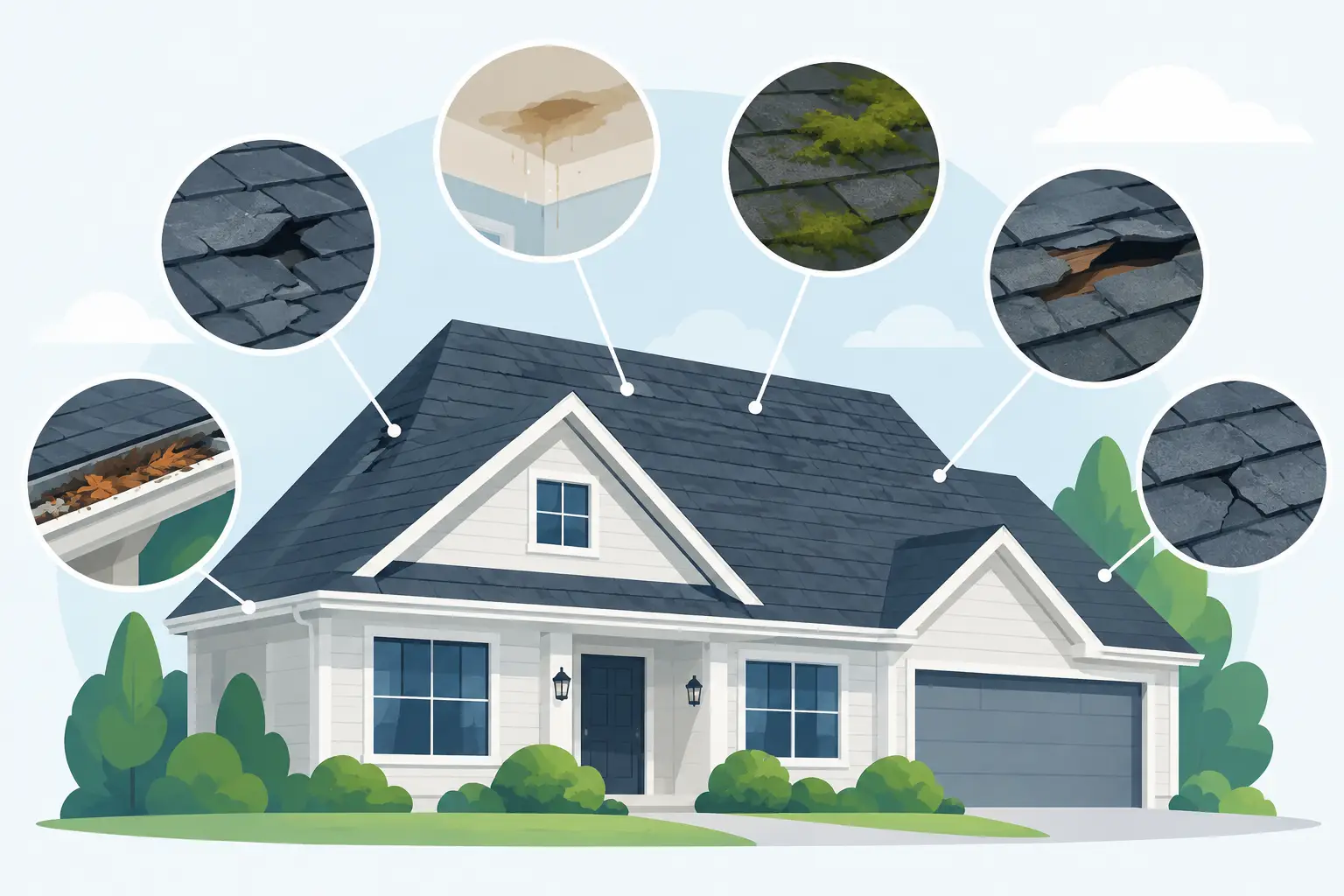
After conditions are safe, walk around the property and look for changes that were not there before the storm. Wind damage often leaves the clearest clues at ground level. Check the lawn, driveway, gutters, and areas near downspouts for shingle pieces, granules, metal fragments, or sections of flashing.
A few loose granules are normal on a new roof and may also appear as shingles age. A concentrated buildup after a storm, however, can indicate that hail or wind has disturbed the shingle surface. Asphalt shingles rely on their granule coating to protect the asphalt layer from ultraviolet exposure and weathering. When the coating is stripped away in patches, the roof may deteriorate faster even if it is not leaking yet.
Also inspect the gutters from the ground. Gutters pulled away from the fascia, bent downspouts, detached guards, and fresh dents may indicate the storm had enough force to affect roof-edge components. These details do not automatically mean the roof needs replacement, but they justify a closer inspection.
How to Spot Roof Storm Damage From a Safe Distance
Use binoculars or a phone camera with zoom rather than climbing onto the roof. A wet, wind-damaged, or steep roof is not a safe place for an untrained person. Falls remain one of the most serious risks in roofing work, which is why qualified crews use proper Working at Heights practices and safety equipment.
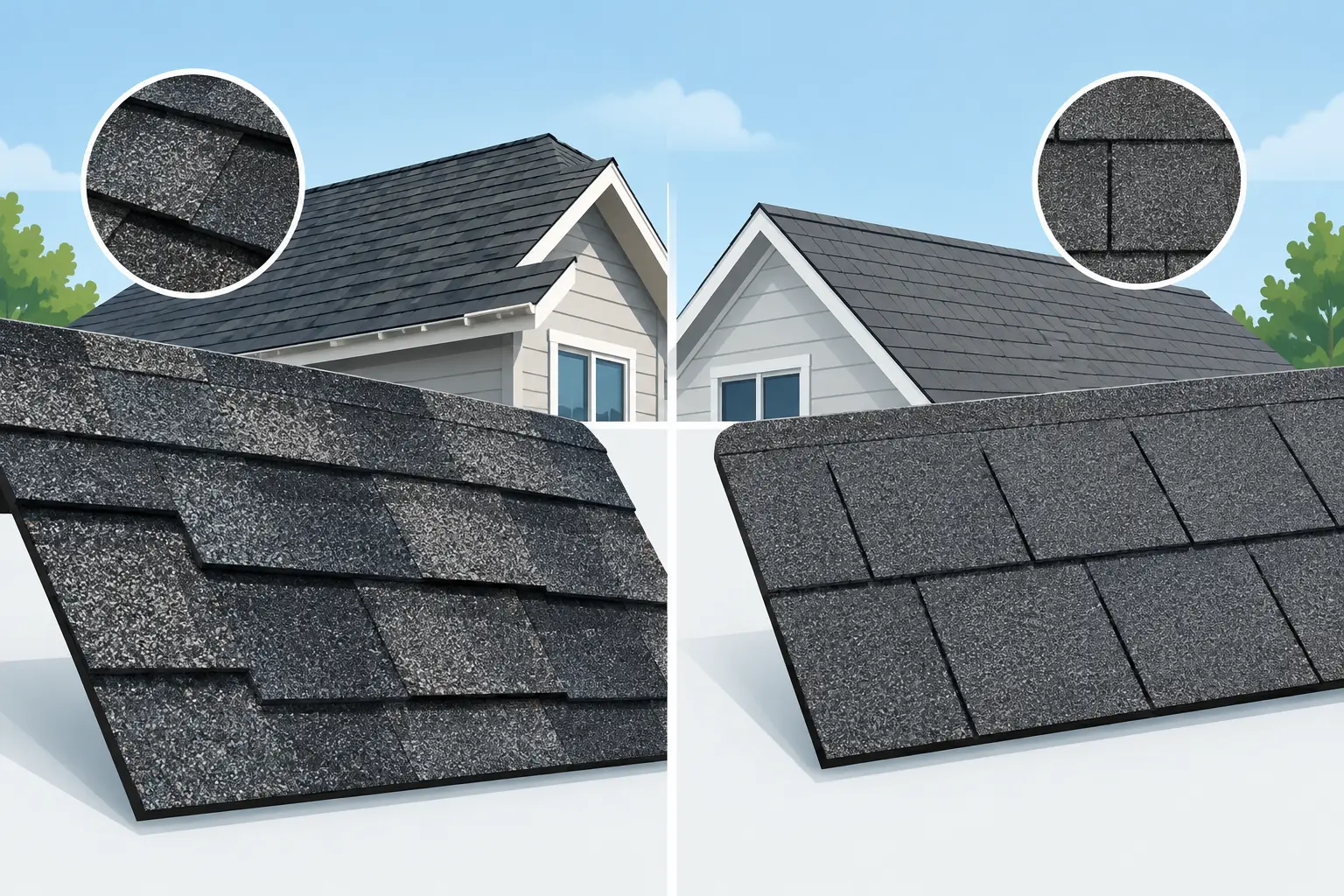
From the ground, look across the roof slope for irregular lines, raised shingle edges, dark spots, exposed underlayment, or areas that appear different in texture or color. Wind may lift a shingle tab without tearing it completely off. Once the seal strip has broken, that shingle can continue to lift in future storms and expose the fasteners beneath it.
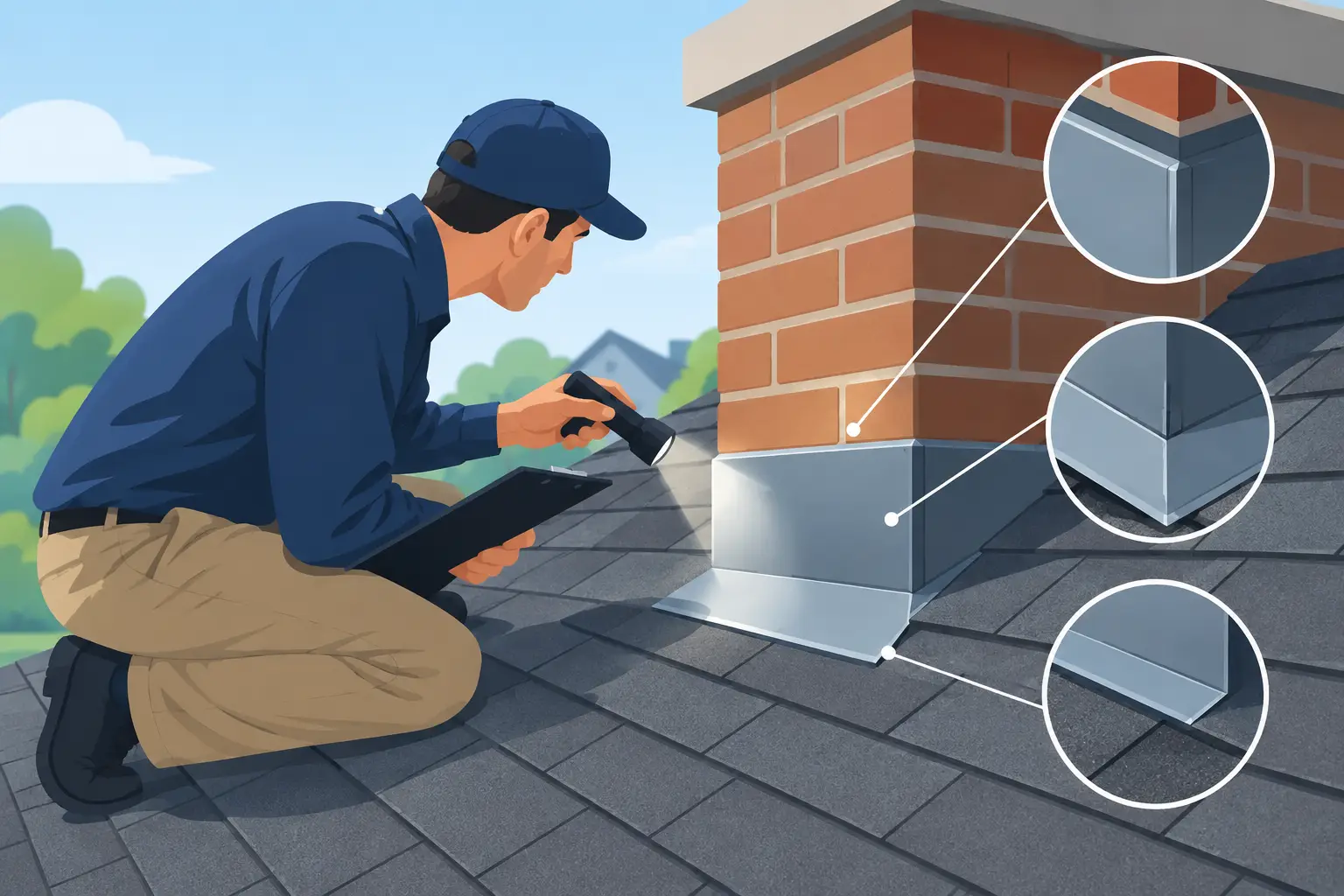
Pay close attention to the roof edges, ridge caps, valleys, and transitions around chimneys, skylights, plumbing vents, and wall intersections. These are high-risk areas because water is directed, slowed, or redirected there. A small piece of loose flashing at a chimney can create a leak path that is difficult to notice until water reaches the ceiling below.
Hail damage can be more subtle. On asphalt shingles, it may appear as random dark circles where granules have been knocked loose, sometimes with a soft or bruised feel that only a trained inspector can confirm. Metal vents, flashing, gutters, and air-conditioning equipment may show dents, but dented metal alone does not prove the roof covering has sustained functional damage. The roof type, age, slope, and direction of the storm all matter.
Check Indoors Before the Next Rainfall
Storm damage is not always visible outside. Inspect the attic, upper-floor ceilings, exterior walls, and rooms beneath roof penetrations. Use a flashlight in the attic and look for fresh water staining, damp sheathing, drips, wet insulation, mold-like growth, or daylight showing through the roof deck.
A water stain on a ceiling is a warning sign, but it does not always identify the exact leak location. Water can travel along roof decking, rafters, insulation, pipes, or electrical lines before it becomes visible indoors. A stain near a skylight may be caused by failed skylight flashing, but it could also originate farther uphill on the roof.
Musty odors, bubbling paint, warped trim, and unexplained moisture around exterior walls deserve attention as well. If water has entered the building, move valuables away from the affected area and place a container under active drips if it is safe to do so. Do not puncture ceilings, disturb electrical fixtures, or enter an attic with standing water unless the area has been assessed safely.
Know What Wind, Rain, Hail, and Ice Leave Behind
Different storm events create different patterns. Understanding those patterns helps you give a contractor useful information during an on-site consultation.
Wind damage
Strong wind can lift, crease, curl, crack, or remove shingles. It may loosen ridge caps and blow debris against vulnerable roof sections. On flat or low-slope commercial roofs, wind can affect membrane seams, perimeter flashing, coping, drains, and rooftop equipment curbs. Damage is often concentrated on the side of the building that faced the strongest wind, though turbulence around taller structures can create unexpected patterns.
Heavy rain damage
Rain rarely damages a sound roof by itself. Instead, it exposes existing weaknesses such as worn flashing, cracked sealant, blocked drainage, deteriorated pipe boots, or improperly installed materials. If a leak begins during a long rainfall but not during a short shower, the issue may involve drainage capacity, saturated materials, or water backing up where it should be flowing away.
Hail damage
Hail can fracture brittle shingles, dislodge granules, puncture aging materials, and dent metal components. Its impact depends on hail size, wind speed, material condition, and roof pitch. An older roof is generally more susceptible than a newer roof, but a professional inspection should assess actual damage rather than relying on age alone.
Snow and ice damage
In Toronto, freeze-thaw cycles can worsen minor roof defects. Ice dams form when melting snow refreezes at colder roof edges, holding water behind the ice. That water can work beneath shingles and enter the roof assembly. Icicles may be visible, but the more concerning sign is water staining or peeling paint along exterior walls and ceilings near the eaves.
Document the Condition Before Repairs Begin
Take clear photographs from the ground of missing materials, debris, damaged gutters, interior staining, and any visible impacts. Include wide shots that show the location on the building as well as close-ups. Note the storm date, the type of weather observed, and when you first noticed the issue.
This record is useful for your roofing contractor and may be required if you decide to contact your insurance provider. Avoid throwing away loose roofing pieces until they have been photographed. Do not attempt temporary repairs with nails, tar, or adhesive unless you understand the material and can work safely. Improvised repairs can create additional punctures, interfere with an insurance assessment, or make a professional repair more complicated.
If there is an active leak, a qualified roofer may recommend an emergency protective measure while a full repair plan is prepared. The right response depends on the roof system, weather forecast, extent of water entry, and whether the affected section can be accessed safely.
When a Professional Inspection Is the Right Call
Arrange a roofing inspection promptly if shingles are missing or lifted, you see exposed roof materials, interior water marks appear, flashing is loose, or the building has experienced significant hail or wind. For commercial properties, inspection is especially prudent after a severe event because low-slope membranes and drainage details can conceal damage that is not apparent from the ground.
A thorough inspection should look beyond the obvious damaged area. A trained roofing professional evaluates the roof covering, fasteners, penetrations, valleys, flashing, ventilation details, drainage, deck condition where accessible, and signs of previous repair failure. The recommendation may be a targeted repair, preventive maintenance, or replacement if the system is at the end of its service life. It depends on the material condition and whether repairs can reliably protect the roof as a complete system.
Toronto Roofers provides detailed estimates and on-site consultations so property owners can understand what was found, what work is recommended, and why. Certified workmanship matters after storm damage because a repair is only as dependable as its installation details.
After the next major storm, do not wait for a ceiling stain to decide whether your roof needs attention. A safe visual check, clear documentation, and a timely professional assessment can protect the roof, the building, and the investment underneath it.