
A roof leak rarely begins where water appears inside the building. Water can travel beneath shingles, along roof decking, around framing, or through insulation before it reaches a ceiling stain. That is why asking what is included in roof inspection is the right first step before approving a repair, planning maintenance, or budgeting for replacement.
A professional inspection is not a quick look from the driveway. It is a systematic review of the roof system, its vulnerable transition points, drainage components, and, when access permits, the conditions beneath the roof. The goal is to identify active problems, early warning signs, and maintenance needs before minor defects create expensive interior damage.
What Is Included in a Roof Inspection?
The exact scope depends on the roof type, building height, accessibility, weather conditions, and whether the property is residential or commercial. A steep-slope shingle roof and a low-slope commercial roof do not fail in the same places. Still, a thorough inspection should examine the main components that protect the structure from water, wind, and seasonal exposure.
Roof covering condition
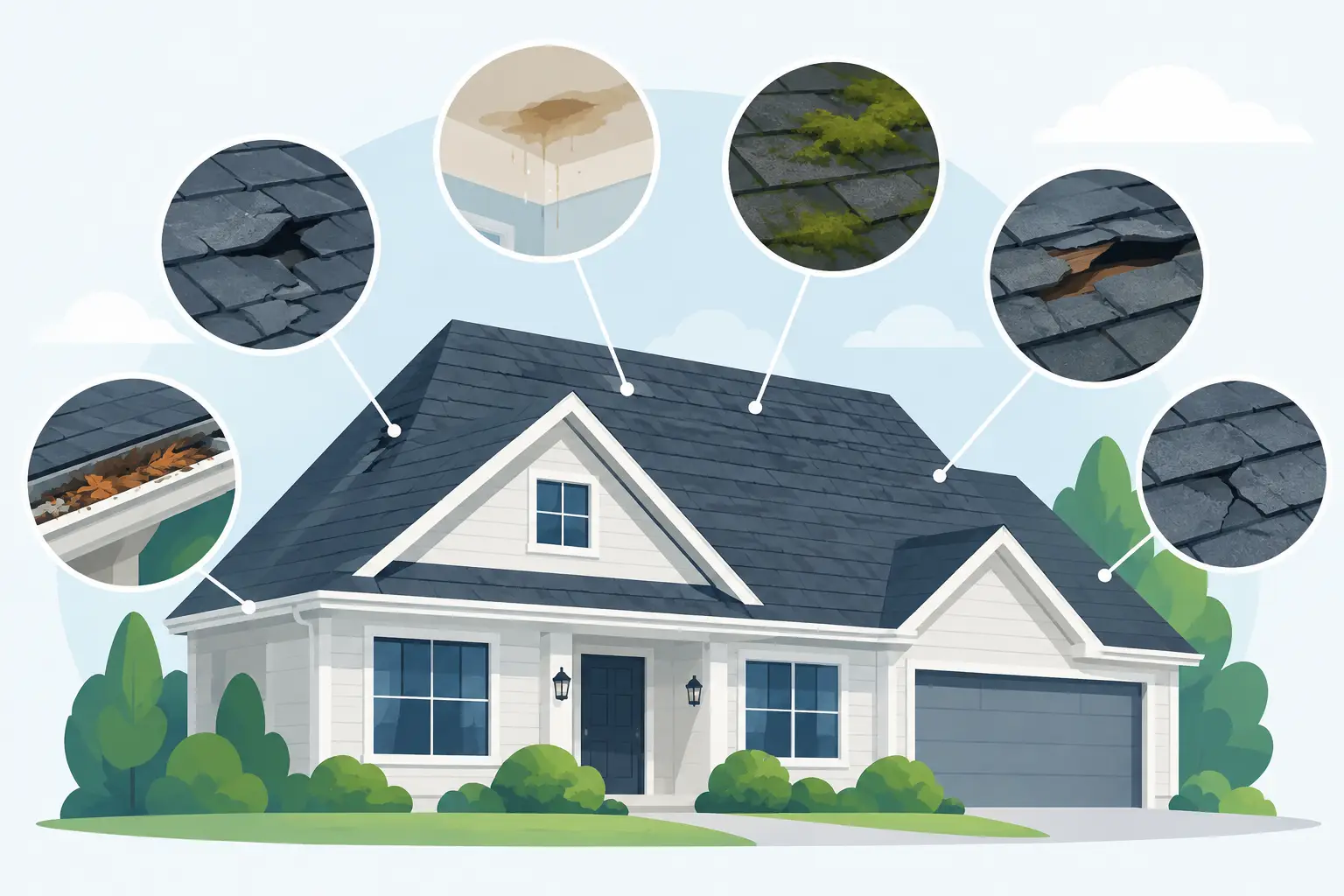
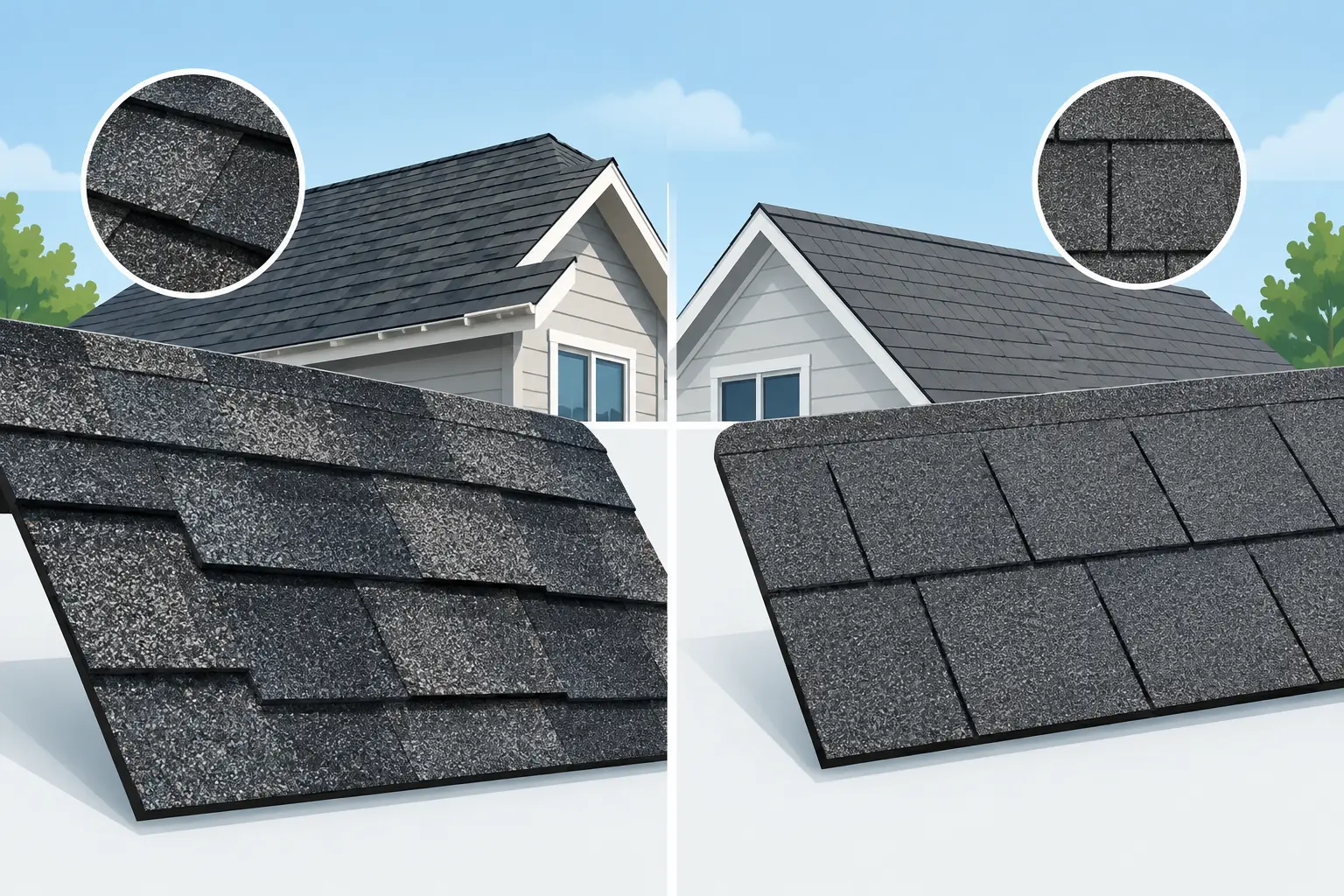
The first review focuses on the visible roof surface. On asphalt shingle roofs, an inspector looks for missing, cracked, curled, torn, loose, or lifted shingles. Granule loss, exposed fiberglass matting, blistering, algae growth, and uneven shingle wear can also indicate aging or declining performance.
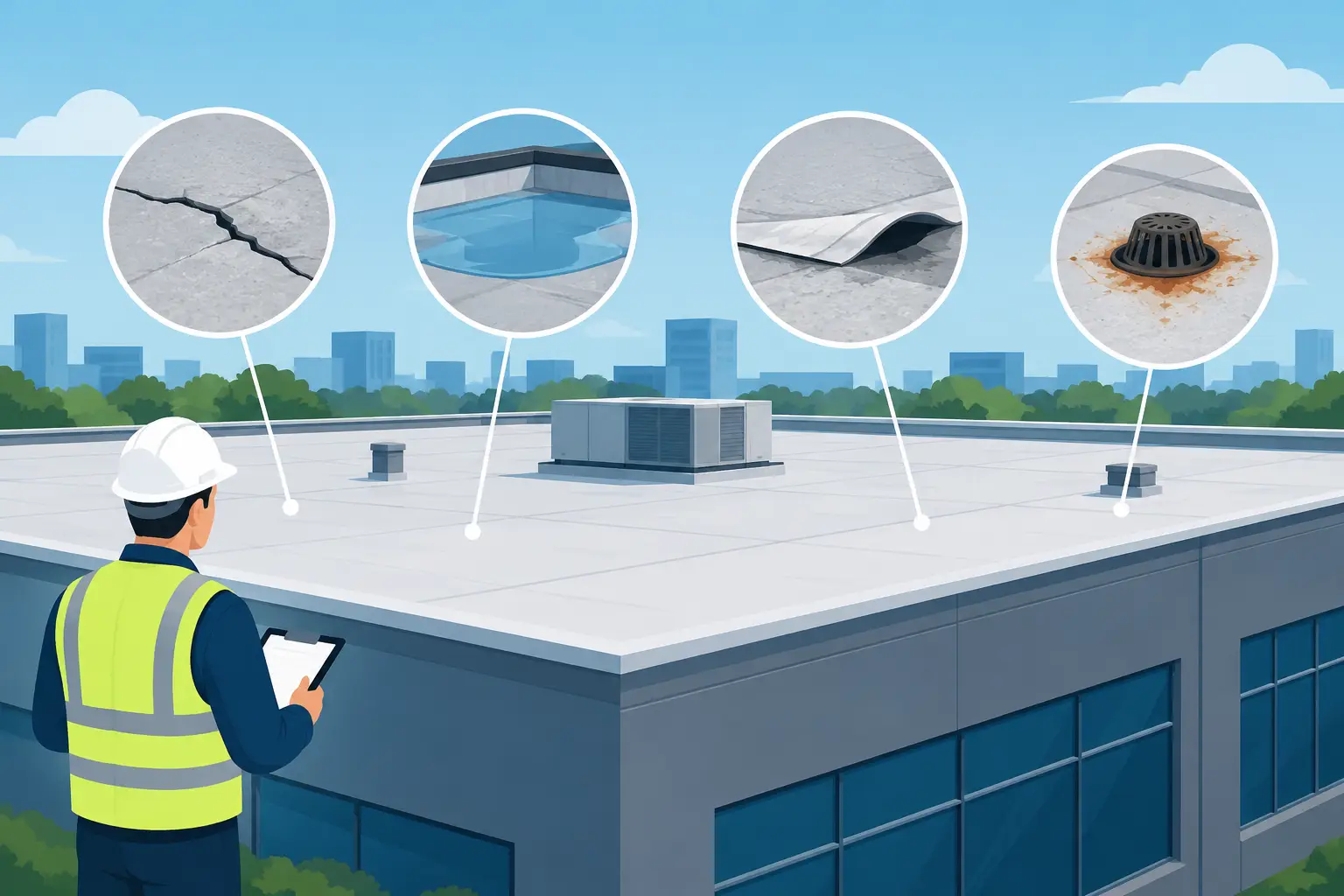
For flat and low-slope systems, the inspection may include membrane seams, laps, punctures, splits, blisters, surface wear, and areas where the membrane has separated from the substrate. Modified bitumen, EPDM, TPO, and other commercial systems each require a material-specific assessment. A reliable contractor should identify the roof material before recommending repairs.
The inspection also considers whether the roof covering is nearing the end of its expected service life. Age alone does not automatically require replacement, but widespread deterioration, repeated repairs, or recurring leaks can make replacement the more responsible long-term decision.
Flashing, penetrations, and transition points
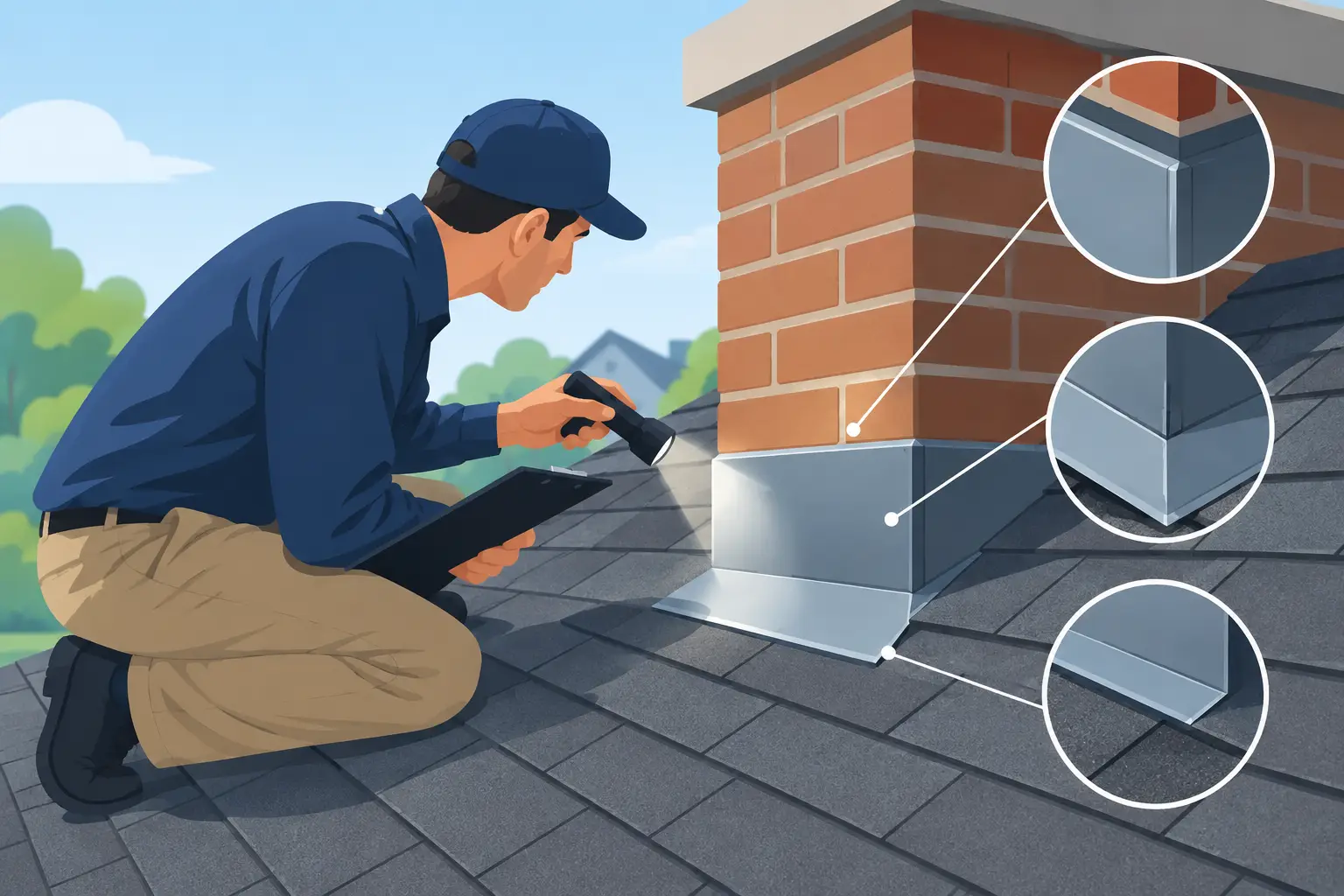
Most roof leaks occur at details rather than in the center of a roof field. Flashing directs water away from joints and openings, so it receives close attention during a proper inspection.
This includes flashing around chimneys, skylights, vents, plumbing stacks, wall intersections, dormers, valleys, and roof-to-wall connections. Inspectors look for rust, gaps, cracked sealant, loose fasteners, damaged counterflashing, and improperly installed materials. A small opening at a vent pipe or chimney can allow significant moisture into the roof assembly over time.
Valleys require particular care because they handle concentrated water flow. Debris buildup, deteriorated valley metal, open seams, or damaged shingles in these areas should be addressed promptly.
Gutters, drainage, and water flow
A roof system cannot perform properly if water has nowhere to go. On homes, that means evaluating gutters, downspouts, gutter guards, and the roof edge. Clogged or undersized gutters can cause water to back up under shingles, overflow onto siding, or collect near the foundation.
On commercial and low-slope roofs, drainage is even more critical. The inspection should review drains, scuppers, downspouts, overflow paths, and signs of ponding water. Standing water can accelerate membrane deterioration and place additional weight on the roof structure. The cause may be blocked drainage, poor slope, a settlement issue, or an undersized drainage design.
Roof deck and structural warning signs
A roofing contractor cannot always see the entire deck without removing roofing materials, but visible warning signs should be documented. Soft areas underfoot, sagging roof lines, uneven surfaces, and recurring depressions may point to wet or deteriorated decking.
Structural concerns deserve a measured response. A localized soft spot may only require limited deck replacement during a repair. Widespread sagging or prolonged moisture damage may require a broader evaluation before new roofing is installed. Covering over damaged substrate is not a quality repair and can affect the roof’s service life and warranty eligibility.
Attic, insulation, and ventilation conditions
When an attic or ceiling cavity is safely accessible, it provides valuable evidence about how the roof is performing. Inspectors may look for water staining, wet insulation, mold-like growth, daylight through roof openings, deteriorated decking, and signs of prior leaks.
Ventilation is also part of the assessment. Inadequate intake and exhaust ventilation can trap heat and moisture, contributing to ice damming, condensation, premature shingle aging, and uncomfortable indoor temperatures. The correct ventilation approach depends on the roof design, insulation levels, and whether the attic is vented or conditioned.
An attic inspection does not replace a full building envelope assessment, but it can reveal problems that are not visible from the roof surface.
A Professional Roof Inspection Goes Beyond Visible Damage
A dependable inspection should distinguish between cosmetic wear, maintenance items, repairable defects, and conditions that may justify replacement. This matters because a vague recommendation leaves property owners unable to make a sound decision.
For example, a few damaged shingles after a windstorm may call for a targeted repair. If matching materials are unavailable, the repair may be visible, but it can still protect the roof effectively. On the other hand, widespread shingle loss, brittle materials, failed flashing, and repeated leakage may indicate that putting money into isolated repairs will not provide lasting value.
A clear inspection typically documents conditions through notes and photos, then explains recommended next steps. The best reports identify the location of each issue, its likely cause, the urgency of the work, and whether the recommendation is preventive maintenance, repair, or replacement planning.
What May Limit a Roof Inspection?
A responsible contractor will also explain what could not be inspected. Snow, ice, high winds, heavy rain, excessive roof pitch, fragile materials, locked access points, or unsafe surfaces may limit hands-on review. In those cases, an inspector may complete a visual assessment from accessible areas and schedule a closer inspection when conditions are safe.
Not every hidden defect can be confirmed without invasive testing or opening part of the roof system. Moisture may exist beneath a membrane or within insulation even when the surface looks intact. On commercial roofs, moisture scanning or test cuts may be recommended when there is evidence of concealed water intrusion.
This is not a weakness in the inspection process. It is professional judgment. A contractor should never create damage or put workers at risk simply to claim that every inch was inspected.
When Should You Schedule an Inspection?
Homeowners should arrange an inspection after major wind events, hail, falling branches, visible leaks, or unexplained ceiling stains. It is also wise to inspect an aging roof before listing a home, purchasing a property, or investing in solar equipment that will be installed over the roof surface.
For commercial properties, regular inspection and maintenance planning are often more cost-effective than waiting for an emergency. Roof drains, seams, penetrations, and perimeter details should be reviewed on a scheduled basis, especially after severe weather and before winter conditions place extra demand on the system.
In Toronto and surrounding areas, freeze-thaw cycles, snow accumulation, wind exposure, and ice dam conditions can turn minor roofing defects into active leaks quickly. Seasonal maintenance is particularly valuable when gutters, drains, and roof edges are exposed to debris and repeated temperature changes.
What to Expect From the Inspection Report
A useful report should give you practical direction, not just a list of observations. It should state whether the roof is currently serviceable, identify urgent water-entry risks, and separate immediate repairs from items that can be monitored or included in future maintenance.
If work is recommended, ask for a detailed estimate that explains the proposed materials, repair areas, installation method, and warranty considerations. Certified workmanship, proper safety practices, and direct on-site accountability matter as much as the materials themselves. Toronto Roofers approaches inspections with that standard: identify the condition accurately, explain the options clearly, and recommend only the work the roof needs.
A roof inspection is most valuable when it gives you time to act before a small defect becomes interior damage, structural deterioration, or an emergency call. If you have noticed a stain, loose shingle, drainage problem, or aging roof surface, arrange a professional assessment while the repair choices are still yours to make.