A water stain on a ceiling rarely marks the point where water entered the roof. Rain can travel along roof decking, framing, insulation, or pipes before it becomes visible indoors. That is why answering what causes roof leaks requires more than finding the nearest wet spot. A proper diagnosis starts on the roof and follows the water path through the building.
For Toronto homeowners, property managers, and commercial building owners, early diagnosis matters. A small opening can wet insulation, rot roof decking, damage finishes, and create conditions for mold long before it becomes an obvious interior problem.
What Causes Roof Leaks Most Often?
Roof leaks usually develop at transitions, penetrations, or areas where the roof system has aged beyond its intended service life. Shingles or membrane fields matter, but the details around them often determine whether the roof remains watertight.
1. Damaged, Missing, or Worn Shingles
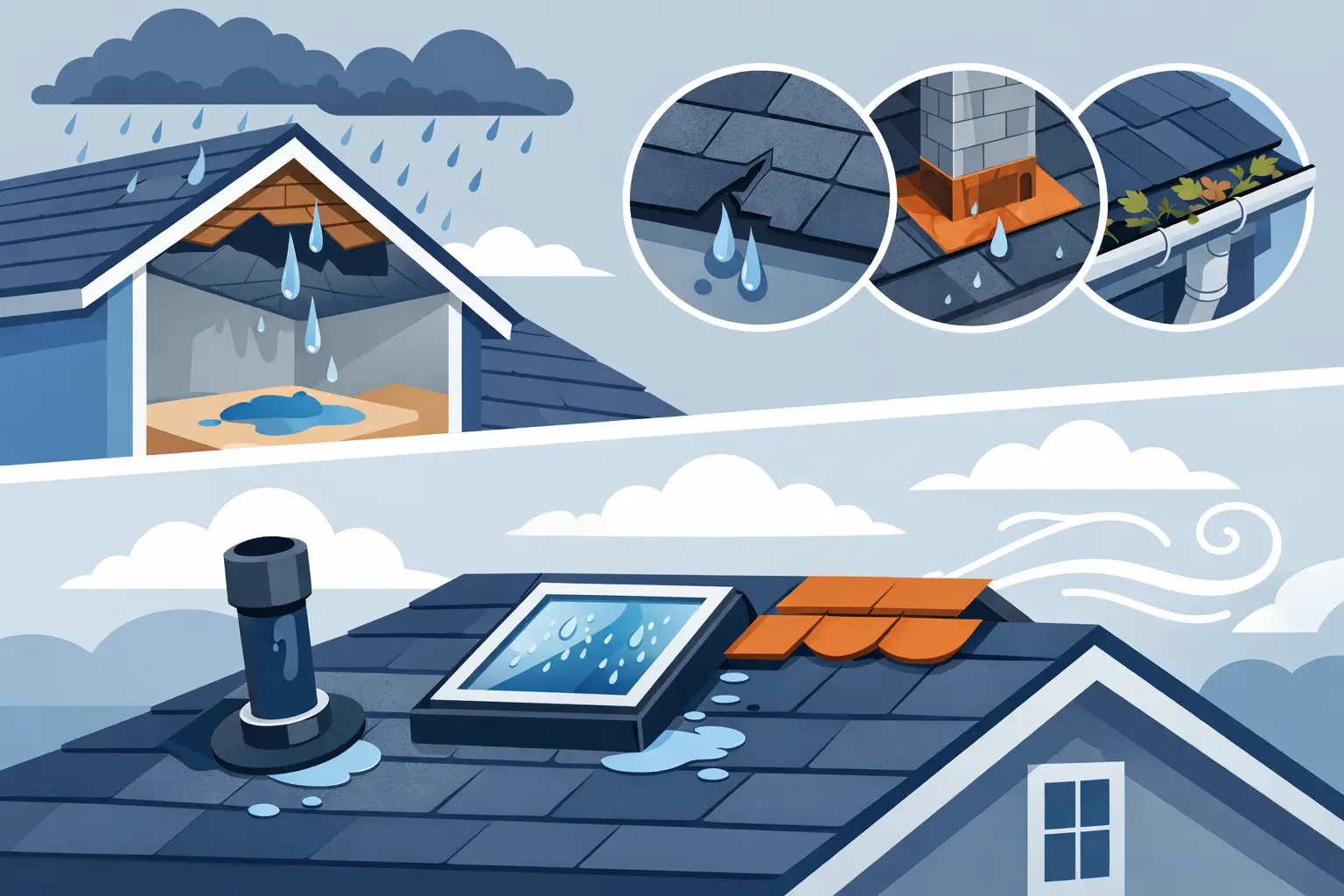
Shingles protect the roof by shedding water in overlapping layers. When wind lifts a shingle, a tab cracks, granules wear away, or shingles go missing, water can reach the underlayment and roof deck. Damage may be limited to a small area, but a few failed shingles can still create a direct path for water during wind-driven rain.
Age is part of the equation. An older roof may look acceptable from the ground while its shingles have become brittle and less able to seal around nails or withstand temperature changes. Replacing isolated shingles can be appropriate when the surrounding roof remains sound. When damage and wear are widespread, repair may only delay a needed replacement.
2. Failed Flashing Around Roof Details
Flashing is the metal or membrane material installed where the roof meets a wall, chimney, skylight, vent, or valley. These are high-risk areas because water is being redirected, not simply shed across an open roof surface.
Loose flashing, failed sealant, corroded metal, or improper overlap can allow water beneath the roofing material. Chimney flashing is a frequent source of leaks, particularly when masonry movement, deteriorated mortar, or previous patchwork has compromised the connection. A reliable repair addresses the flashing system itself, not just the visible gap.
3. Leaks Around Plumbing Vents and Other Penetrations
Plumbing stacks, exhaust vents, satellite mounts, solar attachments, and HVAC penetrations interrupt the roof surface. Each opening needs a correctly installed boot, flange, or flashing detail that remains secure as the roof expands and contracts.
Rubber pipe boots can split with age and ultraviolet exposure. Fasteners can loosen, and sealants can dry out. On commercial roofs, improperly detailed equipment curbs and pipe penetrations can create recurring leaks that are difficult to locate without a close inspection. The repair must be compatible with the existing roofing system and installed to direct water away from the opening.
4. Clogged Gutters and Poor Drainage
Gutters do not create roof leaks by themselves, but blocked drainage can hold water where it does not belong. Water may back up beneath shingle edges, overflow onto fascia boards, or saturate areas near eaves. In winter, poor drainage also contributes to ice buildup.
Flat and low-slope commercial roofs face a similar issue when drains, scuppers, or downspouts are blocked. Standing water places extra stress on seams, flashings, and aging membrane surfaces. Drainage should be reviewed as part of any leak investigation, especially after heavy storms or fall leaf buildup.
5. Ice Dams at the Roof Edge
Ice dams are common in climates with freeze-thaw cycles. Heat escaping into the attic warms the upper roof surface and melts snow. The runoff then refreezes at colder eaves, forming a ridge of ice that traps additional water behind it. That water can work under shingles and enter the roof assembly.
The visible ice is only part of the problem. Long-term prevention may require better attic insulation, improved ventilation, air sealing, proper eave protection, and correction of drainage issues. Removing ice without addressing the heat loss can leave the property vulnerable during the next winter weather event.
6. Valleys That Have Deteriorated or Were Installed Incorrectly
A roof valley is where two sloped roof planes meet. It receives a concentrated volume of runoff, so even minor installation errors can become significant. Cracked shingles, exposed fasteners, failed valley lining, or poorly woven materials can allow water to enter beneath the roof covering.
Valley repairs require careful material selection and correct overlap. Applying roofing cement over a problem may slow a leak temporarily, but it does not replace damaged underlayment or correct an improperly built valley. This is an area where workmanship has a direct effect on roof performance.
7. Skylight Problems
A skylight leak may come from the skylight unit, its glazing, condensation, or the flashing around its perimeter. These causes can look similar from inside the building, which is why assumptions often lead to unnecessary replacement or ineffective repairs.
Older skylights may have failed seals or cracked components. In other cases, the skylight itself is sound but the surrounding flashing was installed incorrectly or has reached the end of its service life. A trained roofer should inspect the full assembly before recommending the scope of work.
8. Aging Underlayment and Roof Decking
The outer roof covering is not the only layer that matters. Beneath shingles or membranes are underlayment, decking, fasteners, ventilation components, and other materials that support the roof system. If water has entered repeatedly, the decking may soften or rot, making it harder for fasteners to hold and allowing the roof surface to sag.
This is why a leak repair sometimes becomes more involved after materials are opened. Replacing compromised decking is not optional cosmetic work. Sound decking is necessary for a secure, code-compliant roofing installation and for the long-term performance of the new materials.
9. Poor Workmanship or Incompatible Repairs
Not every leak is caused by age or severe weather. Incorrect nail placement, inadequate flashing, exposed fasteners, poor seam work, and mismatched repair materials can all shorten a roof’s service life. A patch that looks acceptable from the ground may direct water beneath the roofing system or interfere with drainage.
Roofing details must work together. Shingles, underlayment, flashing, ventilation, and drainage should be installed according to the material manufacturer’s requirements and the roof’s design. That is also why warranty protection depends on more than buying quality products. Certified installation and direct job-site oversight matter.
10. Condensation Mistaken for a Roof Leak
Not all attic moisture comes from rain. Warm, humid indoor air can enter a cold attic through gaps around light fixtures, attic hatches, ducts, and wall openings. When that air hits cold surfaces, it condenses and can wet insulation, sheathing, and framing.
Condensation is often mistaken for a roof leak because it can produce staining, damp insulation, and even dripping. The distinction matters: sealing a roof penetration will not solve an attic ventilation or air-sealing problem. A professional assessment should look for moisture patterns, ventilation performance, insulation gaps, and signs of exterior water entry.
How to Tell When a Roof Leak Needs Prompt Attention
A single stain does not always mean an active emergency, but waiting for the next major storm is rarely a sound maintenance plan. Schedule an inspection promptly if you notice recurring ceiling stains, peeling paint near rooflines, damp attic insulation, visible mold, loose or missing shingles, or water around vents and skylights.
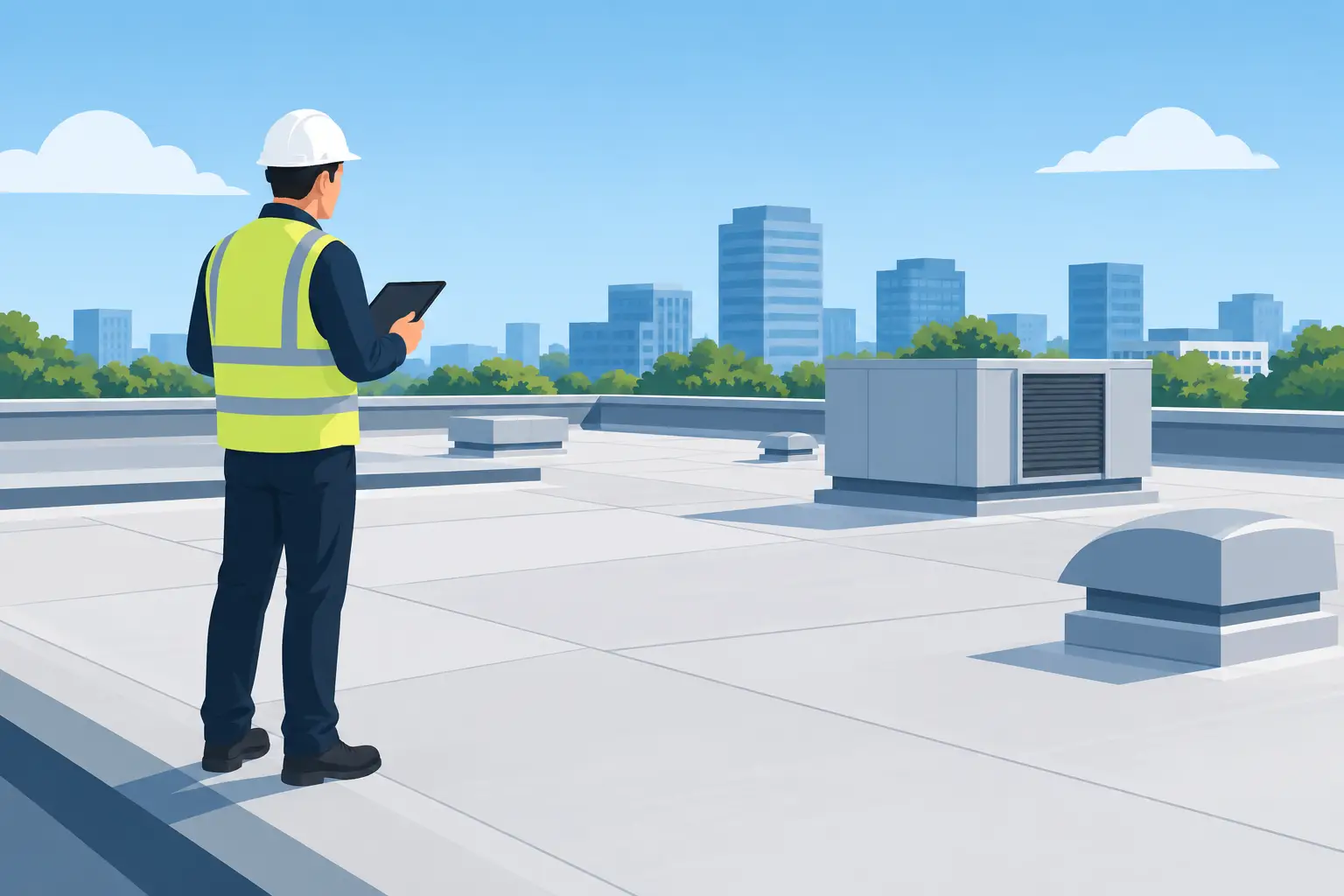
For commercial properties, inspect roof drains, perimeter flashings, seams, and areas around rooftop equipment after severe weather. Water infiltration can spread through a larger roof assembly than the interior evidence suggests, particularly on low-slope systems.
Avoid climbing onto a wet, icy, or steep roof to investigate. It is safer to document the interior symptoms, note when they occur, and have trained roofing professionals inspect the roof, attic, and drainage details. Working at heights requires the right safety procedures as well as the ability to recognize subtle installation failures.
Repair the Cause, Not Just the Symptom
A roof repair should begin with a clear diagnosis and a detailed scope of work. The right solution may be a targeted flashing repair, replacement of failed shingles, drainage maintenance, ventilation improvements, or a broader roof replacement when the system is no longer serviceable. It depends on the roof’s age, condition, material type, and the extent of hidden moisture damage.
Toronto Roofers provides on-site roof assessments for residential and commercial properties, with trained installers and direct accountability for the work performed. Addressing a small issue early is often the most practical way to protect the structure beneath it. If water is showing up inside, treat it as a reason to inspect the roof system now, before the next storm turns a manageable repair into a larger project.