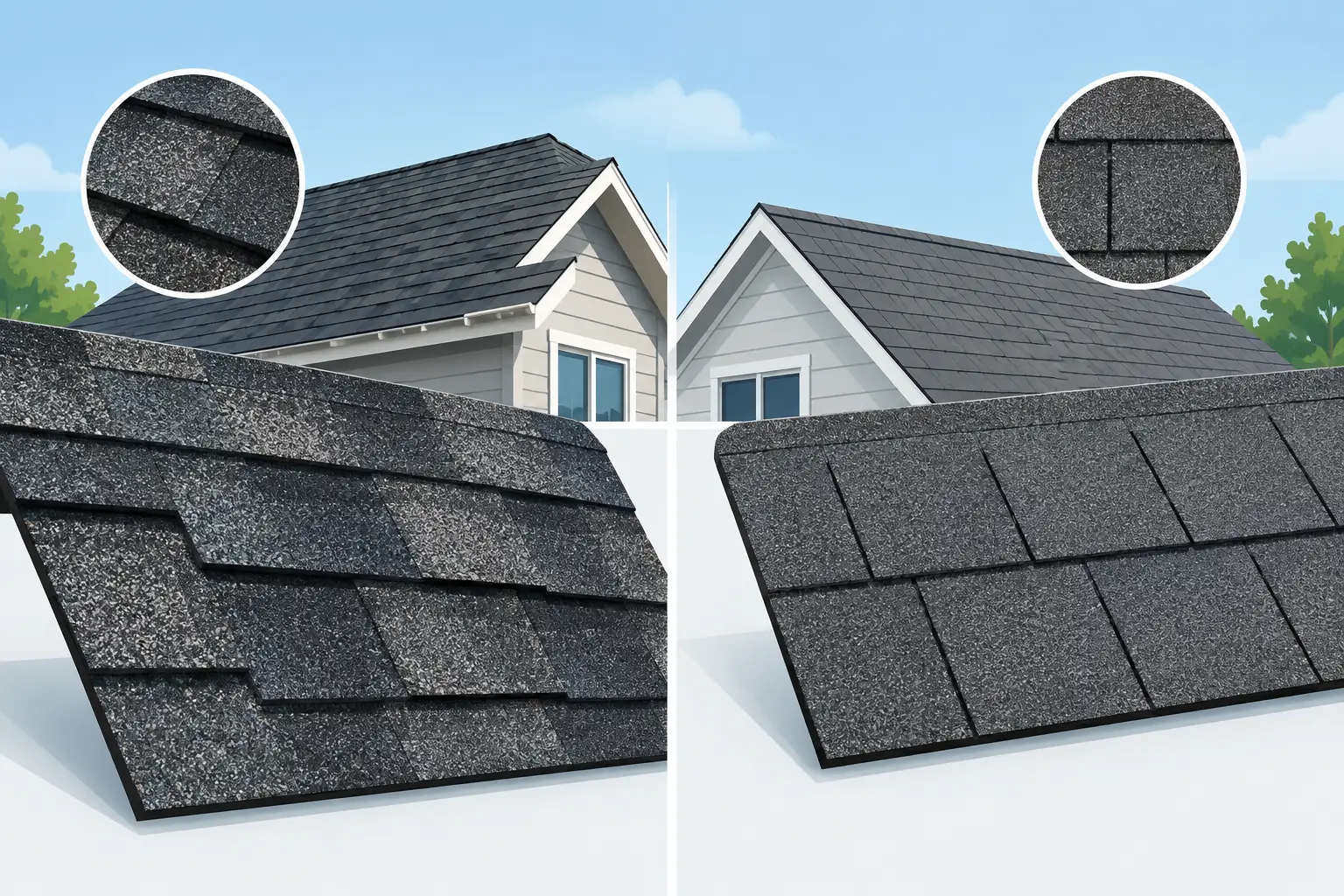
A roof replacement is not the time to choose shingles by color alone. In the Greater Toronto Area, repeated freeze-thaw cycles, wind-driven rain, snow loads, and summer heat all place real demands on a roofing system. When comparing architectural versus three-tab shingles, homeowners should look beyond the initial price and consider service life, weather performance, installation requirements, and the condition of the roof beneath the shingles.
The right choice depends on the property, the budget, and how long you plan to own the building. For most sloped residential roofs, architectural shingles offer stronger long-term value. Three-tab shingles still have a place in limited situations, but they are a more basic product with clear trade-offs.
Architectural Versus Three-Tab Shingles: The Core Difference
Three-tab shingles are traditional asphalt shingles with a flat, uniform appearance. Each strip has cutouts that create three separate-looking tabs once installed. Their consistent shape gives the roof clean horizontal lines, but it also produces a flatter look with less visual depth.
Architectural shingles, also called dimensional or laminated shingles, use multiple bonded layers of asphalt material. This layered construction creates shadow lines and texture that can resemble slate or wood shake from the ground. More importantly, the additional material generally gives architectural shingles greater thickness and improved resistance to everyday weather exposure.
Both products can be part of a properly installed asphalt roofing system. The difference is not simply appearance. It affects wind resistance, durability, repair expectations, and the long-term value of the roof replacement.
Cost Should Be Measured Over the Life of the Roof
Three-tab shingles usually have a lower material cost. For a property owner facing a strict budget, that lower upfront number can be appealing. However, the shingle cost is only one part of the project. Tear-off, deck repairs, underlayment, ice and water protection, flashing, ventilation, disposal, and professional labor still make up a significant portion of the total estimate.
Because architectural shingles commonly last longer and withstand more demanding conditions, the price difference may be more reasonable when spread over the expected life of the roof. A lower-cost roof that needs replacement earlier is not always the less expensive decision.
The best comparison is a detailed estimate that separates the roofing system components and explains what is being installed. A dependable contractor should inspect the roof in person, identify any decking or ventilation concerns, and recommend a shingle system suited to the building rather than quote a generic square-foot price.
Wind Resistance and Toronto Weather Performance
Wind can lift, crease, or remove shingles when the roof system is aging, poorly installed, or not rated for local exposure. Architectural shingles typically have a stronger wind rating than standard three-tab products because of their heavier construction and sealant design. Specific ratings vary by manufacturer and product line, so the shingle data and installation specifications should always be reviewed before work begins.
That difference matters on open lots, taller homes, properties near ravines, and roofs with complex shapes that create wind pressure at ridges, valleys, and edges. Proper fastening is equally important. Even a premium shingle will not perform as intended if nails are placed outside the manufacturer’s nailing zone, driven too deeply, or installed with inadequate fastener quantity.
Winter performance also depends on the complete assembly. Shingles alone cannot prevent ice dams caused by heat loss or poor attic ventilation. Correct insulation, balanced intake and exhaust ventilation, approved underlayment, and ice and water protection at vulnerable eaves work together to help protect the home.
Appearance and Resale Considerations
Architectural shingles provide more design flexibility. They are available in a wider range of blended colors and profiles, and their dimensional finish can make a standard roofline look more substantial. For homeowners updating siding, brick, windows, or trim, this can make architectural shingles the better fit.
Three-tab shingles create a simpler, flatter appearance. On a small detached garage, a shed, or a budget-focused property where visual depth is not a priority, that may be perfectly acceptable. On a primary residence, especially one with visible roof planes, the difference in curb appeal is usually noticeable.
A roof does not need to be selected solely for resale, but exterior condition strongly affects how a property is perceived. Buyers and property managers often view a newer architectural shingle roof as a sign of a more comprehensive investment in the building envelope.
Lifespan Depends on More Than the Shingle
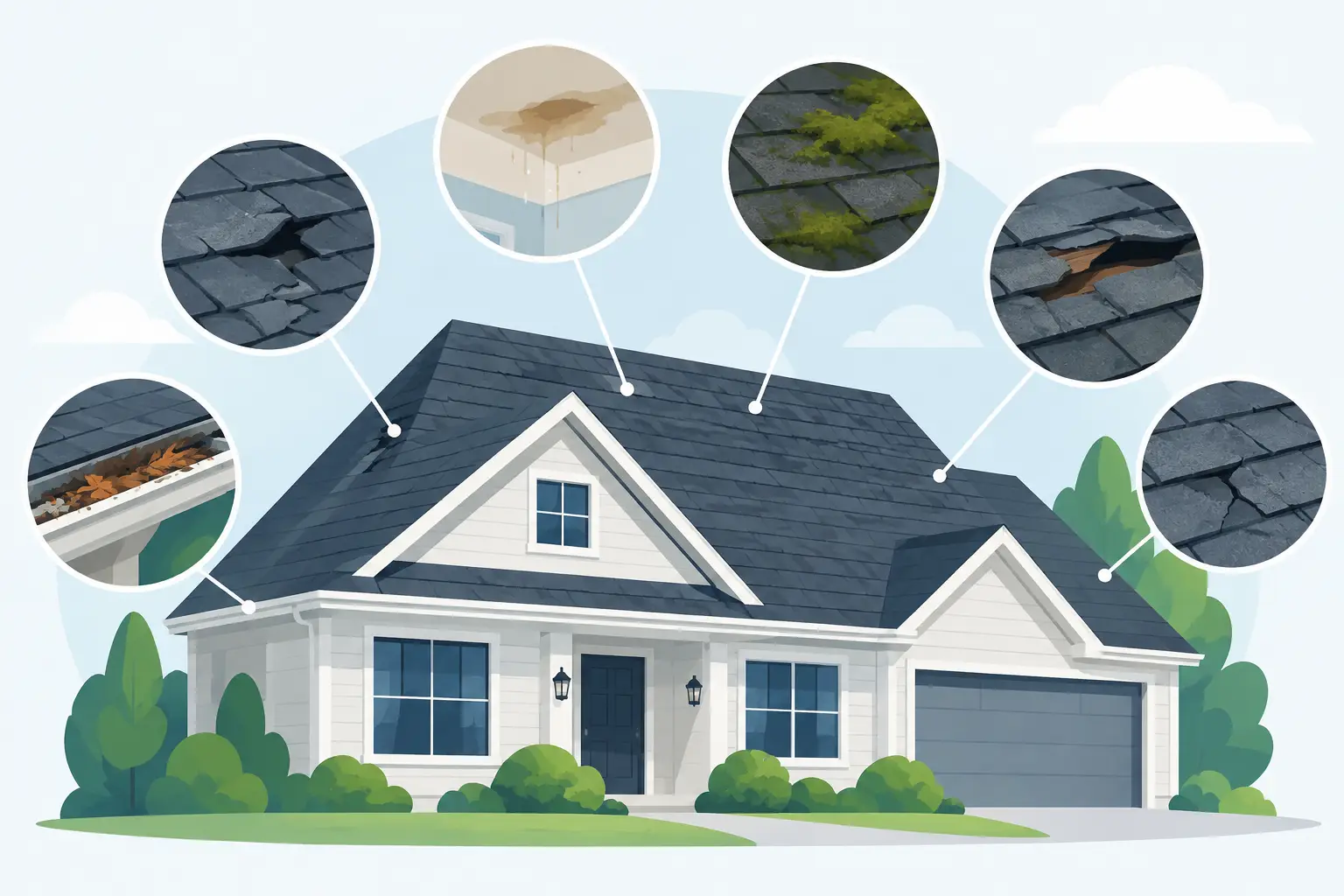
Architectural shingles generally offer a longer expected service life than three-tab shingles. Actual performance, however, depends on several project-specific conditions: the roof slope, sun exposure, attic moisture, ventilation, drainage, nearby tree cover, and the quality of installation.
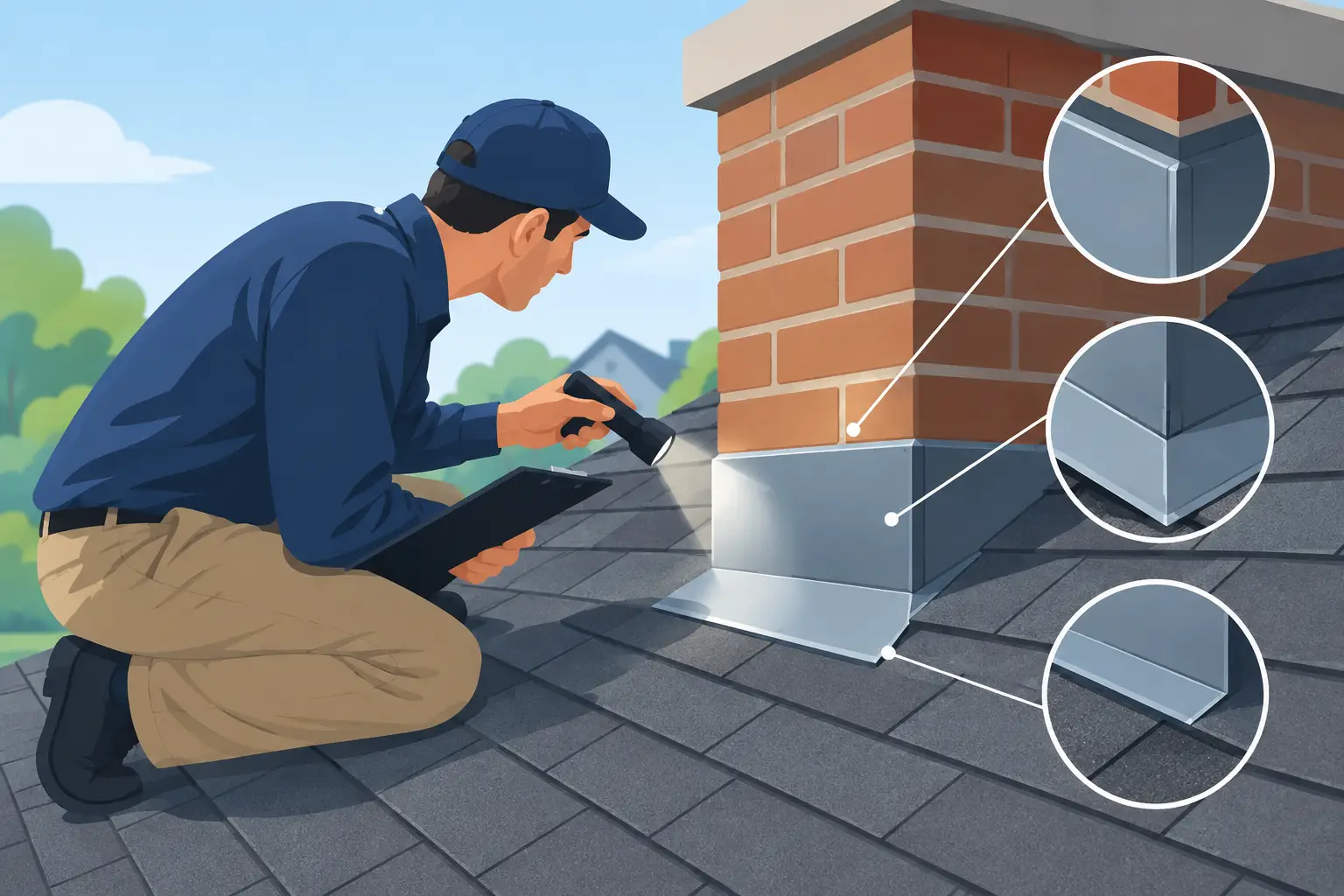
A roof with trapped attic heat or moisture can age prematurely regardless of shingle grade. So can a roof with inadequate flashing around chimneys, walls, skylights, plumbing vents, or valleys. These transition areas are where professional workmanship matters most.
Manufacturer warranties can provide valuable protection, but they are not a substitute for proper installation or regular maintenance. Warranty coverage may require approved installation methods, compatible system components, and documented product registration. Property owners should understand the difference between a manufacturer material warranty and a contractor workmanship warranty before approving the work.
When Three-Tab Shingles May Still Make Sense
Three-tab shingles are not automatically the wrong choice. They can be appropriate where the budget is the primary factor, where a simple outbuilding needs coverage, or where an owner needs to match an existing roof during a limited repair. Availability should be confirmed in advance, as many manufacturers and suppliers now place greater emphasis on architectural product lines.
They are less compelling for a full replacement on a long-term family home. The savings may be modest compared with the overall project cost, while the reduction in thickness, wind performance, and expected lifespan remains significant.
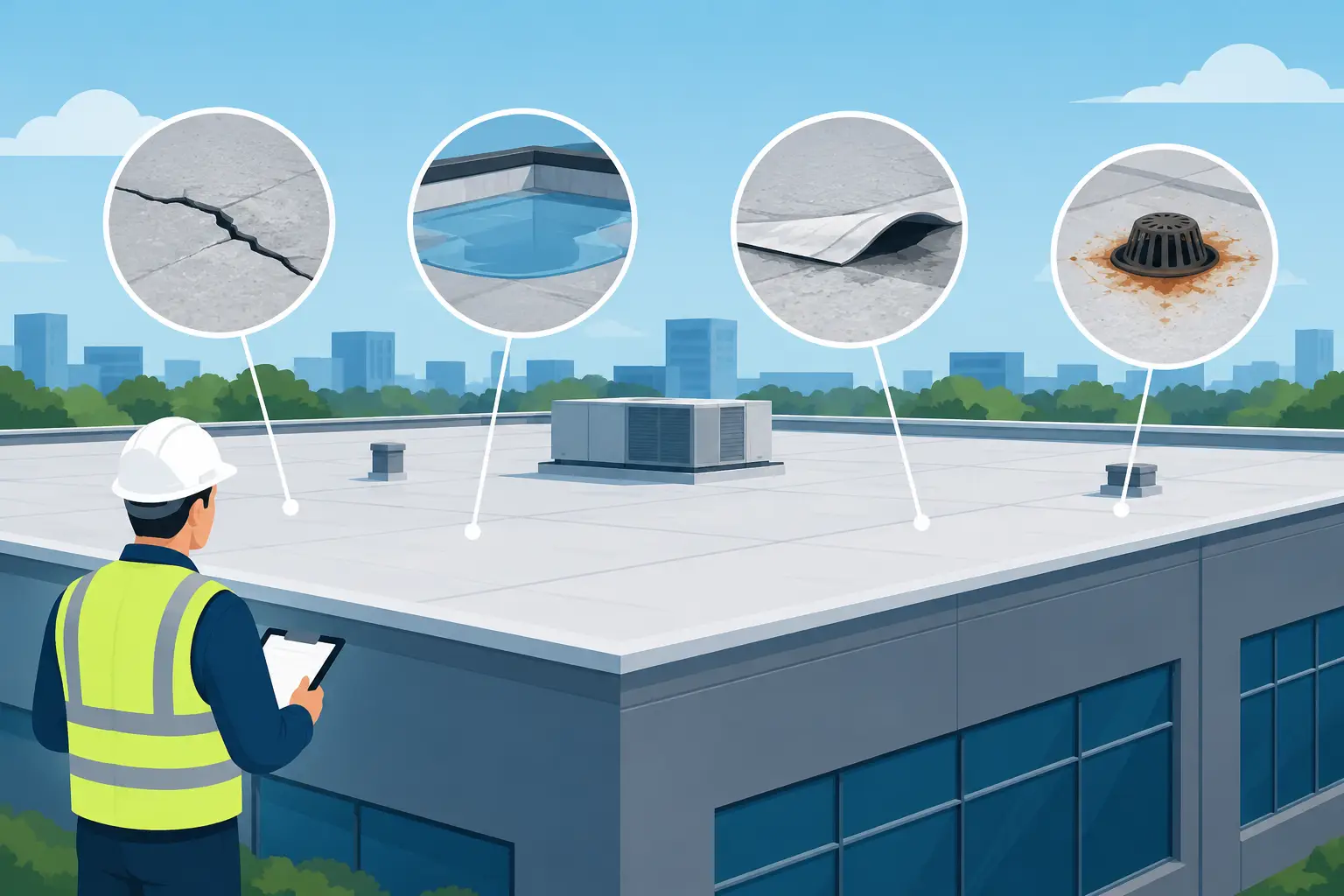
For commercial properties, the discussion is often different. Asphalt shingles are designed for steep-slope applications. Low-slope commercial roofs may require membrane systems rather than either type of shingle. A proper roof assessment should determine whether shingles are suitable before product choices are discussed.
What to Ask Before Selecting a Shingle
Before signing a roofing contract, ask the contractor to explain the proposed system in practical terms. Confirm the exact shingle product, wind rating, underlayment, ice and water protection, flashing approach, ventilation plan, and workmanship coverage. Ask whether damaged decking will be documented and priced only if replacement is required.
It is also reasonable to ask who will perform the work and how site safety will be managed. Trained installers, Working at Heights compliance, direct jobsite oversight, and clean daily work practices all protect the property and the people around it. Roofing is not a product purchase alone. It is a construction project performed on one of the most important protective systems of the building.
Toronto Roofers approaches roof replacement with this full-system view, including an on-site evaluation and a detailed estimate before recommendations are made. The goal is not to push the most expensive shingle. It is to install a roof system that fits the structure, the exposure, and the owner’s long-term plans.
A well-chosen architectural shingle can provide decades of dependable service when it is installed over a sound deck with proper ventilation and flashing. If your roof is nearing the end of its life, an on-site inspection will give you clearer answers than a price comparison alone.