
A ceiling stain that suddenly darkens during a storm is not a problem to watch overnight. The right emergency roof repair steps can limit water damage, protect occupants, and preserve the evidence a roofing professional needs to identify the real failure. The first goal is not a permanent repair. It is to make the property safe and control water until trained roofers can inspect conditions properly.
For homeowners and property managers in Toronto, timing matters. Wind-driven rain, ice buildup, heavy snow, and freeze-thaw cycles can turn a small opening into damaged insulation, soaked drywall, mold risk, or electrical hazards. Act calmly, avoid dangerous shortcuts, and document what you find.
Emergency roof repair steps: act in the right order
1. Protect people before property
Do not climb onto a wet, icy, wind-exposed, or visibly damaged roof. A leak can be frustrating, but a fall through a weakened deck or from a slippery slope is far more serious. Keep children, tenants, and staff away from the affected area.
If water is near light fixtures, ceiling-mounted equipment, outlets, or electrical panels, do not touch them. Shut off power to the affected area only if it can be done safely from a dry location. Contact an electrician or emergency service if you hear buzzing, smell burning, see sparks, or believe electrical components have been exposed to water.
A sagging ceiling needs immediate attention. Move people and valuables away from it, because trapped water can cause drywall or plaster to collapse. Do not puncture a bulging ceiling unless you understand the risks and can safely control the water. In many cases, it is safer to secure the room, place containers beneath active drips, and call a qualified professional.
2. Contain water inside the building
Start by limiting the spread of water. Place buckets, bins, or shallow containers below drips, then protect flooring with towels, plastic sheeting, or absorbent materials. Move furniture, electronics, inventory, and documents out of the area where possible.
For a slow ceiling drip, a small hole in the lowest point of a water-filled drywall bulge may direct water into a container and reduce the chance of a wider collapse. This should only be considered when the area is clearly away from electrical hazards and the ceiling is safely accessible from the floor. Never stand on unstable furniture or a ladder in a wet area.
In an attic, use a flashlight from a stable walking surface and step only on framing members, never between them. If it is safe to enter, place a container under the active drip and move wet insulation away from the immediate area. Do not disturb wiring, and do not assume the visible drip is directly below the roof opening. Water often travels along rafters, decking, pipes, and nails before it appears indoors.
3. Record the damage while it is visible
Take clear photos and short videos of ceiling stains, active leaks, damaged contents, exterior debris, and any missing roofing materials you can see from the ground. Note the time, weather conditions, rooms affected, and whether the leak began after high winds, ice, snow, or a particular storm.
This documentation helps with insurance communication and gives the roofing contractor useful context. It also prevents a common mistake: assuming the leak is solved simply because it stops when the rain stops. A temporary pause does not mean the roof system has dried out or recovered.
Keep receipts for reasonable emergency mitigation, such as water removal or temporary protection. Your insurer may have specific reporting and mitigation requirements, so notify them promptly when the damage is significant. Avoid authorizing major work until you understand your coverage, unless immediate action is necessary to prevent further loss.
4. Inspect from the ground, not from the roof
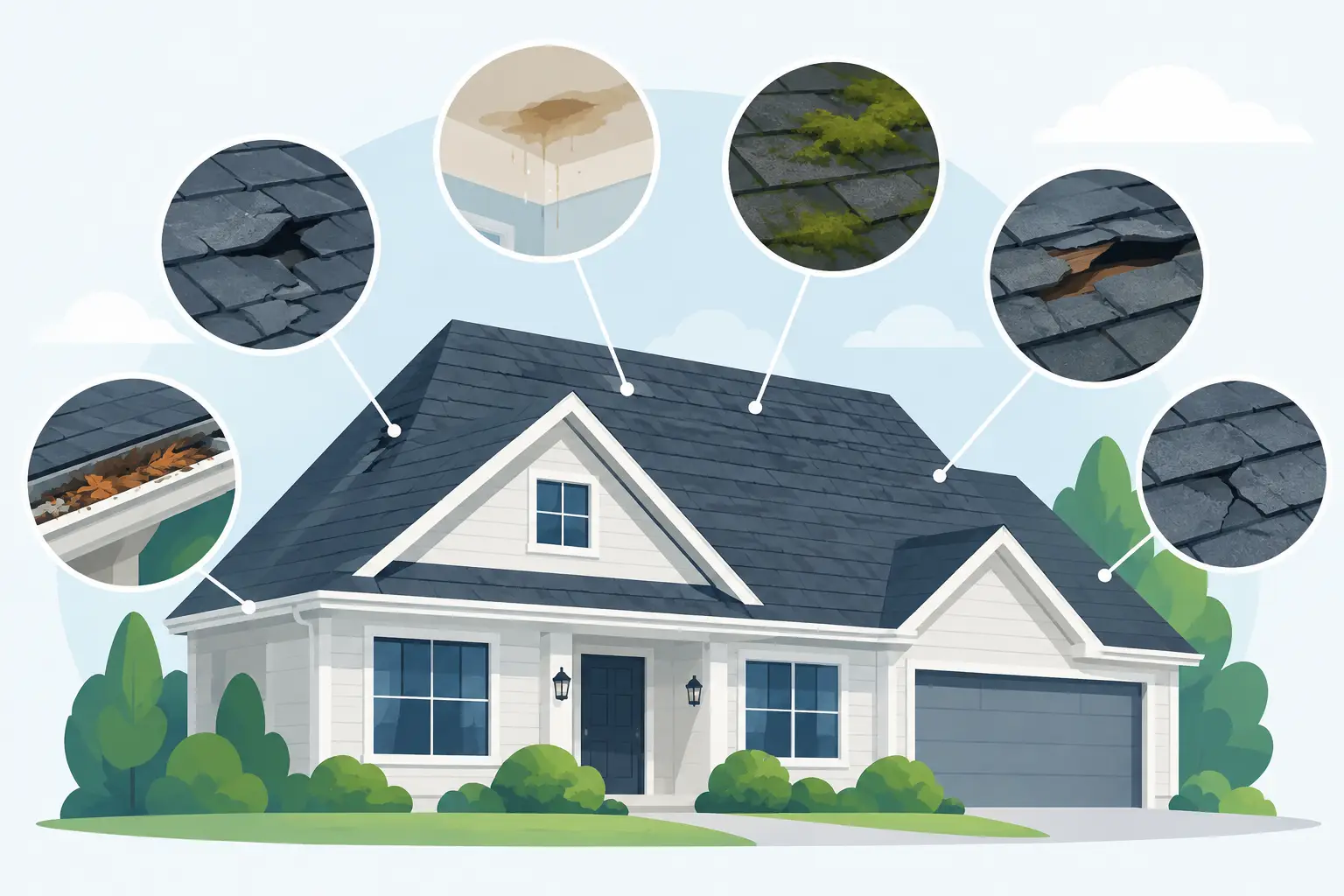
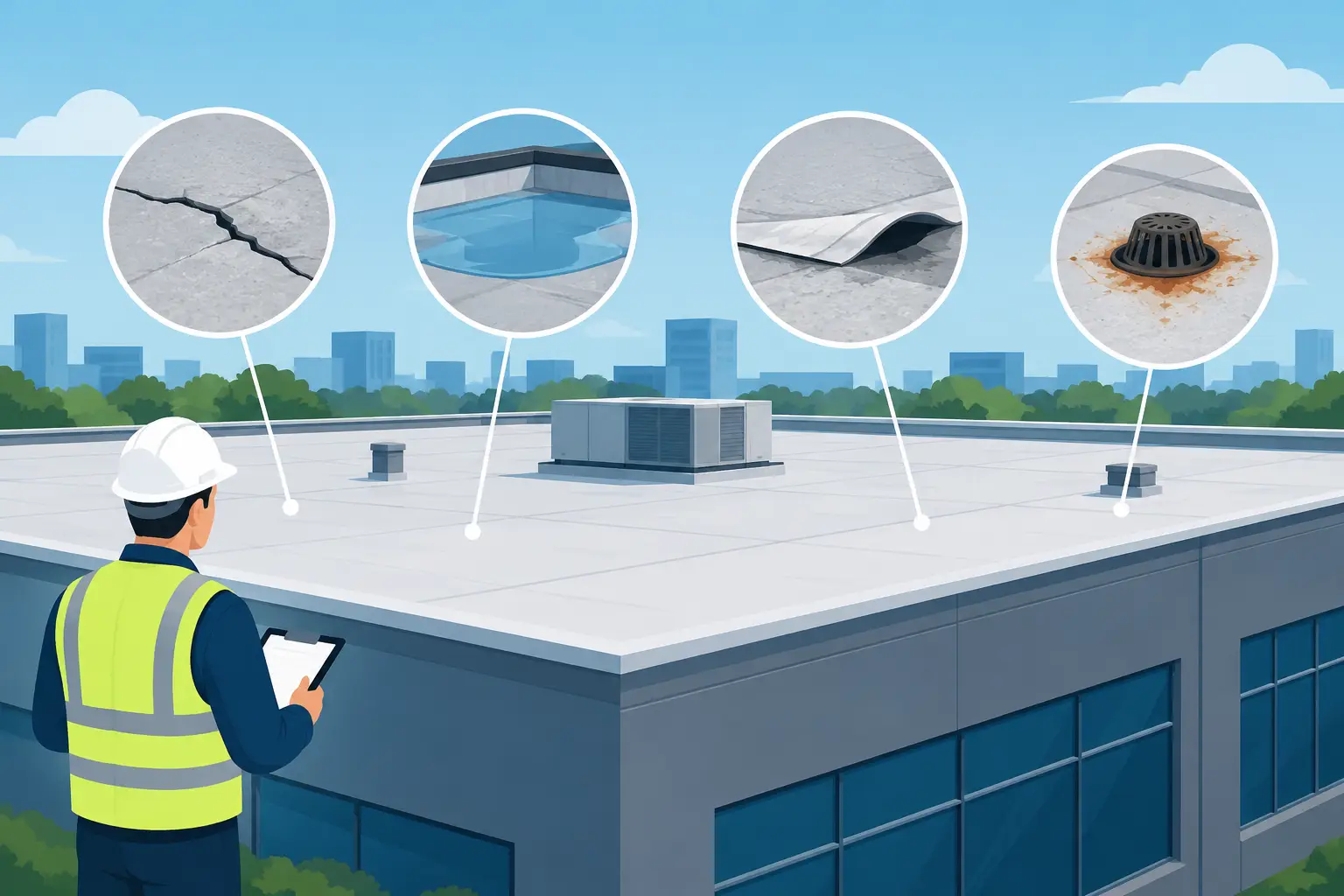
After the weather clears, look for obvious signs from a safe position at ground level. You may see displaced shingles, exposed underlayment, fallen flashing, damaged gutters, loose vents, punctures from branches, or debris around roof drains. On flat commercial roofs, ponding water around drains or scuppers can signal a drainage issue that needs prompt assessment.
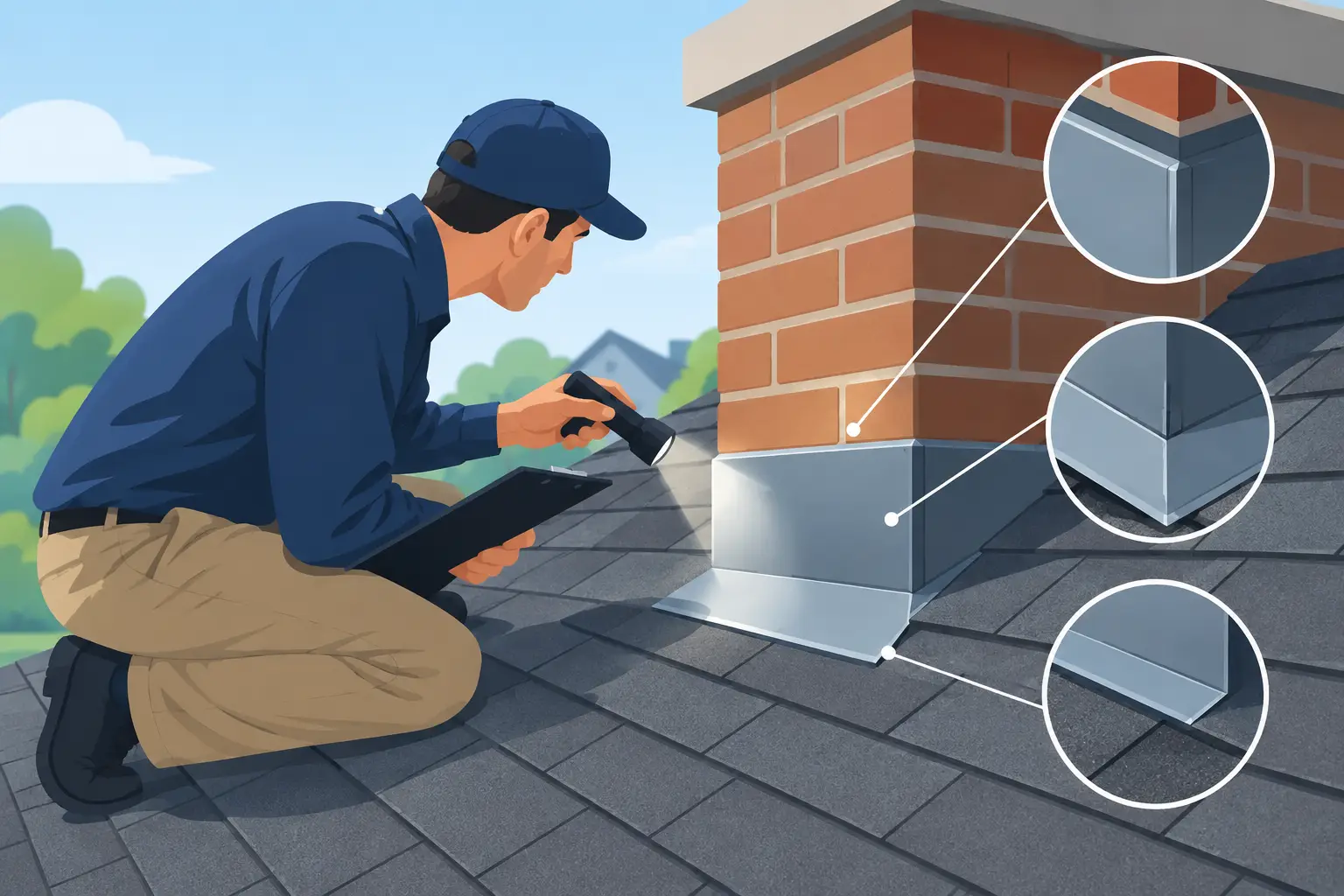
Do not treat an exterior visual check as a diagnosis. A missing shingle may be the source, but leaks can also come from flashing around chimneys, skylights, walls, plumbing vents, valleys, or rooftop equipment. On low-slope systems, membrane seams and penetrations require a different inspection approach than asphalt shingles.
If a tree limb is resting on the roof, a section has lifted in the wind, or you can see structural movement, keep clear of the area. Emergency tree removal and roof stabilization may be required before repairs can begin.
5. Use temporary protection only when conditions allow
A tarp can reduce additional water entry, but it is not a casual do-it-yourself task. Installing one requires safe roof access, stable footing, correct fastening, and an understanding of where the damage is located. Fasteners placed carelessly can create more penetrations and make the final repair more extensive.
A ground-based temporary measure is often safer. If practical, use plastic sheeting indoors to protect contents and redirect water into containers. For accessible, low-risk exterior areas, a professional may secure a tarp or temporary membrane until permanent materials can be installed.
Never use loose tarps, duct tape, roofing cement, or spray foam as a substitute for a qualified repair. These materials can trap moisture, conceal damaged decking, interfere with warranty-covered work, and make it harder to locate the original source. A temporary repair is meant to buy time, not close the job.
When an emergency requires a roofing contractor
Call for professional inspection promptly when water is entering the building, shingles or flashing have blown off, a branch has struck the roof, or a ceiling is sagging. The same applies when a flat roof is holding water, a skylight is leaking, or moisture appears near electrical equipment.
Commercial property managers should also act quickly when leaks affect tenant spaces, mechanical rooms, server equipment, inventory, or public areas. The cost of a small repair can rise quickly when water reaches insulation, interior finishes, or critical building systems. Clear communication with tenants and maintenance teams helps contain the issue while the roof is assessed.
A trained contractor should determine whether the solution is a localized repair, replacement of damaged shingles or flashing, membrane restoration, drainage correction, or a larger roof replacement. The answer depends on the age and condition of the roof, how long water has been entering, the condition of the deck, and whether the failure is isolated or repeated.
Toronto Roofers approaches emergency conditions with the same standards used for planned work: trained installers, Working at Heights safety compliance, detailed site assessment, and direct accountability for the repair recommendation. A proper estimate should explain what failed, what must be removed or dried, the proposed repair materials, and any conditions that could affect the final scope.
Do not overlook the damage you cannot see
The most visible leak is not always the most expensive part of the event. Wet insulation loses performance, wood decking can deteriorate, and moisture behind walls or above ceilings may support mold growth if it is not addressed. Ask the contractor whether the attic, deck, flashing, drainage paths, and ventilation should be evaluated as part of the repair.
For an older roof, an emergency leak can expose a broader maintenance problem. That does not automatically mean full replacement is necessary. A certified roofer should be able to distinguish between a repairable storm-related issue and a roof system nearing the end of its service life. Honest recommendations protect both the property and the long-term budget.
Once the immediate danger is controlled, schedule the inspection before the next weather event tests the roof again. Fast action is valuable, but safe, documented, professionally assessed work is what turns an emergency into a lasting repair.