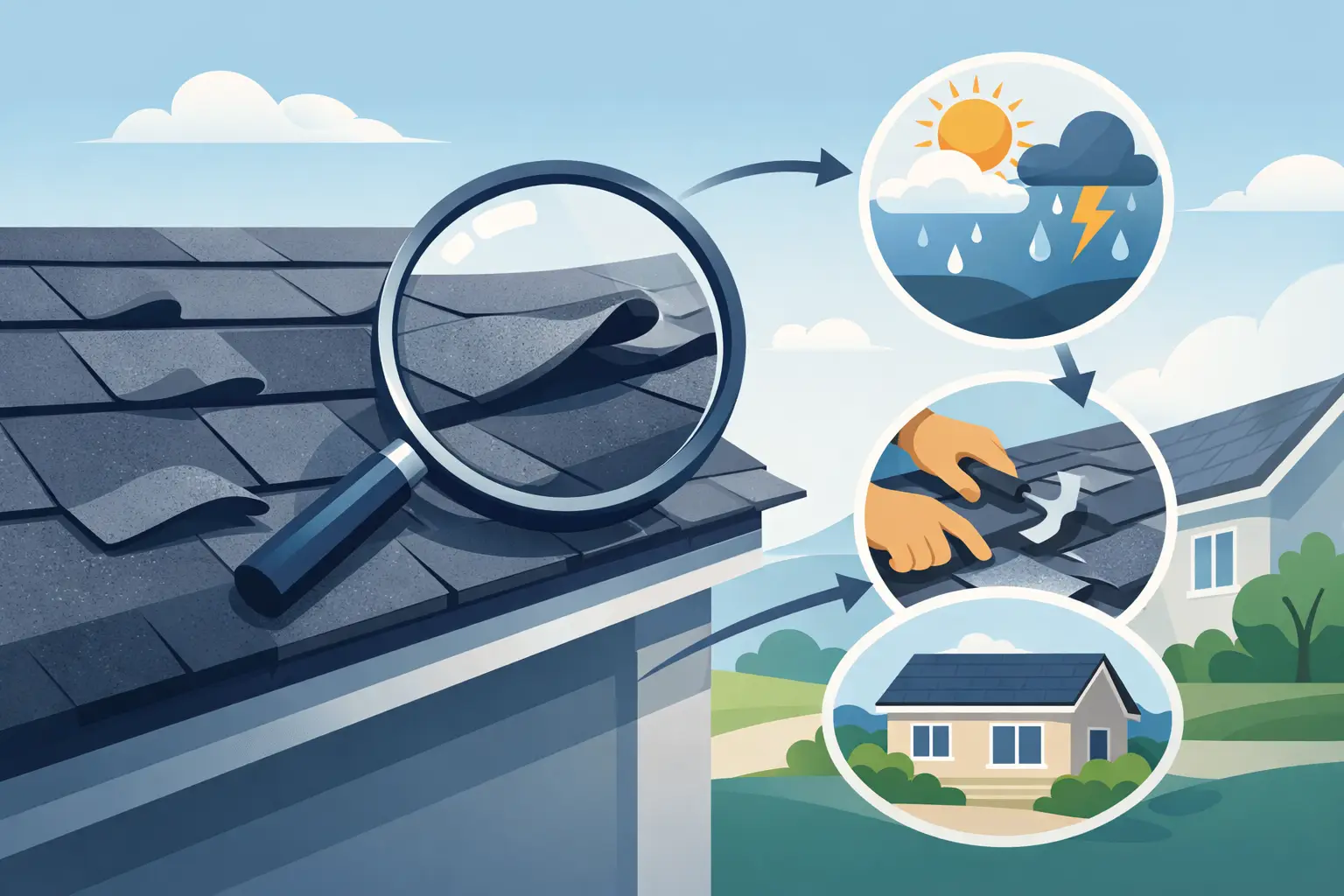
A curled shingle is more than a cosmetic issue. Once the edges lift or the corners begin to turn upward, the roof has lost part of its ability to shed water and resist wind. Homeowners often ask, why do shingles curl when the roof did not appear to be leaking yesterday? The answer can range from normal aging to an installation or ventilation problem that deserves prompt attention.
On a sloped asphalt-shingle roof, curling exposes areas that should remain protected. Wind can get beneath the lifted tabs, rain can reach the roof deck, and winter freeze-thaw cycles can accelerate the damage. The right response depends on the cause, the roof’s age, and whether the issue is isolated or widespread.
Why Do Shingles Curl on a Roof?
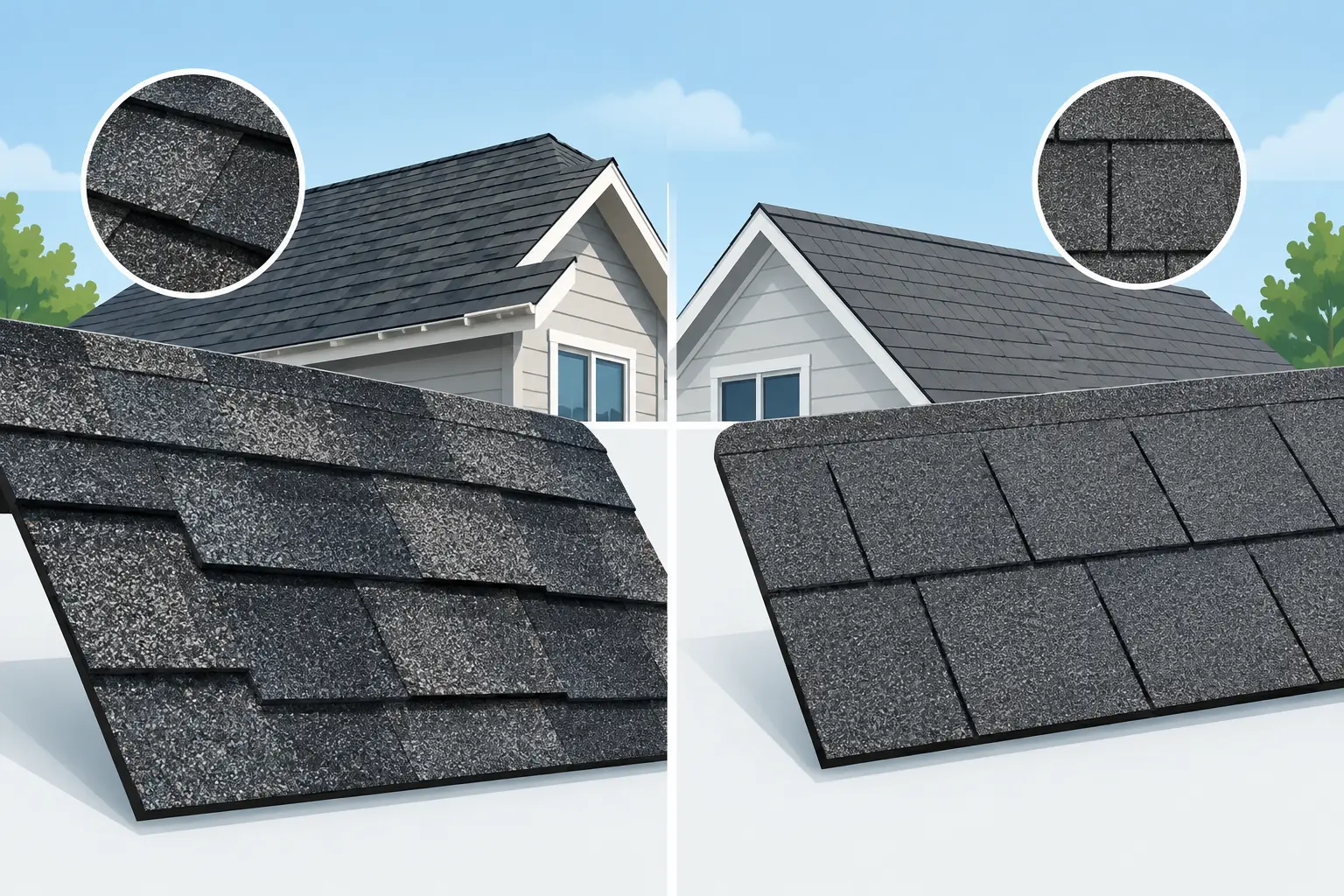
Shingles usually curl because they have lost flexibility, been exposed to excess heat or moisture, or were not installed under the conditions required by the manufacturer. Curling can take two common forms. Cupping occurs when the center of the shingle rises while the edges turn downward. Clawing occurs when the edges lift upward, creating a claw-like shape.
Both patterns should be taken seriously, particularly when they appear across several roof slopes. A few damaged shingles after a storm may be repairable. Widespread curling on an older roof often indicates that the roofing system is approaching the end of its service life.
Age and weather exposure
Asphalt shingles contain oils that help them remain flexible. Years of sun, heat, rain, snow, and temperature swings gradually dry those oils out. Once shingles become brittle, the edges may curl, crack, or lose their protective granules.
This process is not always evenly distributed. South- and west-facing roof sections commonly receive more direct sun and may deteriorate first. In the Toronto area, summer heat followed by cold winters and repeated freeze-thaw conditions can be especially demanding on aging shingles.
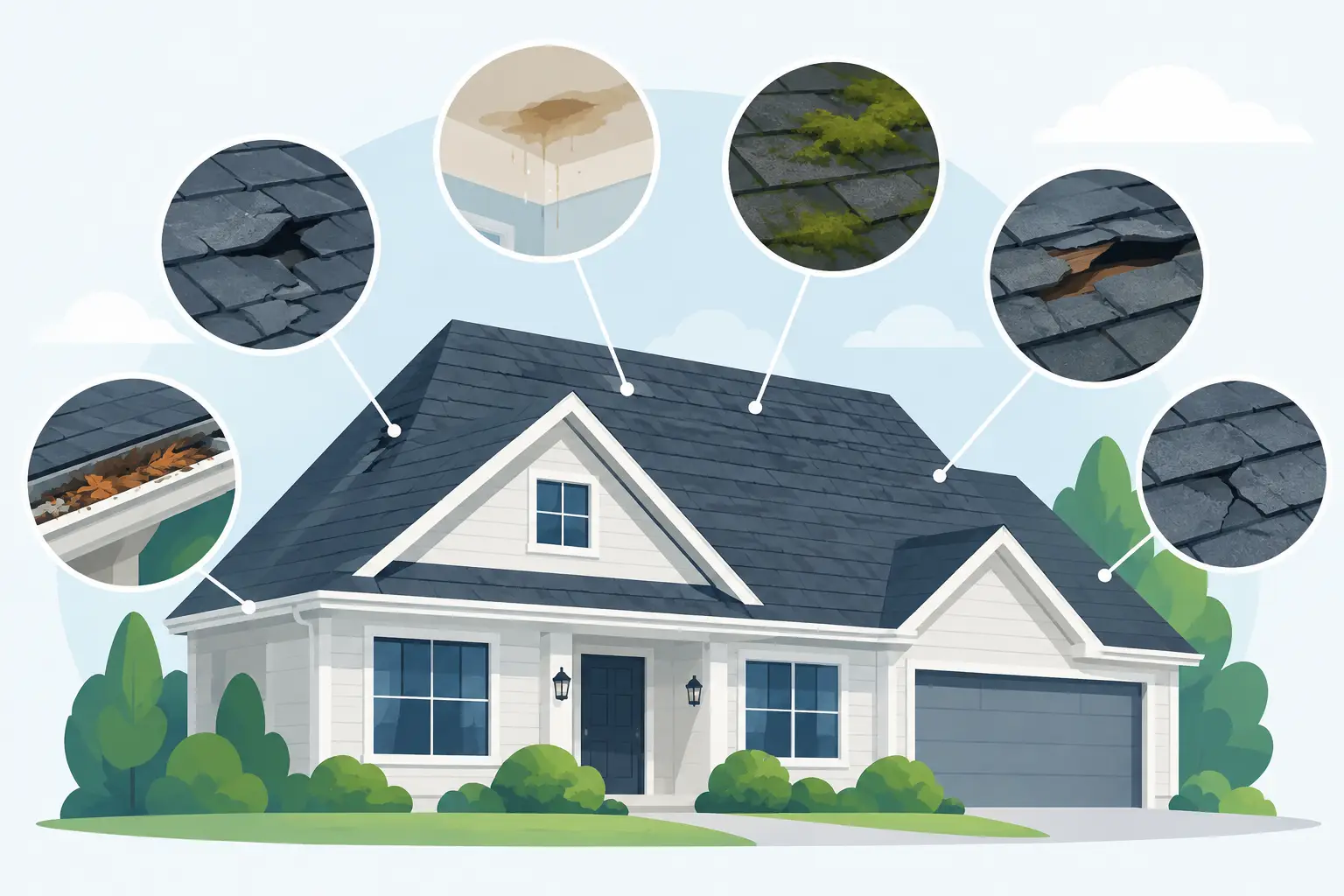
A roof near the end of its expected lifespan may show curling along with bald spots, cracking, loose tabs, or granules collecting in gutters. At that stage, spot repairs can reduce immediate risk, but they may not restore dependable long-term protection.
Poor attic ventilation
Heat and moisture trapped in an attic can shorten shingle life from below. During warm weather, inadequate intake and exhaust ventilation allow attic temperatures to rise. That heat transfers through the roof deck and can bake the shingles prematurely.
During colder months, moist indoor air can enter the attic and condense on cold surfaces. Over time, excess moisture can contribute to deck deterioration, mold growth, insulation problems, and shingle distortion. Ventilation must work as a balanced system. Adding more exhaust vents without sufficient intake ventilation is not always an effective fix.
A professional roof inspection should consider the full assembly, including soffit intake, exhaust ventilation, insulation, air sealing, and the condition of the roof deck. Replacing shingles without correcting a serious ventilation issue may leave the new roof exposed to the same damaging conditions.
Installation errors
Incorrect installation can cause shingles to curl much sooner than expected. Common concerns include inadequate fastening, improper nail placement, installing shingles over an uneven deck, or failing to follow the manufacturer’s requirements for underlayment and ventilation.
Cold-weather installation also requires care. Shingles may not seal properly when temperatures are low, leaving tabs vulnerable to wind lift. Excess roofing cement can be a problem as well. It is not a substitute for correct fastening or proper sealing conditions, and applying it indiscriminately can damage shingles or interfere with future repairs.
If a relatively new roof develops broad curling, lifting, or repeated loose shingles, it should be assessed by a qualified roofing contractor. Documentation matters when workmanship or manufacturer warranty coverage may be involved.
Moisture below the shingles
Water intrusion beneath shingles can affect the roof deck and create uneven surfaces that force shingles out of position. Leaks around flashing, chimneys, skylights, plumbing vents, valleys, or ice-dam areas may be the source. In some cases, the roof may look curled from the ground while the underlying issue is softened or deteriorated plywood.
This is why a roof should not be judged only from a driveway view. Safe, close inspection can identify whether the shingles are simply weathered or whether the deck, flashing, and ventilation system require repair.
Manufacturing defects and incompatible materials
Although less common, defective shingles can curl prematurely. The possibility is greater when the roof is new, the installation follows manufacturer specifications, and the pattern appears consistently across many areas. Incompatible roof materials, poor storage before installation, or shingles installed over unsuitable existing layers can also contribute to early failure.
A contractor should avoid assuming the cause before inspecting the roof. The correct diagnosis protects the property owner from paying for repairs that address the symptom but not the underlying problem.
When Curled Shingles Need Repair or Replacement
The most practical question is not simply whether a shingle has curled. It is whether the roof can still perform reliably through heavy rain, wind, snow, and changing temperatures.
A localized repair may be appropriate when a few shingles were damaged by wind, a branch, or a small flashing issue, and the remaining roof is in good condition. Matching replacement shingles can be difficult on older roofs because color changes with age, but a targeted repair may still be the sensible option if the system has useful life remaining.
Replacement deserves serious consideration when curling is widespread, shingles are brittle or cracking, granule loss is heavy, or leaks and repairs are becoming recurring expenses. A full replacement also allows the contractor to inspect the deck, install proper underlayment and ice-and-water protection where needed, and correct ventilation deficiencies before new shingles are installed.
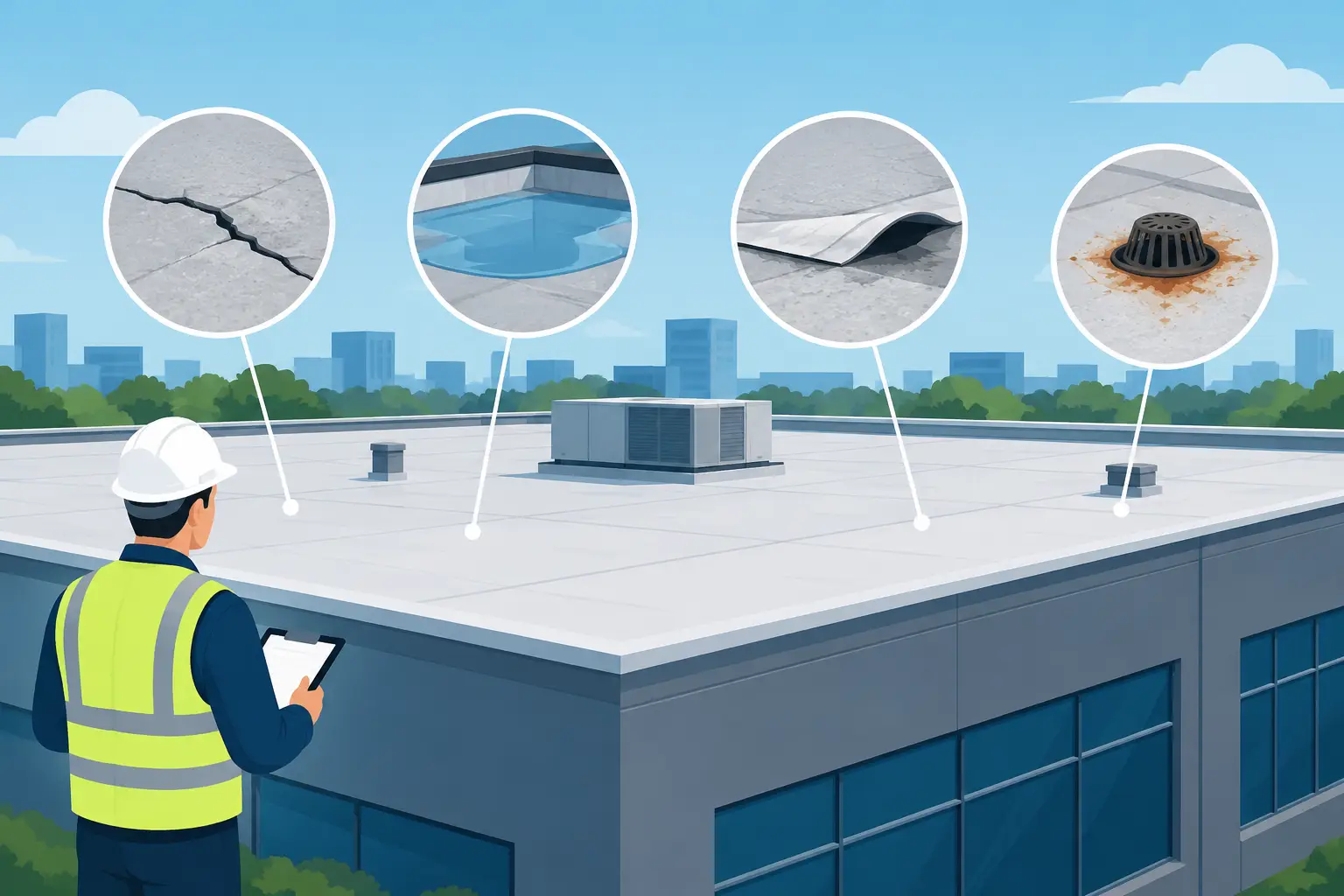
For commercial property owners, the same principle applies to shingle-covered sloped roof sections. Deferred repairs can turn a surface-level shingle problem into damage to insulation, ceilings, inventory, or tenant spaces. A documented assessment helps property managers plan repairs or capital replacement with fewer surprises.
What Not to Do When Shingles Curl
Do not walk on a brittle, curled roof unless you are trained and properly equipped. Foot traffic can break weakened shingles, and roof work carries serious fall risks. It is also unwise to flatten curled tabs with nails, adhesive, or a heat gun. These temporary measures can crack the shingle, create new punctures, and conceal water damage below.
Avoid waiting for an interior ceiling stain before arranging an inspection. By the time water becomes visible indoors, moisture may already have affected the roof deck, attic insulation, or framing. Early assessment is generally less disruptive and gives you more options.
A Professional Inspection Gives You a Clearer Decision
A qualified roofing inspection should look beyond the visible curl. The contractor should assess shingle condition, fastening, flashing, valleys, penetrations, gutters, roof deck stability, attic ventilation, and signs of moisture. You should receive a clear explanation of what is causing the problem, what repairs are appropriate, and whether replacement is the more responsible investment.
For homeowners and property managers, detailed estimates and direct accountability matter. Toronto Roofers uses trained, safety-compliant installers and evaluates the condition of the complete roofing system rather than treating every curled shingle as the same problem.
If you notice lifting edges, clawing tabs, missing granules, or interior signs of moisture, arrange an on-site roof assessment while the damage is still manageable. A timely diagnosis can protect the roof structure, preserve warranty options, and help you make a repair-or-replacement decision with confidence.