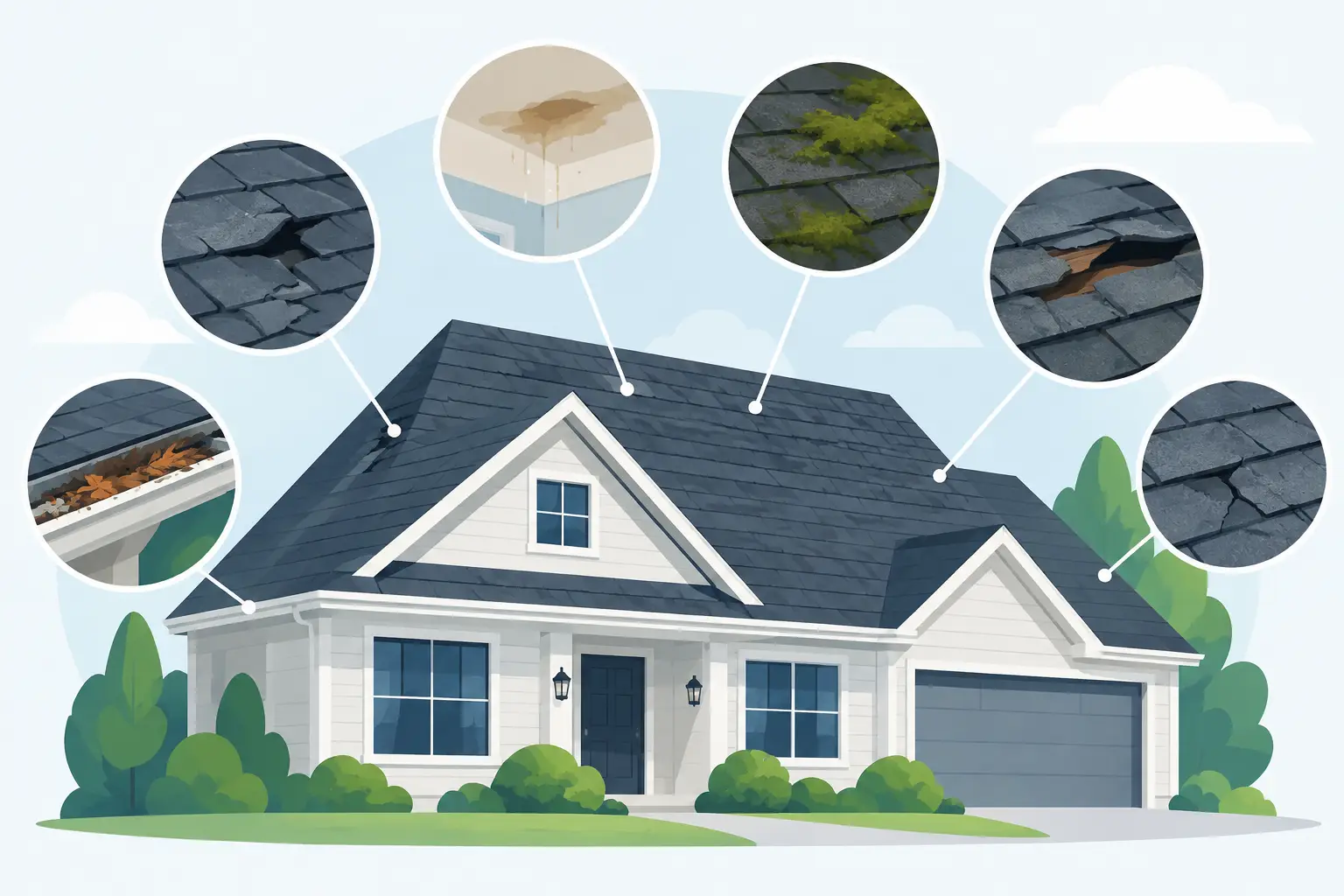
A roof rarely fails without giving warnings first. The problem is that many roof damage signs start small, often out of sight, and worsen through repeated rain, freeze-thaw cycles, wind, and snow. A loose shingle can become an exposed section of decking. A small flashing gap can allow moisture into insulation, framing, and finished interior spaces.
For homeowners and property managers, early action is the most cost-effective form of roof maintenance. Knowing what to look for helps you schedule a professional inspection before a manageable repair becomes an urgent replacement or interior restoration project.
10 Roof Damage Signs You Should Not Ignore
1. Missing, lifted, or cracked shingles
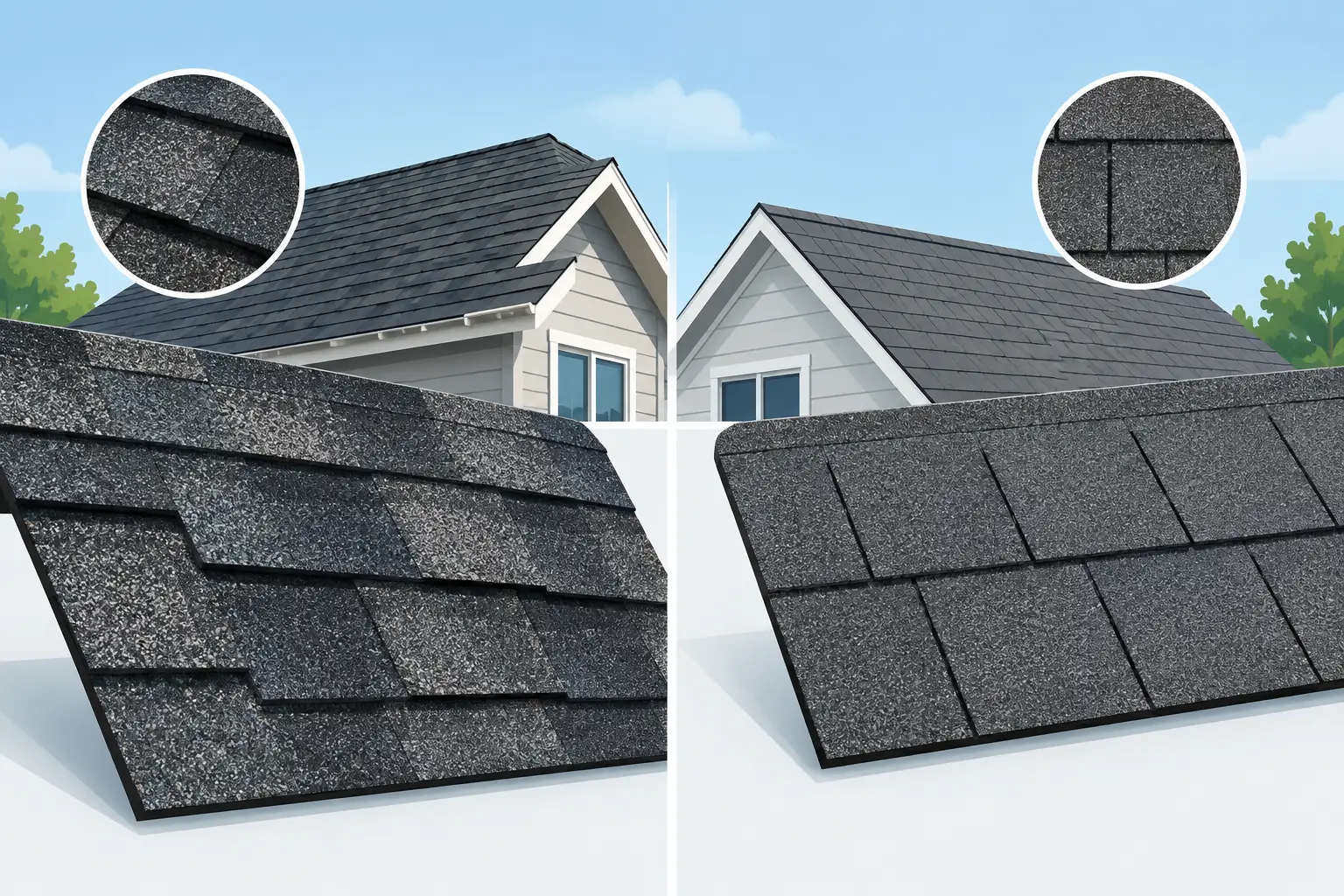
Shingles are the roof’s first layer of protection against water and wind. Missing shingles are an obvious concern, but lifted tabs, curling edges, cracks, and torn sections also deserve attention. Wind can break the seal that holds shingles down, allowing rain to reach the underlayment and roof deck beneath.
After a storm, inspect the roof safely from the ground with binoculars if needed. Do not climb onto a sloped roof to investigate. Walking in the wrong area can damage aging shingles, and wet or debris-covered surfaces are hazardous.
2. Shingle granules collecting in gutters
Asphalt shingles have a protective mineral surface. Some granule loss is normal, particularly on a newer roof, but large amounts in gutters or at downspout exits can indicate that shingles are wearing out. Bare or darker-looking patches on the roof are another warning that the protective surface has thinned.
Granule loss does not automatically mean a full replacement is required. The right solution depends on the roof’s age, the condition of the shingles across the entire slope, and whether leaks or underlying deck issues are present. A trained roofing contractor can distinguish normal aging from a roof system nearing the end of its service life.
3. Water stains on ceilings or walls
A brown ceiling stain, peeling paint near the ceiling line, or a damp patch in an upper-floor room should never be dismissed as cosmetic. These symptoms can indicate an active roof leak, but the entry point may be several feet away from where the stain appears. Water follows framing, insulation, pipes, and other building materials before it becomes visible indoors.
Interior staining can also result from plumbing leaks, condensation, or ventilation problems. That is why an on-site assessment matters. A qualified roofer should inspect the roof surface, flashing details, attic area, ventilation, and likely water paths instead of guessing from the stain alone.
4. Damaged flashing around roof penetrations
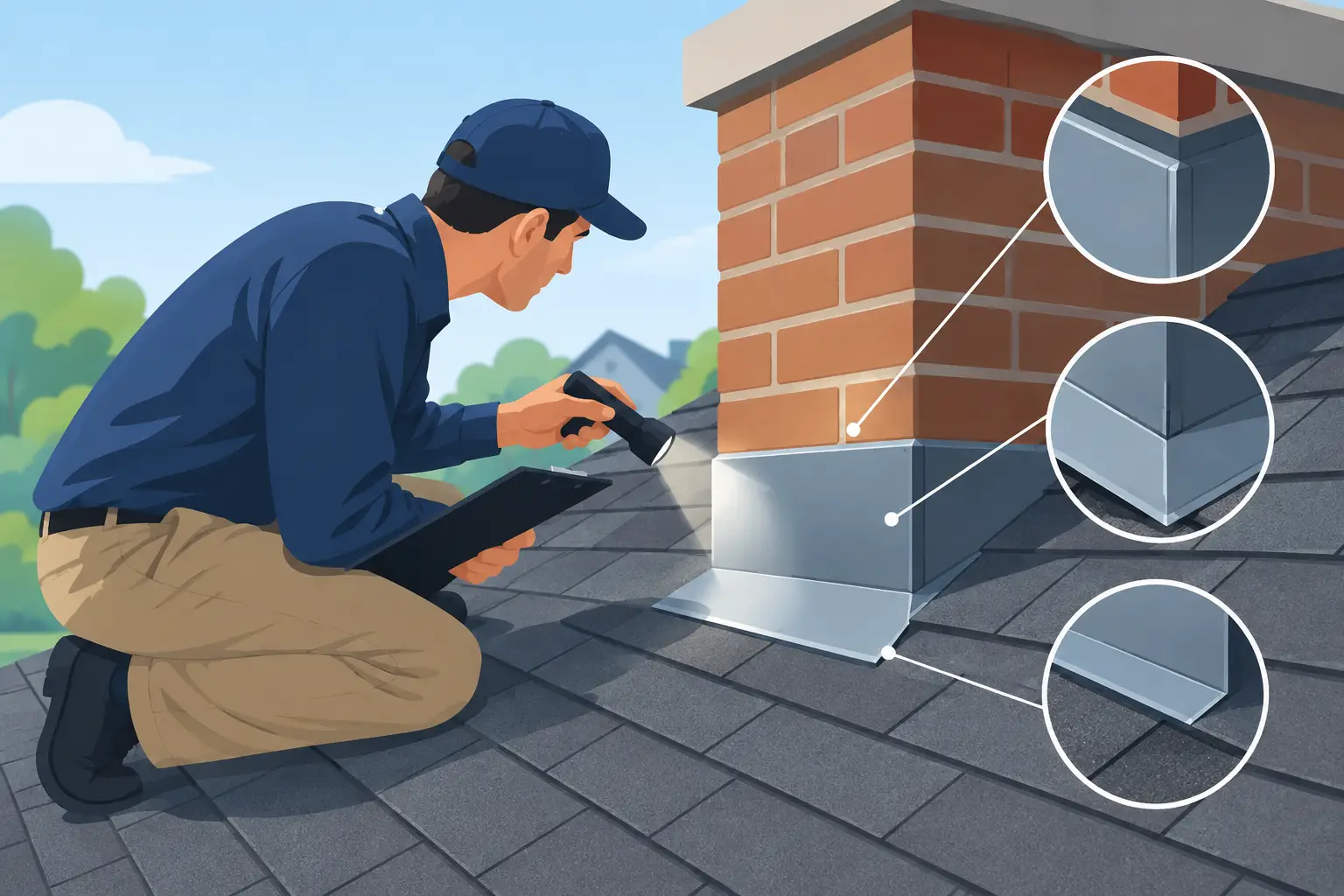
Flashing is the metal or membrane material installed where the roof meets chimneys, skylights, walls, vents, and valleys. These transitions are among the most leak-prone areas of any roof because they must direct water away from openings and changes in direction.
Look for loose metal, separated sealant, rust, cracked caulking, or lifted edges around penetrations. Temporary sealant may help in limited situations, but it is not a substitute for properly installed flashing. A lasting repair needs to integrate with the roofing system so water sheds correctly rather than being trapped behind a surface patch.
5. A sagging roofline or soft roof areas
A roofline should appear straight and consistent. Any visible dip, wave, or sag may point to deteriorated decking, prolonged water exposure, or structural concerns. Inside the attic, soft-looking sheathing, dark wood staining, or bowed framing should also be assessed promptly.
This is not a repair to postpone. A sagging area may involve more than shingles, and covering it with new roofing materials without correcting the cause can leave the building vulnerable. The roof deck and supporting structure must be evaluated before repair or replacement decisions are made.
6. Daylight, moisture, or mold in the attic
Your attic can reveal problems that are not yet visible from outside. On a clear day, small points of daylight through the roof deck may signal openings around fasteners, vents, or damaged materials. Damp insulation, musty odors, mold growth, frost buildup in winter, and darkened sheathing are equally significant signs.
Not every attic moisture issue begins with a roof leak. Inadequate ventilation or air leakage from the living space can create condensation that resembles a leak. A professional inspection should consider both roofing and ventilation, because repairing shingles alone will not solve a moisture problem caused by poor airflow.
7. Clogged, loose, or overflowing gutters
Gutters are not part of the roof covering, but they are essential to roof drainage. When gutters clog, water can back up at the roof edge, soak fascia boards, and contribute to ice dams during cold Toronto winters. Loose gutters and sagging sections can also allow water to spill against siding, foundations, and entryways.
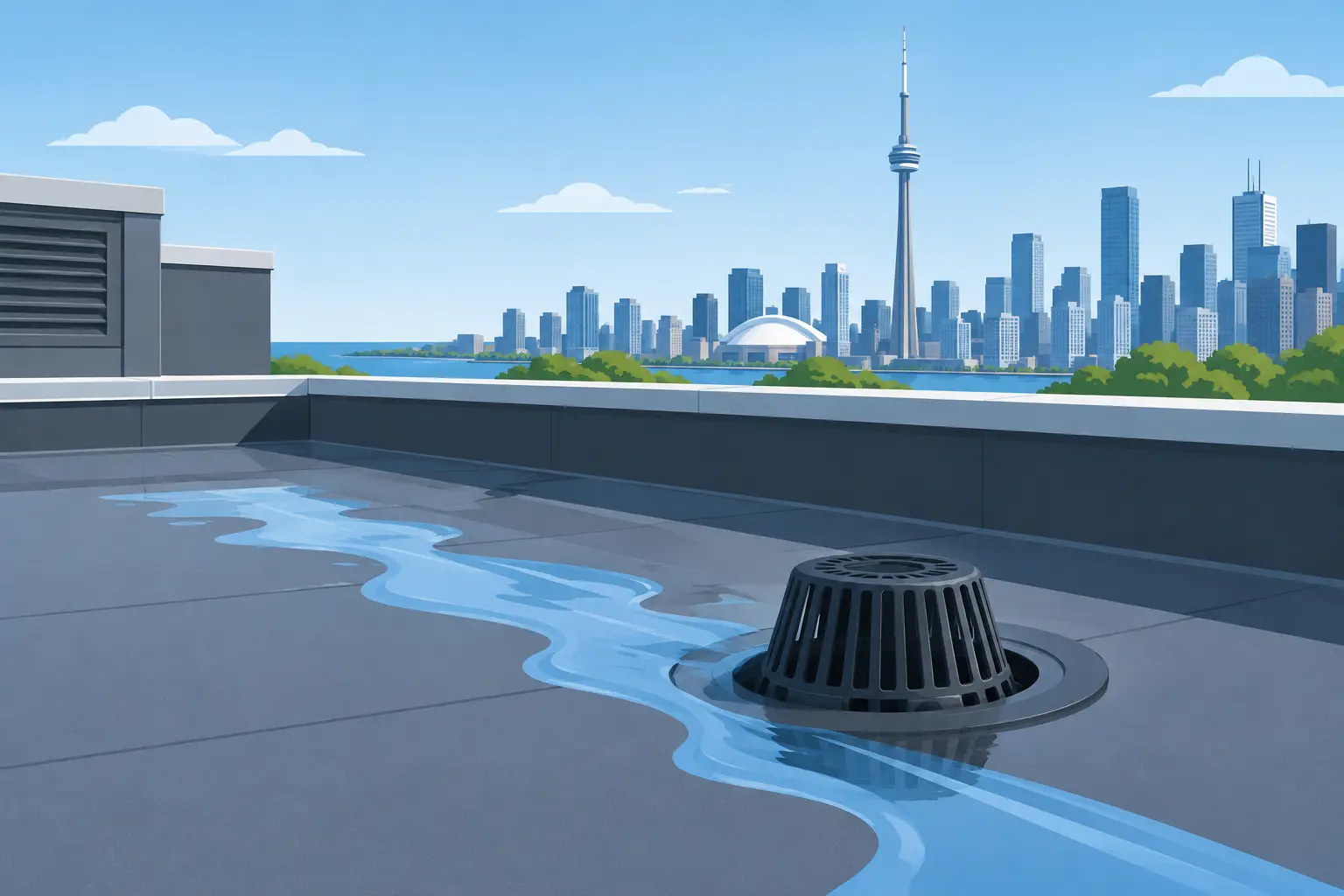
Keep gutters and downspouts clear, securely fastened, and directed away from the building. If you see persistent overflow despite cleaning, the roof drainage design or gutter pitch may need attention. Flat and low-slope commercial roofs require similar care with drains, scuppers, and internal drainage components.
8. Moss, algae, or vegetation growth
Dark streaks on shingles are often algae and are usually more of an appearance issue than an immediate leak concern. Moss is different. It can hold moisture against the shingle surface, lift edges as it grows, and accelerate wear in shaded areas.
Avoid pressure washing or aggressively scraping the roof. Both can strip protective granules and shorten shingle life. The appropriate treatment depends on the roofing material, roof age, and the extent of growth. For older shingles, replacement may be more sensible than repeated cleaning that risks further damage.
9. Higher energy bills or uneven indoor temperatures
A sudden increase in heating or cooling costs can have several causes, including insulation, windows, HVAC performance, and utility rates. However, roof and attic conditions should be part of the investigation. Air leaks, wet insulation, poor ventilation, and damaged roof components can reduce a building’s ability to manage heat and moisture.
This sign is especially relevant for commercial property owners, where roof insulation and membrane condition can affect operating costs across a large area. A roof assessment should identify whether the issue is localized, such as a flashing leak, or part of a broader roofing and insulation concern.
10. The roof is approaching the end of its expected life
Age alone does not determine whether a roof must be replaced. Installation quality, ventilation, storm exposure, maintenance history, and material type all affect service life. Still, an aging roof deserves more frequent attention, even when it is not leaking.
If your roof has required repeated repairs, has widespread shingle deterioration, or no longer provides confidence during heavy rain and wind, it is time for a detailed estimate. Replacement can be the better long-term investment when repair costs continue to accumulate or when the existing system cannot be restored to a dependable condition.
When Roof Damage Needs Immediate Attention
Some conditions call for urgent action. Active water entering the building, a tarp or emergency repair after a storm, visible structural sagging, large areas of missing roofing, or water near electrical fixtures should be addressed immediately. Move belongings away from the affected area if it is safe to do so, contain dripping water with a bucket, and contact a qualified roofing professional.
Do not rely on a quick surface patch as a permanent solution unless the roof has been fully assessed. Water damage can continue beneath shingles or membranes even after the visible leak appears to stop. Proper repairs require identifying the source, inspecting the surrounding materials, and restoring the roof assembly with compatible products and trained installation practices.
What a Professional Roof Inspection Should Include
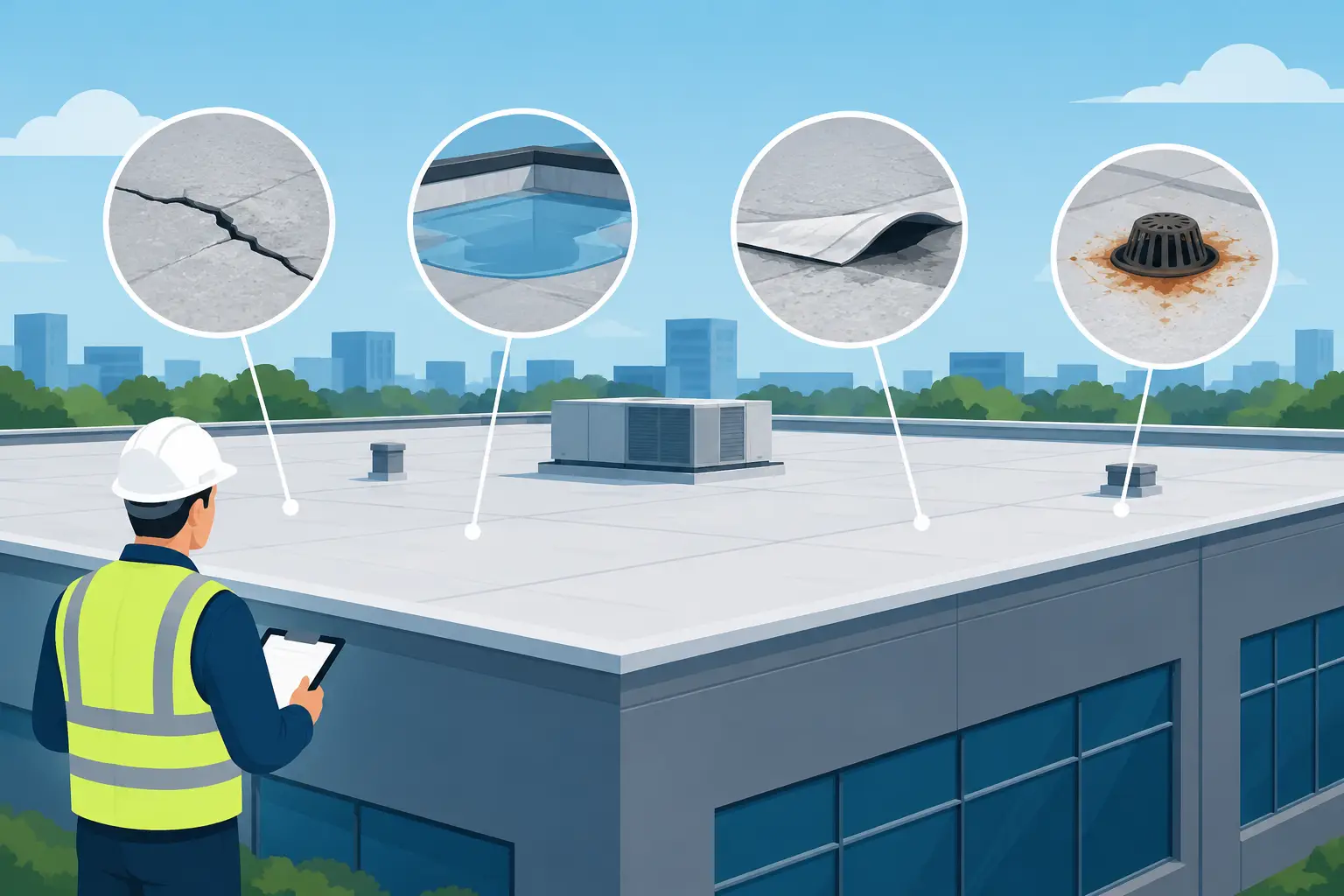
A useful inspection is more than a glance at the shingles. It should examine roofing materials, flashing, valleys, penetrations, drainage, roof edges, visible deck condition, and attic ventilation where accessible. For commercial roofs, the inspection should also consider seams, ponding water, drains, expansion details, and areas around mechanical equipment.
At Toronto Roofers, our in-house roofing specialists assess the condition of the full system before recommending repair or replacement. Clear findings and a detailed estimate allow property owners to make decisions based on the roof’s actual condition, not pressure or guesswork.
A roof does not need to be actively leaking to need attention. If you have noticed one or more of these warning signs, arrange an inspection while the repair options are still straightforward and before the next storm tests a vulnerable area.