A roof leak after a windstorm is not a wait-and-see problem. Water can move through insulation, ceiling cavities, electrical fixtures, and wall assemblies long before the visible stain reaches the room below. This emergency roof tarping guide explains how to reduce immediate exposure without taking unsafe risks or creating additional damage to the roof.
A tarp is a temporary weather barrier, not a repair. It can buy time while a qualified roofer assesses missing shingles, lifted flashing, punctures, tree impact, or membrane failure. The priority is always the same: protect people first, limit water intrusion second, and arrange a professional inspection as soon as conditions allow.
Emergency Roof Tarping Guide: First Decisions
Before anyone reaches for a ladder, assess the situation from the ground and inside the building. If a power line is down, water is entering near electrical panels or light fixtures, a tree has struck the structure, or the roof appears unstable, stay clear and contact the appropriate emergency services and your utility provider. A tarp does not make these conditions safe.
Wind, rain, ice, darkness, and steep roof slopes turn a simple temporary measure into a serious fall hazard. Do not climb onto a wet, icy, damaged, or poorly visible roof. Do not work alone. For most homeowners and property managers, the right decision is to contain the leak indoors and call a trained roofing crew with Working at Heights training and the proper fall-protection equipment.
If it is safe to do so, inspect from the ground with binoculars or take clear photos from accessible windows. Look for blown-off shingles, exposed underlayment, loose metal flashing, torn flat-roof membrane, displaced vents, and branches resting on the roof. These details help a contractor prepare for the emergency call and help support an insurance claim.
Control Water Inside Before It Spreads
The interior response often prevents more damage than a rushed attempt to cover the roof. Move furniture, electronics, inventory, and valuables away from the affected area. Place containers beneath active drips and use towels or plastic sheeting to protect flooring.
A ceiling that is bulging with water needs careful attention. Keep people away from the area, especially if electrical fixtures are nearby. If it is safe and electricity is not involved, a small controlled opening at the lowest point of the bulge can release water into a bucket and reduce the risk of a larger ceiling collapse. If you have any doubt about wiring or structural stability, leave it to an emergency restoration or roofing professional.
For commercial properties, document the affected rooms, equipment, and materials before moving them where practical. Notify occupants of wet areas, place warning signs around slip hazards, and protect sensitive operations from water exposure. A fast record of conditions can make the next steps with insurers, tenants, and contractors much clearer.
When a Tarp Is a Reasonable Temporary Measure
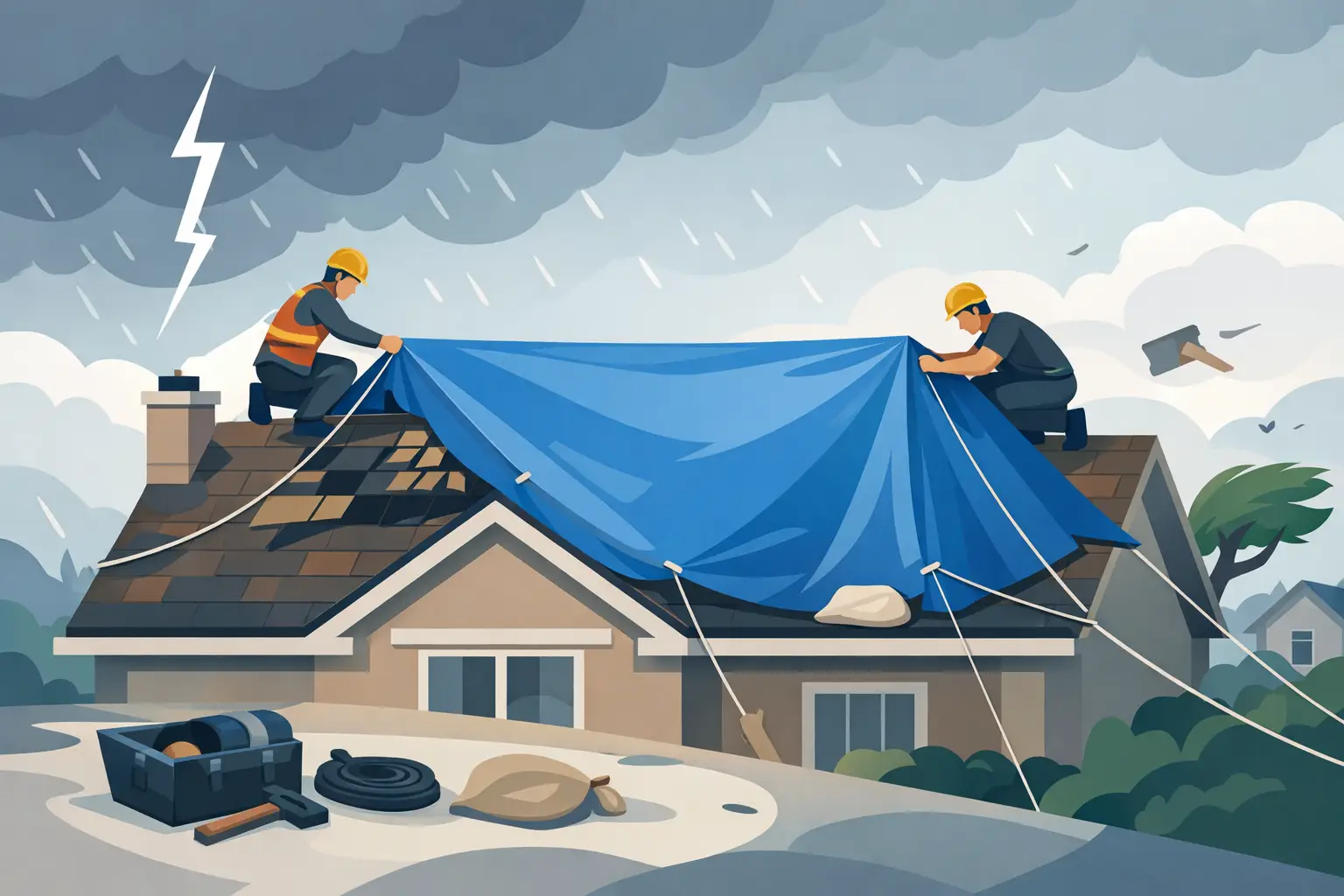
A temporary tarp may be appropriate when the roof damage is accessible, the weather has cleared, the roof surface is dry, and the person performing the work has safe ladder access and the ability to secure the material without walking across compromised areas. Even then, the work should be treated as short-term damage control.
Use a heavy-duty polyethylene tarp large enough to cover the damaged section with generous overlap on every side. The tarp needs to shed water downhill and extend well beyond the opening. Covering only the visible hole often fails because rain can travel beneath lifted shingles or under the tarp edge.
A practical emergency setup typically requires these materials:
- A heavy-duty tarp with no tears or pinholes
- Straight 1-by-3 or 1-by-4 wood boards for securing edges
- Exterior-rated screws long enough to fasten into sound decking or framing
- A drill, utility knife, measuring tape, gloves, and eye protection
- A properly rated ladder and a second person to stabilize the work area
Avoid using bricks, concrete blocks, loose tools, or other heavy objects to hold a tarp in place. Strong wind can turn them into projectiles, and they do not create a reliable weather seal. Duct tape, caulk, and adhesive patches may help with a very minor temporary issue on a dry surface, but they are not dependable solutions for storm damage.
How to Position a Roof Tarp Safely
If roof access is genuinely safe, position the tarp so water naturally runs over it and away from the damaged section. The upper edge should extend above the affected area, ideally toward the roof peak where the roof design allows. On sloped roofs, water must not be able to flow beneath the top edge.
Do not stretch the tarp tightly across sharp debris, broken shingles, exposed fasteners, or damaged metal. Those points can puncture the material. Remove only loose debris that can be safely reached without disturbing the roof system. A branch embedded in the roof or a large piece of damaged material should be left in place until a roofing professional can assess whether removing it will enlarge the opening.
Secure the tarp edges with wood battens rather than placing individual fasteners through the center of the tarp. Roll the tarp edge around a board, then fasten the board into structurally sound material. This spreads the load and reduces the chance of wind tearing through the tarp. Work from the sides and lower edge where possible, never from an unstable area around the damage.
There is a trade-off here. Any screw driven into a roof can create another penetration that requires proper repair later. That is why tarping should be limited to an active emergency and why the permanent repair should include a careful inspection of all temporary fastening points.
Flat Roofs Require a Different Response
Flat and low-slope commercial roofs should not be treated like shingle roofs. Water can pond, travel beneath membrane seams, and enter at drains, curbs, parapet walls, or mechanical penetrations. Walking on a wet membrane can also cause slips or damage materials that are already stressed.
If a flat roof is leaking, check safe interior access points first and note whether drains appear blocked, water is ponding, or ceiling areas are becoming saturated. Do not cut the membrane, force water toward an edge, or install a tarp over standing water. A commercial roofing contractor needs to identify the source, which may be some distance from the visible interior leak.
Document the Damage Without Delaying Mitigation
Take photos and short videos of the roof from the ground, exterior elevations, interior staining, damaged belongings, and any temporary protection you install. Record the date, weather conditions, and when the leak was first noticed. Keep receipts for tarps, cleanup materials, and emergency service work.
Do not wait for an insurance adjuster before taking reasonable steps to prevent further damage. Most policies expect property owners to mitigate loss. At the same time, avoid discarding damaged roofing materials or making permanent changes before the damage has been documented, unless doing so is necessary for safety.
Know When the Tarp Has Reached Its Limit
Call for professional help immediately when there is structural damage, multiple leaks, missing sections of roof covering, a puncture through the deck, chimney or flashing damage, repeated tarp failure, or water entering electrical areas. The same applies when a leak appears after a major storm but the source is not obvious. Hidden wind damage can compromise shingles, sealants, vents, and underlayment without leaving a dramatic opening.
Toronto Roofers approaches emergency roof protection with trained installers, direct on-site oversight, and a repair plan based on the actual condition of the roof system. The goal is not simply to cover a leak, but to identify why water entered, protect the structure, and complete a repair that supports the roof’s long-term performance and warranty requirements.
Once the weather settles, do not assume a dry ceiling means the issue is resolved. Arrange an inspection while the evidence is still visible. A properly installed temporary tarp can protect your property for the moment, but a timely, professional repair is what keeps the next storm from finding the same weakness.