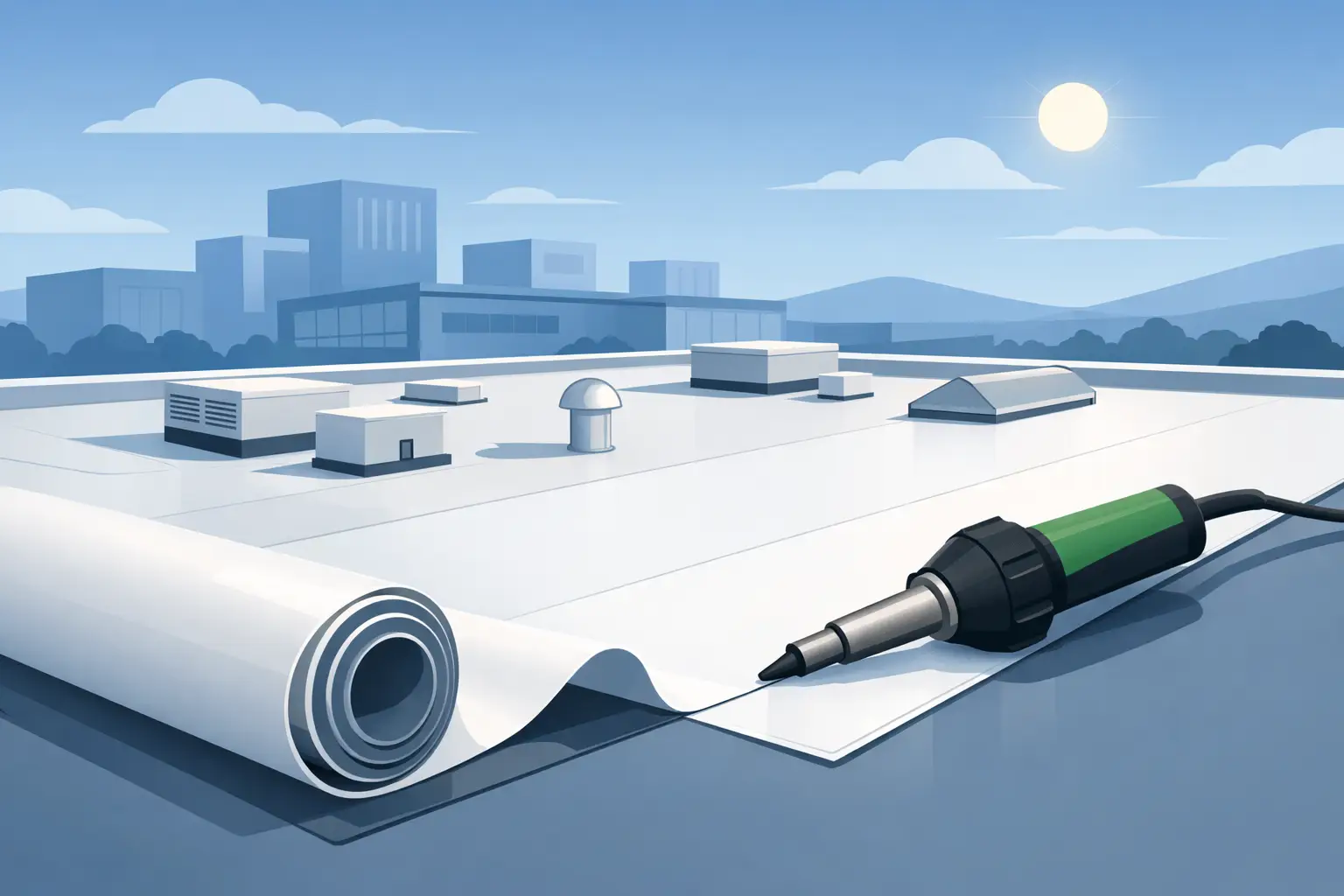
A low-slope roof is only as reliable as its seams, drainage, and details around every penetration. TPO membranes are a leading single-ply option for commercial buildings because they create a continuous, heat-welded waterproof surface that can perform well under demanding conditions. But the material alone does not make a roof dependable. System design, substrate preparation, trained installation, and ongoing maintenance determine whether a TPO roof delivers its expected service life.
For property owners and managers, the right question is not simply whether TPO is a good material. It is whether TPO is the right system for the building, and whether the contractor has the training, safety procedures, and direct job-site oversight to install it correctly.
What Are TPO Membranes?
TPO stands for thermoplastic polyolefin. It is a flexible, single-ply roofing membrane commonly used on low-slope commercial roofs. The membrane is manufactured in sheets, typically white or light-colored, then installed over insulation or a suitable cover board. Seams are fused with controlled hot-air welding rather than joined solely with adhesive.
That heat-welded seam is one of the primary reasons TPO is widely specified. When welding is performed at the proper speed, temperature, and pressure, adjoining sheets become one continuous waterproof assembly. This differs from many older roofing systems where laps depend more heavily on adhesives, asphalt, or tapes.
TPO is not a one-size-fits-all product. Membrane thickness, reinforcement, color, attachment method, insulation package, edge metal, drains, curbs, and flashing details must all be selected for the specific roof. A detailed on-site assessment is necessary before recommending a system.
Why TPO Is Popular on Commercial Roofs
TPO offers practical advantages for many warehouses, retail buildings, offices, multi-unit properties, and other structures with low-slope roof areas. Its light surface can reflect a significant amount of solar heat, which may help reduce heat absorption at the roof level during warm weather. The actual energy impact depends on insulation levels, building use, HVAC performance, roof color, and local conditions.
The membrane also resists common rooftop exposures, including moisture, ultraviolet light, and many environmental contaminants. Its flexibility helps it accommodate normal building movement and temperature changes when the complete system is properly designed and installed.
For building owners, TPO can also make inspection and maintenance more straightforward. The surface is generally easy to observe, and welded seams can be tested during installation to identify inconsistencies before the crew leaves the site. That quality-control step matters. A seam that looks acceptable from a distance may still need correction if it has not fused fully.
Where TPO Performs Best
TPO is most often used on roofs with a low slope, not on steep residential roof planes designed for shingles. It can be installed on new construction, roof replacements, and, in certain conditions, recover projects over an existing roof assembly.
A recover may reduce tear-off costs and building disruption, but it is not automatically the better choice. The existing roof must be dry, stable, and appropriate for a new system. Wet insulation, deteriorated decking, trapped moisture, excessive roof layers, or structural concerns may require removal rather than covering the problem.
Drainage is equally important. TPO is waterproof, but no roof membrane benefits from chronic standing water. A roof with clogged drains, poorly placed scuppers, sagging areas, or inadequate slope needs those issues addressed as part of the project. A new membrane installed over poor drainage may still face unnecessary stress and maintenance demands.
The Installation Details That Protect the Roof
A TPO roof is a system, not just a roll of membrane. The installation begins with evaluating the deck, existing assembly, drainage paths, rooftop equipment, and perimeter conditions. Crews must identify soft areas, moisture damage, loose components, and flashing failures before new materials are installed.
The deck and insulation need a clean, stable base. Depending on the design, the membrane may be mechanically attached, fully adhered, or secured with an approved ballast approach. Mechanically attached systems use fasteners and plates placed in a specific pattern, while fully adhered systems bond the membrane to the substrate. Each method has different cost, wind-resistance, substrate, and building-use considerations.
Seams require particular attention. Installers use hot-air welding equipment and perform test welds to confirm settings for the day’s conditions and materials. They then probe completed seams to check for voids or weak areas. This is hands-on quality control, not an optional finishing step.
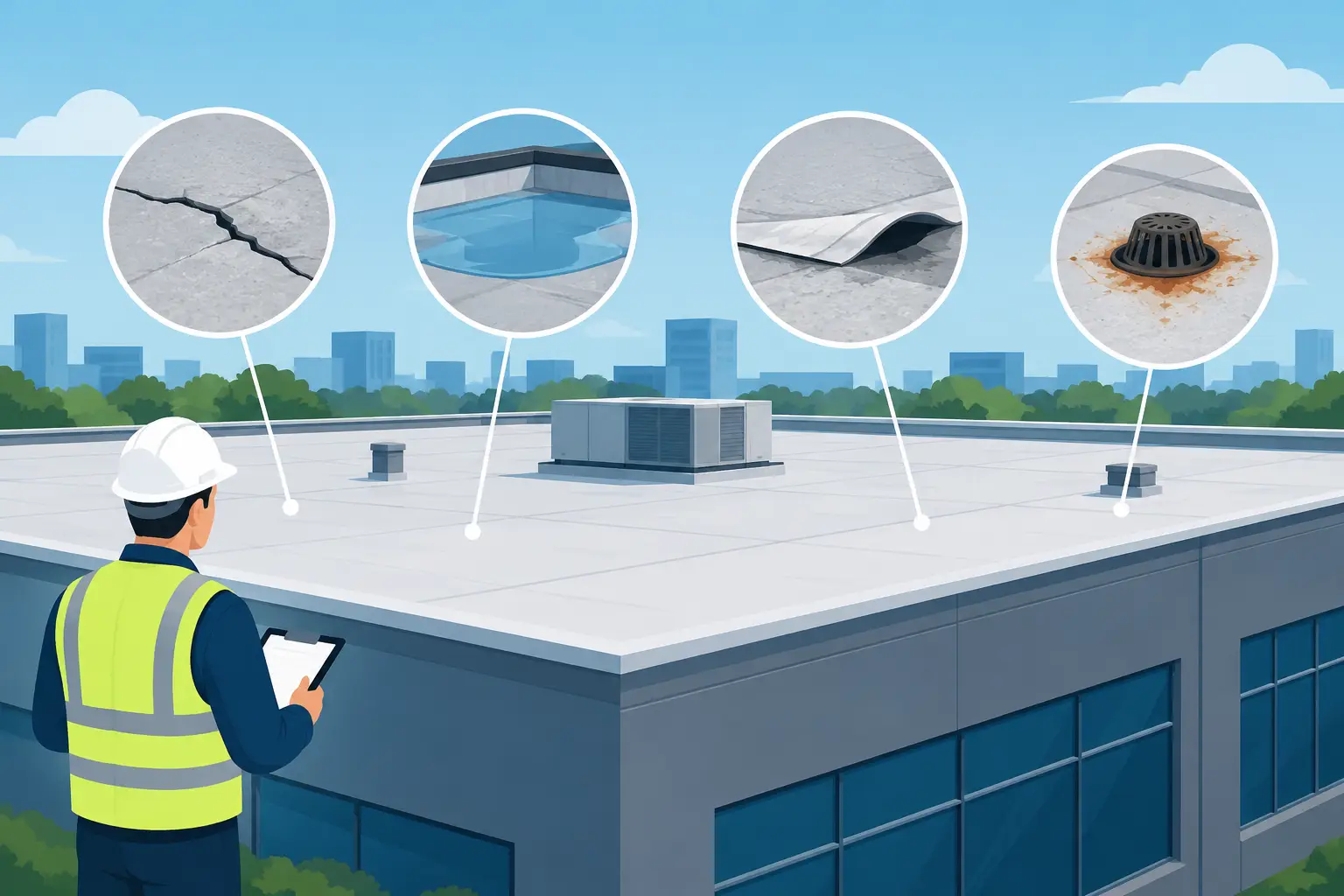
Details at parapet walls, curbs, drains, vents, skylights, expansion joints, and roof edges deserve the same level of care as the open field of the roof. Most leaks do not begin in the middle of an uninterrupted membrane sheet. They occur where materials change direction, terminate, or meet a penetration. Proper flashing, secure terminations, compatible accessories, and clean welds protect these vulnerable areas.
Choosing Membrane Thickness and System Design
TPO membranes are available in multiple thicknesses. A thicker membrane generally provides more material for long-term weathering and can offer stronger resistance to incidental damage, but it also increases material cost. It may be a sensible investment on roofs with frequent maintenance traffic, numerous mechanical units, or a longer ownership horizon.
Thickness should not be chosen in isolation. A thinner membrane installed as part of a carefully designed and properly maintained system may be appropriate for one building, while another may require a thicker membrane, cover board, enhanced walkway pads, and upgraded edge details. The roof’s exposure, drainage, wind requirements, access patterns, and warranty requirements all matter.
Property managers should also consider rooftop traffic. Service technicians crossing the roof to reach HVAC equipment can scuff or puncture a membrane over time. Designated walk pads and clear access routes help protect the roof while making maintenance work safer and more organized.
Maintenance Is Part of Long-Term Value
Even a well-installed TPO roof should be inspected regularly. Seasonal inspections and checks after severe weather can catch minor issues before they become interior leaks or insulation damage. Maintenance teams should look for blocked drains, damaged sealants, loose edge metal, debris buildup, punctures, unauthorized rooftop work, and changes around mechanical equipment.
Roof access should be controlled. Contractors installing signs, communications equipment, HVAC components, or other rooftop equipment can damage a membrane if they do not use proper protection and flashing methods. Any new penetration should be coordinated with a qualified roofing professional, not treated as a simple patch job.
Fast response matters when a leak appears. Water can travel through insulation or along the deck, meaning the interior stain may not sit directly below the entry point. A professional inspection can identify the source, assess whether moisture has entered the assembly, and recommend a repair that maintains system integrity.
Questions to Ask Before Approving a TPO Roof
A commercial roofing proposal should explain more than the membrane brand and square footage. Ask what preparation is included, whether existing materials will be removed or recovered, how wet areas will be handled, and what insulation and cover board are specified. The proposal should also address drainage corrections, flashing details, edge metal, penetrations, access protection, safety procedures, and warranty options.
It is also reasonable to ask who will perform the work. Roofing requires trained installers who understand manufacturer requirements, working-at-heights procedures, and the detail work that protects a building after the project is complete. Direct contractor oversight provides accountability from the initial site review through final inspection.
Toronto Roofers approaches commercial roofing with this level of planning and workmanship control. A clear estimate and on-site consultation help building owners understand the condition of the existing roof and the scope required to protect the property properly.
A TPO roof can be a sound, efficient choice when it is matched to the building rather than selected by price alone. Start with a careful roof assessment, insist on clear system details, and treat maintenance as protection for a major building asset.