
A roof rarely fails without warning. The top signs your roof needs replacement often begin as small changes that are easy to dismiss: a few curled shingles, a stain on the ceiling after heavy rain, or granules collecting near a downspout. In Toronto, repeated freeze-thaw cycles, wind, snow loads, and summer heat can turn those early symptoms into active leaks and expensive interior damage.
A professional inspection is the right way to determine whether repair or replacement makes financial sense. Some issues are isolated and can be repaired properly. Others indicate that the roofing system has reached the end of its service life, and continued patching will only delay a larger problem.
Top Signs Your Roof Needs Replacement
1. Your roof is nearing or past its expected service life
Age does not automatically mean a roof must be replaced, but it is a major factor. Most asphalt shingle roofs provide dependable protection for roughly 20 to 30 years, depending on shingle quality, ventilation, installation practices, maintenance, and weather exposure. A roof installed over an existing layer of shingles may have a shorter useful life because heat can become trapped and hidden deck issues are harder to identify.
Property records, prior inspection reports, and permits can help establish the roof’s age. If the roof is approaching its expected lifespan and multiple minor issues are appearing, replacement is often the more responsible long-term decision. A detailed on-site assessment should consider the shingles, flashings, valleys, vents, drainage, decking, and attic conditions rather than relying on age alone.
2. Shingles are curling, cracking, lifting, or missing
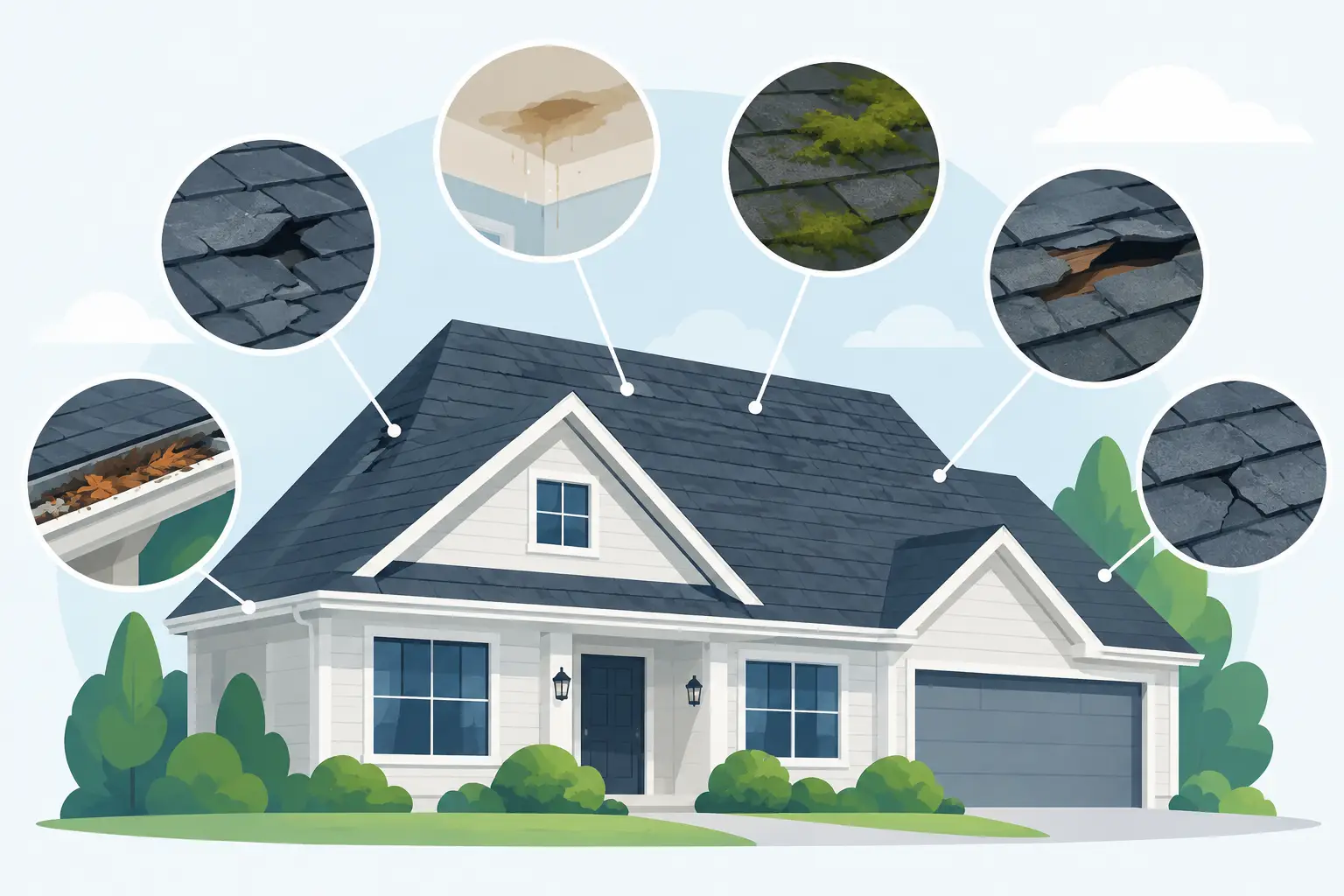
Shingles should lie flat and form a continuous water-shedding surface. Curling edges, cracked tabs, lifted corners, and missing shingles expose the roof to wind-driven rain and moisture intrusion. You may notice this damage after a storm, but it can also develop gradually when shingles become brittle from age and sun exposure.
A small number of damaged shingles may be repairable if matching materials are available and the surrounding roof remains in good condition. When deterioration is widespread, however, spot repairs can create a patchwork roof without solving the underlying aging problem. This is especially true when shingles no longer seal properly along their adhesive strips.
3. Granules are accumulating in gutters or at downspouts
Asphalt shingles are coated with mineral granules that protect them from ultraviolet exposure and help manage weathering. Some granule loss is normal, particularly after a new roof is installed. Significant or ongoing granule accumulation on an older roof is different. It can indicate that the shingles are wearing out and losing their protective surface.
Look for bare, darker patches on shingles or excessive gritty material in gutters. Granule loss does not always require immediate replacement, but it should prompt an inspection. Once shingles begin losing their protective layer, they can age faster, retain heat, and become more susceptible to cracking.
4. Water stains, recurring leaks, or damp attic insulation
An active roof leak deserves prompt attention, even if the stain is small or only appears during severe rain. Water can travel along roof decking, framing, wiring, and insulation before it becomes visible inside. The source may be a damaged shingle, failed flashing, an aging vent boot, ice damming, or an issue around a chimney or skylight.
One isolated leak does not necessarily mean the entire roof needs replacement. The decision depends on the cause, the roof’s age, and whether other sections are deteriorating. Recurring leaks in different locations, widespread attic moisture, or soft decking are stronger indicators that the roofing system is no longer providing reliable protection.
5. Flashing is deteriorated around roof penetrations
Flashings are the metal components installed at vulnerable transitions, including chimneys, walls, skylights, valleys, plumbing vents, and roof edges. A roof can have shingles that appear acceptable from the ground while flashing failures allow water into the structure.
Rust, loose metal, cracked sealant, exposed fasteners, or separated flashing should be evaluated by a trained roofing professional. In some cases, flashing can be repaired as part of routine roof maintenance. If the roof covering is aged and several flashing areas are failing, replacing the complete system may provide better protection and warranty value than repeated temporary repairs.
6. The roof deck feels soft or appears uneven
A straight roof plane is a good sign. Sagging areas, visible dips, soft spots, or a wavy appearance can point to damaged decking, trapped moisture, structural movement, or inadequate support. These are not cosmetic concerns. They require a careful evaluation because the roof deck is the foundation beneath the finished roofing material.
Do not walk on a roof to check for soft areas. Damaged decking can be unsafe, and walking on brittle shingles can cause additional damage. A qualified contractor can inspect the surface and attic structure safely, identify the extent of deterioration, and explain whether localized deck repair or a full replacement is necessary.
7. Moss, algae, and moisture-related growth keep returning
Dark streaks on asphalt shingles are often algae and may be largely cosmetic. Moss is more concerning because it holds moisture against the roof surface and can lift shingle edges over time. Persistent growth often points to shade, poor drainage, blocked gutters, or a roof that stays wet longer than it should.
Cleaning may improve the appearance of a roof that is otherwise sound, but aggressive pressure washing can damage shingles and shorten their life. When moss has spread beneath shingles or the roof is already brittle and aged, replacement may be the more practical option. The new system should also address drainage, ventilation, and nearby tree maintenance where appropriate.
8. Repairs are becoming frequent and increasingly expensive
A roof repair is a smart investment when it addresses a specific, limited issue. It becomes less cost-effective when service calls are recurring, leaks move from one area to another, or repairs are needed after every major weather event. At that point, property owners should compare the cumulative repair cost against the value of a properly installed replacement.
Replacement provides the opportunity to correct hidden concerns that cannot be fully addressed through surface repairs. This can include deteriorated underlayment, damaged decking, inadequate ventilation, weak flashing details, or compromised edge protection. It also allows the contractor to install a coordinated roofing system with compatible materials and manufacturer-backed coverage.
Repair or Replacement: What Should Guide the Decision?
The right answer depends on condition, not one symptom alone. A newer roof with a localized wind-damaged section may be a strong repair candidate. An older roof with curling shingles, granule loss, multiple leaks, and declining flashing is usually a replacement candidate. The key is to avoid making decisions based only on what is visible from the ground.
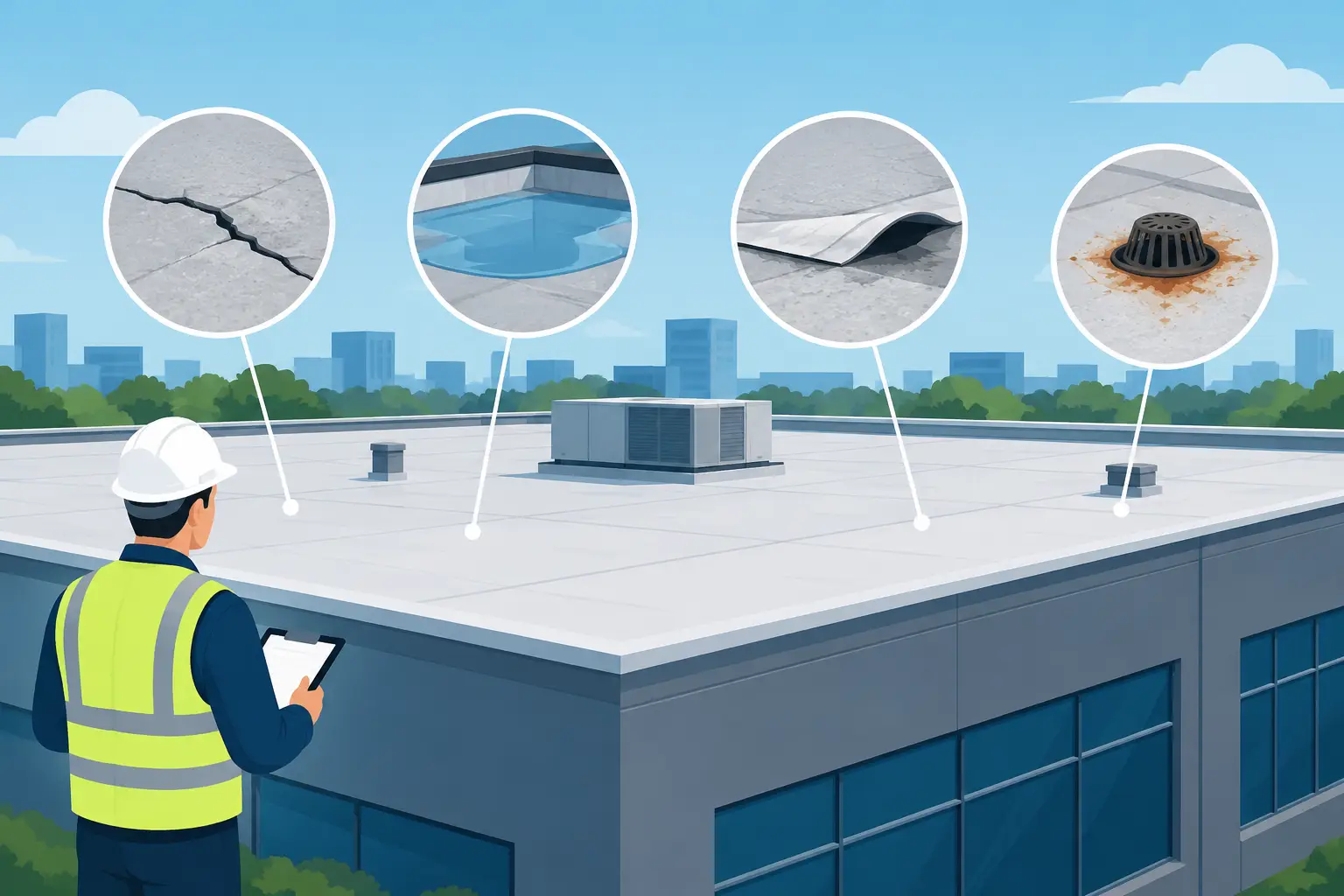
For commercial properties, the assessment should also account for membrane seams, drains, ponding water, rooftop equipment, insulation, and the building’s maintenance history. A small membrane split may be repaired, while widespread seam deterioration or persistent ponding may call for a more comprehensive replacement strategy.
A reliable estimate should clearly explain the proposed scope of work, materials, deck repair allowances, ventilation requirements, flashing details, disposal, safety procedures, and warranty coverage. Be cautious of vague pricing that does not identify how the contractor will handle concealed damage once the existing roof is removed.
Why a Professional Inspection Matters
Roof replacement is not simply a matter of installing new shingles. Long-term performance depends on proper preparation, correct underlayment, secure flashing, balanced attic ventilation, trained installation, and safe work practices. A roof can look new on installation day and still fail early if these details are overlooked.
Toronto Roofers approaches inspections with direct oversight, trained installers, Working at Heights compliance, and a clear focus on workmanship. An on-site consultation can distinguish a repairable issue from a roof that is no longer protecting the building as intended, without pressuring you into unnecessary work.
If you have noticed water staining, damaged shingles, repeated repairs, or an aging roof, schedule an inspection before the next severe weather event tests the system. Early action gives you more control over timing, budget, material selection, and the protection of the property beneath it.