A roof can look perfectly fine from the street and still be failing from the inside. We see this often when attic heat and moisture have been building for months or years, quietly shortening shingle life, warping decking, and creating mold risk. This roof ventilation guide for homeowners is meant to help you understand what proper airflow actually does, what can go wrong, and when a professional inspection is the smart next step.
Why roof ventilation matters more than most homeowners think
Roof ventilation is not just about letting hot air escape in summer. A properly ventilated roof system helps regulate attic temperature, control moisture, and protect the full assembly from the inside out. That includes shingles, underlayment, roof decking, insulation, and even framing.
When ventilation is weak, attic temperatures can climb fast during warm weather. That trapped heat can age shingles prematurely and push cooling costs higher. In colder months, the bigger issue is often moisture. Warm indoor air rises into the attic, and if that moisture cannot escape, it can condense on colder surfaces. Over time, that creates the conditions for wood rot, insulation damage, and mold growth.
For homeowners, the key point is simple: ventilation affects more than comfort. It affects roof performance, maintenance needs, and long-term replacement costs.
How a roof ventilation system works
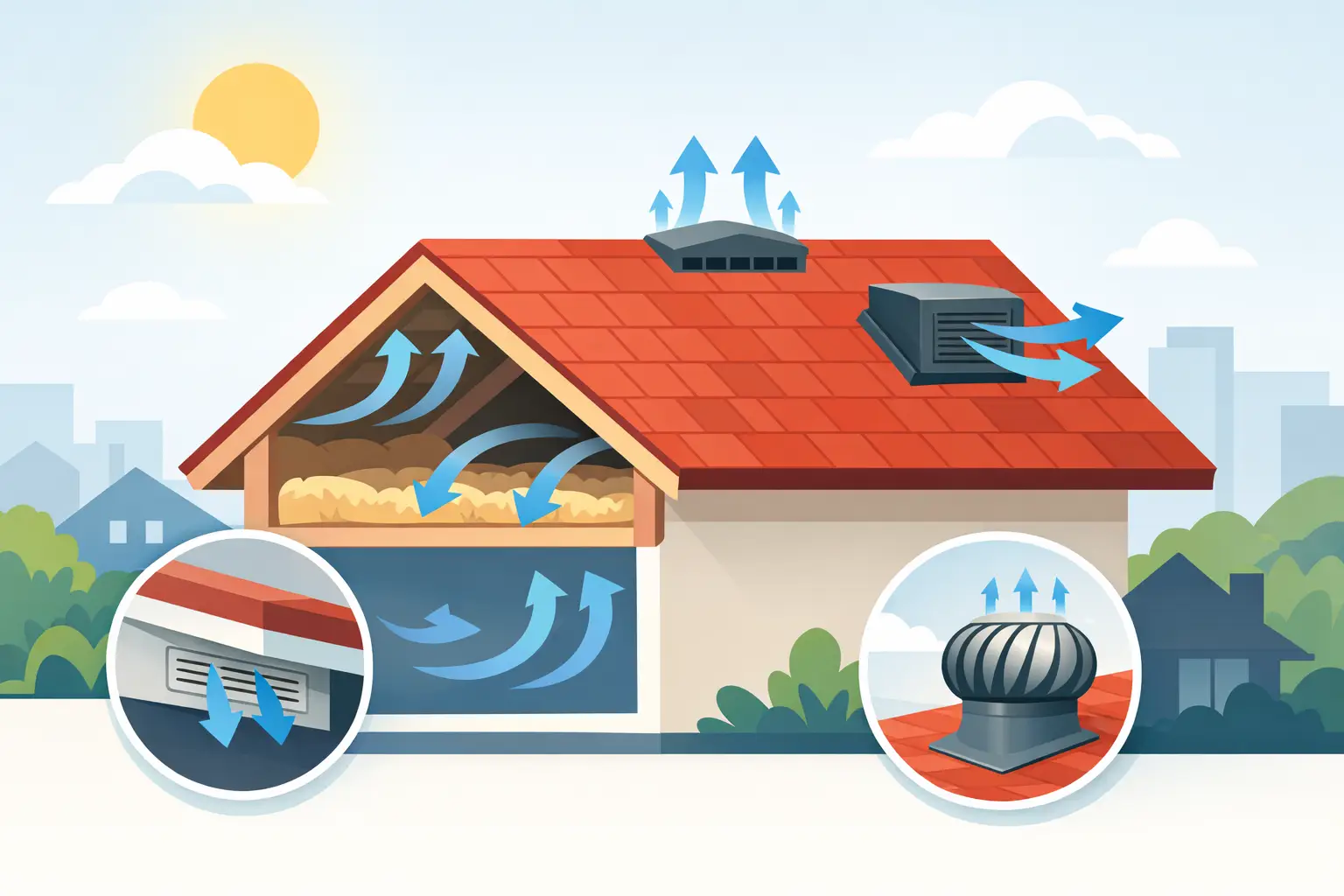
A balanced system usually relies on intake and exhaust. Intake vents, often installed at the soffits, allow cooler outside air to enter the attic. Exhaust vents, placed near the ridge or high on the roof, allow warm, moist air to leave.
That continuous airflow matters. Exhaust alone is not enough if the system cannot draw in fresh air from below. Likewise, intake vents do not solve much if the hot air has nowhere to exit. The goal is controlled circulation across the underside of the roof deck.
There are different vent types, and the right setup depends on roof design. Ridge vents are common and effective on many sloped roofs because they run along the peak and provide consistent exhaust. Box vents, static vents, and turbine vents may be used on some homes. Powered attic fans can help in specific situations, but they are not always the best answer. If the attic is not properly sealed or balanced, a fan can pull conditioned air from the house instead of fixing the ventilation problem.
Roof ventilation guide homeowners can use when checking for problems
Most homeowners are not climbing into the attic with instruments, and they should not need to. Still, there are warning signs worth paying attention to.
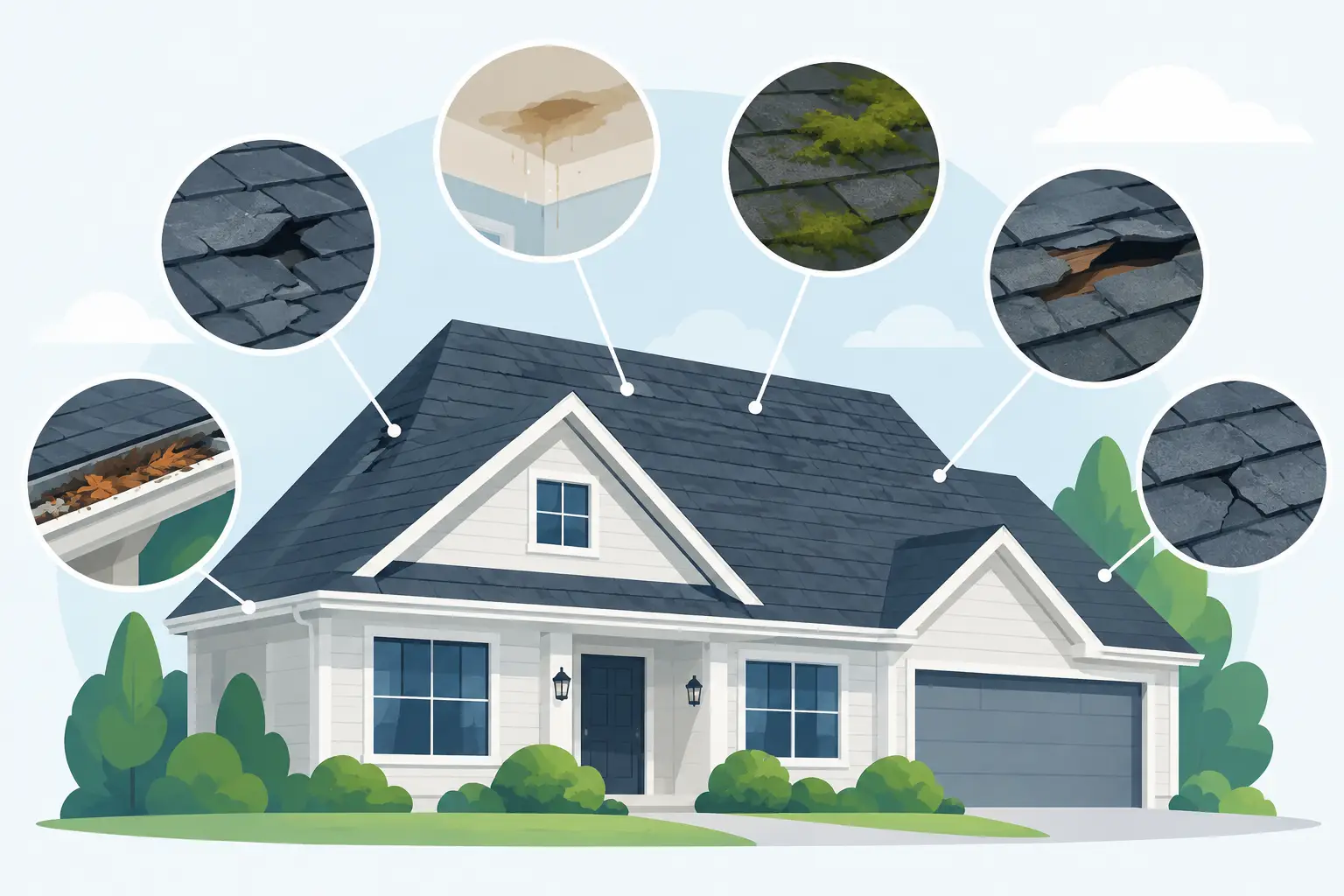
If the upper floor feels much hotter than the rest of the home in summer, poor attic ventilation may be contributing. If you notice frost, damp insulation, staining on the underside of roof decking, or a musty smell in the attic during colder months, moisture buildup may be the issue. Curling shingles, premature granule loss, or repeated ice dam problems can also point to ventilation deficiencies, although those issues can involve insulation and air sealing too.
This is where experience matters. Roof problems rarely come from one cause alone. Ventilation, insulation, attic bypasses, flashing details, and roof age all interact. A contractor who only looks at the shingles can miss the real source of the problem.
Common ventilation mistakes that cause expensive damage
One of the most common issues is blocked soffit intake. This often happens when insulation is packed too tightly at the eaves, cutting off the airflow the system depends on. From the outside, the roof may look normal. Inside, the attic is not getting enough fresh air.
Another frequent mistake is mixing vent types in ways that interfere with performance. For example, adding roof-mounted exhaust vents to a ridge vent system can reduce efficiency if air starts pulling from the easier opening instead of flowing properly from soffit to ridge. More vents do not always mean better ventilation.
We also see roofs with insufficient vent area for the size of the attic, along with older homes where renovation work changed the airflow path. New insulation, finished attic spaces, or additions can all alter how the roof system behaves. If the house has been updated over the years, the original venting plan may no longer match the current structure.
Installation quality matters as much as product choice. A vent is only effective if it is placed correctly, integrated properly with the roofing system, and protected against water intrusion. Poor workmanship can create leaks while still failing to improve airflow.
What proper attic ventilation can and cannot do
Good ventilation helps a roof system perform as intended, but it is not a cure-all. Homeowners are sometimes told that ventilation alone will solve high energy bills, winter ice problems, or persistent attic moisture. Sometimes it helps significantly. Sometimes it only addresses part of the issue.
If warm interior air is leaking heavily into the attic through recessed lights, bath fan ducting, plumbing penetrations, or poorly sealed access hatches, ventilation will be fighting an uphill battle. If insulation is thin or uneven, temperature differences can still create trouble. If shingles are already near the end of their service life, adding vents will not reverse aging.
The practical takeaway is that ventilation should be evaluated as part of the full roof and attic system. That is the approach a trained roofing contractor should take during an on-site consultation.
When to inspect ventilation during roof replacement
The best time to correct ventilation issues is often during roof replacement. At that stage, the contractor has direct access to the assembly and can assess intake, exhaust, decking condition, and the compatibility of the vent system with the new roofing materials.
This matters for warranty protection as well. Many roofing manufacturers expect roof systems to be installed according to specific standards, and ventilation can be part of that discussion. If a roof is replaced without addressing obvious airflow deficiencies, the homeowner may end up with a new roof over an old problem.
For that reason, detailed estimates should not stop at shingles and labor. They should explain whether the existing ventilation is adequate, what changes are recommended, and how those changes support the performance of the new roof system.
Roof ventilation guide homeowners should follow before hiring a contractor
Before approving any ventilation work, ask how the contractor calculated the ventilation needs of the home and whether the plan includes balanced intake and exhaust. Ask whether soffits are open and functional, not just present. Ask how the proposed vents will integrate with the existing roof design and whether any current vents should be removed or replaced.
It is also fair to ask who will perform the work. Roofing is a high-trust trade, and ventilation changes affect weather protection, roof life, and often manufacturer warranty conditions. Homeowners should look for trained installers, safety compliance, and clear accountability. Certifications and workmanship standards are not marketing extras. They are signs that the contractor understands how a roof system performs as a whole.
In markets like Toronto, where homes deal with humid summers, freeze-thaw cycles, and winter snow loads, ventilation details matter. A rushed or improvised approach can create problems that do not show up until the next season.
Signs it is time to schedule a professional evaluation
If your roof is aging, if you have had recurring ice dams, if the attic smells damp, or if mold has been found near the roof deck, it is time for a proper assessment. The same is true if you are planning to replace the roof, add insulation, or convert attic space. Those changes affect airflow and should not be handled in isolation.
A professional inspection should look beyond surface symptoms. That means checking vent placement, attic conditions, decking health, insulation patterns, and signs of trapped moisture or heat stress. Companies with trained in-house crews and direct project oversight are typically better positioned to diagnose these conditions accurately because they control the quality of both the assessment and the installation.
At Toronto Roofers, this is exactly why roof evaluations should be detailed and practical, not rushed. Homeowners need real answers, not guesses.
A well-ventilated roof is rarely something you notice day to day, and that is the point. When the system is working, your attic stays drier, your roof materials age more predictably, and your home is better protected through every season.